
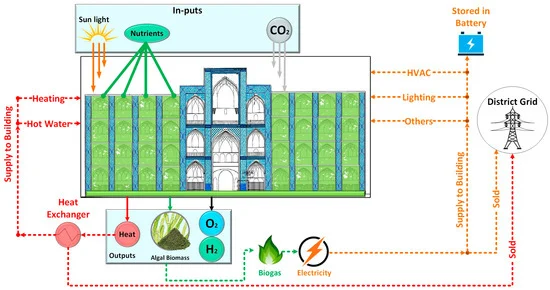
As the energy sector continues to move towards sustainability and decarbonization, companies are investing heavily in innovative technologies that can help reduce greenhouse gas emissions. One such technology is biofissation, a process that harnesses the power of algae to absorb carbon dioxide from the atmosphere.
The Role of Algae in Biofissation
To understand how biofissation works, let’s take a closer look at its key components. What are the main players in this process? The answer lies with microalgae, tiny organisms that thrive in aquatic environments and have the ability to convert carbon dioxide into oxygen through photosynthesis.
In order to illustrate the benefits of biofissation, let’s ask ourselves: what makes it so special? Is it just a novelty or does it offer real-world advantages?
The Benefits of Biofissation
Biofissation has numerous benefits for industries involved in energy production. By harnessing the power of algae and photosynthesis, we can absorb carbon dioxide from the atmosphere, reducing harmful emissions and mitigating climate change.
Here are some key benefits of biofissation:
- Carbon sequestration: Biofissation allows us to capture CO2 from the atmosphere, which would otherwise contribute to global warming.
- Water recycling: The process uses water efficiently, as it is recycled and reused throughout the production cycle.
- Biomass utilization: Algae biomass can be used for various purposes, including food production, nutraceuticals, and biofuel.
Biofissation in Italy: A Reality Check
Eni, a leading energy company, has invested heavily in biofissation research and development. By adopting this technology, Eni aims to reduce its environmental footprint and create a more sustainable future.
The bioraffineries developed by Eni represent a crucial step towards circular economy principles. These facilities utilize advanced technologies to convert organic waste into biofuels, reducing greenhouse gas emissions and promoting sustainability.
Case Studies: Biofissation in Practice
To illustrate the effectiveness of biofissation, let’s look at some real-world examples:
- Bioraffineria di Gela: This facility uses microalgae to produce biomass, which is then converted into biofuels.
- Enimed a Ragusa: This site features photobioreactors that use artificial light to induce photosynthesis in microalgae, producing CO2-rich biomass.
Scaling Up Biofissation: The Future of Sustainability
Biofissation has the potential to make a significant impact on the environment. By scaling up this technology, we can create a more sustainable future and reduce our reliance on fossil fuels.
One notable example is the recent pilot project launched by Eni at the Center for Renewable Energy and Environmental Research in Novara. This facility uses four photobioreactors with advanced lighting systems to produce 500 tons of biomass per hectare annually and capture approximately 1000 tons of CO2.
Challenges and Opportunities
While biofissation offers many benefits, there are also challenges to be addressed. For instance:
- Scalability: Biofissation requires large amounts of algae to absorb significant amounts of CO2.
- Cost: The production cost of biofuels from microalgae is currently higher than traditional fossil fuels.
However, these challenges can also present opportunities for innovation and growth. By addressing the scalability and cost issues, we can unlock the full potential of biofissation and make it a viable alternative to fossil fuels.
Conclusion
Biofissation is a game-changing technology that has the potential to revolutionize the way we approach sustainability. By harnessing the power of algae and photosynthesis, we can reduce greenhouse gas emissions, promote circular economy principles, and create a more sustainable future.
Here are 8 FAQs related to the topic covered:
- What is biofissation?
- How does biofissation work?
- What are the benefits of biofissation?
- Which companies are investing in biofissation research and development?
- How can biofissation help reduce greenhouse gas emissions?
- What is the role of microalgae in biofissation?
- Can biofissation be used to produce biofuels?
- How can biofissation contribute to a circular economy?
Future Directions
The future of biofissation holds much promise, with ongoing research and development aimed at improving the efficiency and scalability of this technology.
Some potential areas for future exploration include:
- Genetic engineering: Scientists are working on developing genetically engineered algae that can produce more efficient CO2 uptake.
- Advanced lighting systems: Researchers are exploring new lighting technologies that can enhance photosynthesis in microalgae, leading to higher biomass production.
By continuing to innovate and improve biofissation technology, we can unlock its full potential and create a more sustainable future for generations to come.


