
As we continue to explore innovative solutions for a sustainable future, one technology has been gaining significant attention in recent years: renewable energy. In this article, we’ll delve into an exciting development that has left many in the industry buzzing – Apple’s latest innovation in storage technology for wind power.
The Importance of Renewable Energy
Before diving into the details of Apple’s system, let’s take a moment to understand why renewable energy is so crucial. The world is facing a pressing issue: climate change. As our reliance on fossil fuels continues to grow, we’re seeing devastating effects on our planet. Renewable energy offers a cleaner alternative, reducing greenhouse gas emissions and mitigating the impacts of global warming.
The benefits of renewable energy are multifaceted. Not only does it reduce our dependence on finite resources, but it also provides numerous economic and social advantages. For instance, investing in renewable energy can create jobs, stimulate local economies, and improve air quality. Moreover, as technology advances, the cost of renewable energy is decreasing, making it an increasingly viable option for individuals, businesses, and governments alike.
The Challenge with Wind Energy
Wind energy is a promising source of renewable power, but it comes with its own set of challenges. One of the primary concerns is the inconsistency in production. Unlike traditional fossil fuels, wind energy is generated by natural fluctuations in the environment, making it difficult to predict and store for later use.
To illustrate this point, let’s consider a real-world example. On a given day, a wind farm might produce an average of 200 megawatts (MW) of electricity. However, on another day, production could plummet to just 50 MW due to varying wind conditions. This unpredictability can make it difficult for utilities and grid operators to manage demand, leading to potential power outages or overloads.
Apple’s Innovative Storage System
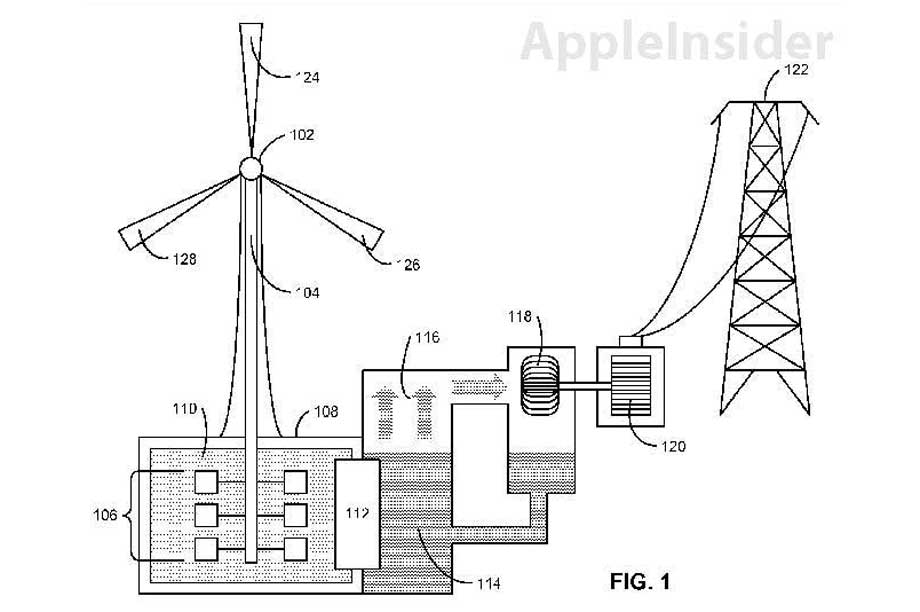
In an effort to address this issue, Apple has been working on a novel storage system for wind power. Their patent filing outlines a unique approach that utilizes rotating blades to convert kinetic energy into low-temperature heat. This heat is then transferred to a fluid, which is used to generate electricity.
The concept is straightforward: by harnessing the kinetic energy of rotating blades, Apple’s system can store excess energy during periods of high demand and release it when needed. This approach has several advantages over traditional energy storage methods:
- Improved Efficiency: By converting kinetic energy directly into heat, Apple’s system can achieve higher efficiency rates than conventional methods.
- Increased Scalability: The use of rotating blades allows for the creation of larger turbines, enabling the storage of greater amounts of energy.
- Enhanced Flexibility: With the ability to store excess energy during periods of high demand, Apple’s system provides a flexible solution for grid operators and utilities.
How it Works
Here’s a simplified explanation of the process:
- Rotating Blades: The turbine’s blades are designed to rotate when caught in the wind, generating kinetic energy.
- Heat Generation: This kinetic energy is converted into low-temperature heat within a chamber filled with “fluids at low capacity thermal.”
- Electricity Generation: The heated fluid is then used to produce electricity through an electrochemical reaction.
The resulting system can store energy for extended periods, providing a reliable source of renewable power even during times of high demand.
Why Apple’s System Matters
So, what makes this system so innovative? For one, it addresses the core issue with wind energy production – its unpredictability. By harnessing and storing energy during periods of high demand, Apple’s system ensures a more stable supply of renewable power.
Moreover, the use of rotating blades offers several advantages over traditional turbines:
- Improved Turbine Design: The unique design of Apple’s turbine can reduce drag and increase efficiency.
- Enhanced Maintenance: With fewer moving parts than traditional turbines, Apple’s system may require less maintenance and upkeep.
Connecting the Dots: Apple’s Data Centers
But how does this relate to Apple’s data centers? As we all know, these massive facilities require immense amounts of energy to operate. In recent years, Apple has been actively seeking out sustainable solutions to meet their growing demands. By investing in renewable energy sources like wind power and developing innovative storage systems, the company is working towards a more eco-friendly future.
Apple’s commitment to sustainability is evident in various initiatives:
- Renewable Energy Purchases: The company has pledged to purchase 100% renewable energy for its data centers by 2025.
- Carbon Neutrality Goals: Apple aims to power 100% of its facilities with renewable energy and achieve carbon neutrality across its entire operations.
The Verdict: A Game-Changer for Renewable Energy?
While it’s still early days for this technology, one thing is clear – Apple’s innovation has the potential to revolutionize the way we approach renewable energy. As we move forward in our quest for a sustainable future, it will be exciting to see how this technology evolves and impacts industries worldwide.
Frequently Asked Questions (FAQs)
Q: How does Apple’s system compare to traditional energy storage methods?
A: While conventional methods often involve converting kinetic energy into heat, which is then used to generate electricity, Apple’s system uses a fluid to store the energy. This approach has potential advantages in terms of efficiency and scalability.
Q: What are the benefits of using renewable energy sources like wind power?
A: Renewable energy sources like wind power offer several benefits, including reduced greenhouse gas emissions, lower operational costs, and improved air quality.
Q: Can Apple’s system be used for other types of energy generation, such as solar or hydroelectric power?
A: While the patent filing mentions wind power specifically, it’s possible that similar technology could be adapted for other forms of renewable energy. Further research and development will be necessary to explore these possibilities.
Q: What are the potential drawbacks of using Apple’s storage system?
A: As with any new technology, there may be challenges and limitations associated with this system. For instance, the conversion process could result in losses or inefficiencies, affecting overall performance.
Q: How does Apple’s innovation align with their broader sustainability goals?
A: By investing in renewable energy sources and developing innovative storage systems, Apple is taking significant steps towards reducing its environmental footprint and promoting a more sustainable future.


