
As the summer season approaches, lawn maintenance becomes a top priority to ensure your grass stays healthy and thriving. In this article, we’ll delve into the essential tasks required for maintaining a lush and vibrant lawn during the hot summer months.
Understanding Summer Lawn Care
The frequency of mowing, watering, and fertilizing your lawn decreases during the summer due to the heat and lack of rainfall. This can lead to an uneven growth pattern, making it challenging to achieve an even cut. To combat this, it’s essential to adjust your lawn care routine to ensure your grass receives adequate attention.
Adjusting Mowing Frequency
For non-irrigated lawns, mowing frequency decreases significantly in the summer, from every 7-10 days to once every 10-15 days. However, for lawns with irrigation systems, the frequency of mowing also decreases, but not as dramatically. For example, if you have a lawn with an irrigation system, it’s recommended to mow every 7-10 days.
Protecting Your Lawn from Extreme Temperatures
When temperatures soar above 90°F (32°C), the growth rate of certain grass species slows down significantly. To mitigate this effect, increase your mowing height by about 30% to protect the collars of young grass plants from scorching sun rays. This adjustment can be made in early summer when temperatures are still relatively mild.
When to Revert to Regular Mowing Patterns
Once temperatures begin to drop (around mid-September in the north and mid-October in the center-south regions), it’s safe to revert to your regular mowing patterns. Until then, maintain an elevated mowing height to shield your grass from excessive sun exposure.
Irrigation Strategies for Summer Lawn Care
Proper irrigation is crucial during the summer months when water scarcity can occur. Aim to irrigate every 4-5 days, delivering approximately 30-35 liters of water per square meter. As temperatures begin to drop in late summer (mid-September), you can reduce watering frequency to once every 5-7 days and deliver about 15-20 liters of water per square meter.
Optimal Timing for Irrigation
To minimize evaporation and maximize the effectiveness of your irrigation, it’s best to water after sunset. This allows the water to penetrate deeper into the soil rather than evaporating quickly under direct sunlight.
Fertilization Strategies for Summer Lawn Care
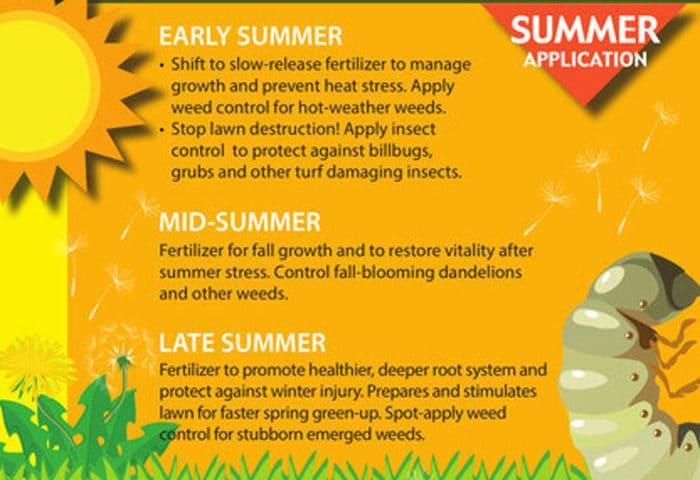
Fertilize your lawn in late summer (around September) to support healthy growth during the cooler months ahead. Popular fertilizer options include Nitrophoska Gold and Floranid Rasen, both of which come with built-in dosers for easy application. Apply fertilizers immediately after mowing, followed by irrigation to ensure optimal absorption.
Re-seeding and Repairing Damaged Areas
If your lawn suffers from damage or thinning, it’s essential to address these issues promptly in late summer (around September). Re-seed the affected area using a mix of grass species suitable for your region. Follow a step-by-step re-seeding process:
- Prepare the soil by tilling to a depth of about 6-8 cm.
- Add 2-3 kg of compost or topsoil per square meter.
- Sow the seeds evenly, covering them with a thin layer (0.3-0.6 mm) of soft earth.
- Rake the soil gently and water lightly to maintain moderate moisture until germination.
Tips for Successful Re-seeding
After re-seeding, keep the area consistently moist but not saturated until the new growth appears. Once established, follow a regular mowing schedule to promote healthy growth and prevent overgrowth.
With these expert tips and strategies, you’ll be well on your way to maintaining a lush, vibrant lawn throughout the summer season. Remember to stay vigilant about temperature fluctuations, water availability, and fertilizer applications to ensure your grass stays healthy and thriving all year round.
Frequently Asked Questions (FAQs)
- What is the ideal mowing height for my lawn during the summer?
A: Increase your mowing height by about 30% to protect young grass plants from excessive sun exposure. - How often should I water my lawn in the summer?
A: Irrigate every 4-5 days, delivering approximately 30-35 liters of water per square meter. - What is the best fertilizer for my lawn during the summer?
A: Nitrophoska Gold and Floranid Rasen are popular options suitable for various grass species. - How long should I wait before re-seeding a damaged area on my lawn?
A: Wait until the temperature drops (around mid-September in the north and mid-October in the center-south regions) to minimize water stress. - What is the best time of day to irrigate my lawn?
A: Water after sunset to allow for deeper soil penetration rather than evaporation under direct sunlight. - How often should I fertilize my lawn during the summer?
A: Fertilize in late summer (around September) to support healthy growth during the cooler months ahead. - What is the recommended mowing height for newly seeded areas?
A: Maintain a slightly lower mowing height (about 20-30% below normal) until the new growth reaches about 3 inches tall.
By following these expert tips and strategies, you’ll be well-equipped to maintain a lush, vibrant lawn throughout the summer season. Stay vigilant about temperature fluctuations, water availability, and fertilizer applications to ensure your grass stays healthy and thriving all year round.
Additional Tips for Summer Lawn Care
- Maintain good air circulation in your lawn by pruning nearby shrubs or trees.
- Consider using mulch or compost to improve soil health and retain moisture.
- Regularly inspect your lawn for signs of pests, such as white grubs or chinch bugs.
- Fertilize your lawn at the right time. In general, it’s best to fertilize during the growing season (spring-fall) when grass is actively producing new growth.
Conclusion
Summer lawn care requires a combination of proper mowing, watering, and fertilization strategies to maintain a healthy and vibrant lawn. By following these expert tips and strategies, you’ll be well on your way to achieving a lush, green lawn that withstands the heat of summer. Remember to stay vigilant about temperature fluctuations, water availability, and fertilizer applications to ensure your grass stays healthy and thriving all year round.


