
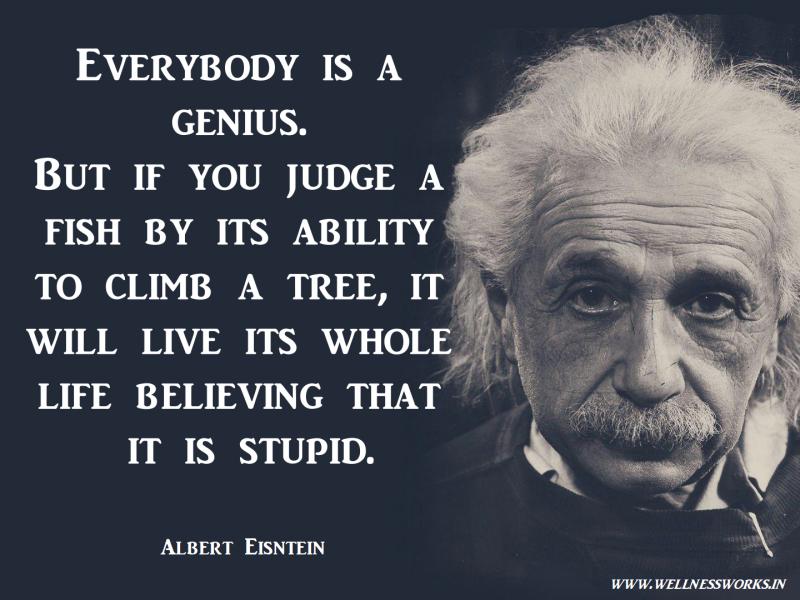
Albert Einstein is one of the most celebrated minds in history, whose groundbreaking contributions to physics revolutionized our understanding of space and time. Despite being a genius of unparalleled proportions, his legacy has become so ingrained that it’s easy to lose sight of the magnitude of his achievements. In this article, we’ll delve into Einstein’s remarkable life, his influential thoughts, and some of his most famous quotes.
Early Life and Career
Born on March 14, 1879, in Ulm, Germany, Albert Einstein was a curious child who excelled in mathematics and physics from an early age. He moved to Switzerland at the age of 16 and later enrolled in the Swiss Federal Polytechnic University, where he graduated in 1900 with a degree in physics.
Einstein’s academic career spanned over two decades, during which he worked as a patent clerk in Bern, Switzerland, while continuing to develop his revolutionary ideas about space, time, and gravity. In 1905, Einstein published four groundbreaking papers that would change the face of physics forever: the theory of special relativity, the photoelectric effect, Brownian motion, and the famous equation E=mc².
The Nobel Prize and Controversy
In 1921, Einstein received the Nobel Prize in Physics for his explanation of the photoelectric effect, which was a major breakthrough at the time. However, this achievement came with controversy, as Einstein’s outspoken criticism of nationalism and militarism during World War I had made him a target of criticism.
In the years following the war, Einstein continued to speak out against the dangers of racism and fascism, which led to his expulsion from Germany in 1933. He eventually settled in the United States, where he became a professor at Princeton University and worked tirelessly to advocate for peace and social justice.
Major Contributions and Legacy
Einstein’s work had far-reaching implications that continue to shape our understanding of the universe today. Some of his most significant contributions include:
- Special Relativity: Einstein introduced the concept of time dilation, which states that time is relative and can slow down or speed up depending on an object’s speed and proximity to a gravitational field.
- General Relativity: Building upon special relativity, Einstein developed the theory of general relativity, which describes gravity as the curvature of spacetime caused by massive objects.
- The Photoelectric Effect: Einstein’s explanation of this phenomenon led to the development of quantum mechanics and earned him his Nobel Prize in Physics.
Einstein’s legacy extends beyond his scientific contributions. He was a passionate advocate for peace, social justice, and human rights. His famous quote “The value of a person should be determined by what they contribute to society, not by how much wealth they accumulate” still resonates today.
Famous Quotes
Einstein’s wit and wisdom are evident in his many quotes, which continue to inspire and delight people around the world. Here are some of his most famous quotes:
- “Imagination is more important than knowledge. Knowledge is limited. Imagination encircles the world.”
- “The secret to creativity is knowing how to hide your sources.”
- “Life is like riding a bicycle. To keep your balance, you must keep moving.”
- “The only thing that interferes with my learning is my education.”
- “Education is what remains after one has forgotten everything he learned in school.”
Books by Albert Einstein
Einstein was a prolific writer and thinker, and his books continue to captivate readers today. Here are some of his most notable works:
- “The Meaning of Relativity”: This book explores the concept of relativity and its implications for our understanding of space and time.
- “Out of My Later Years”: Written in collaboration with Ben Braude, this book offers insights into Einstein’s personal life and thoughts on a range of topics, from politics to physics.
- “Einstein: His Life and Universe”: This biography, written by Walter Isaacson, provides an intimate look at Einstein’s life and times.
In conclusion, Albert Einstein was a true giant of science, whose contributions continue to shape our understanding of the universe. Through his work, his famous quotes, and his legacy, we can still feel the impact of this extraordinary individual today.
Frequently Asked Questions
Q: Who was Albert Einstein?
A: Albert Einstein was a German-born physicist who is widely regarded as one of the most influential scientists of the 20th century.
Q: What were some of Einstein’s major contributions to physics?
A: Some of Einstein’s most significant contributions include special relativity, general relativity, and the photoelectric effect.
Q: Why did Einstein move to the United States?
A: Einstein moved to the United States in the 1930s due to his outspoken criticism of nationalism and militarism during World War I.
Q: What was Einstein’s view on politics and social justice?
A: Einstein was a passionate advocate for peace, social justice, and human rights. He believed that education should be free and accessible to all people.
Q: How did Einstein feel about the dangers of nuclear weapons?
A: Einstein was deeply concerned about the dangers of nuclear weapons and wrote several letters to President Harry Truman warning him about the potential consequences of developing an atomic bomb.
Q: What is Einstein’s most famous quote?
A: One of Einstein’s most famous quotes is “The value of a person should be determined by what they contribute to society, not by how much wealth they accumulate.”
Einstein’s work and legacy continue to inspire new generations of scientists, thinkers, and leaders. As we look to the future, we would do well to remember the wisdom of this extraordinary individual and strive to make the world a better place for all people.
Conclusion
Albert Einstein was a true giant of science, whose contributions continue to shape our understanding of the universe. Through his work, his famous quotes, and his legacy, we can still feel the impact of this extraordinary individual today. As we reflect on his life and achievements, we are reminded of the importance of imagination, creativity, and critical thinking in shaping our world.
In a world that is increasingly complex and interconnected, Einstein’s ideas and ideals remain more relevant than ever. By embracing his vision of a better future for all people, we can work towards creating a brighter, more just, and more peaceful world for ourselves and generations to come.
References
- Einstein, A. (1916). “The Meaning of Relativity”
- Einstein, A. (1950). “Out of My Later Years”
- Isaacson, W. (2007). “Einstein: His Life and Universe”
- Rudolph, C. (1979). “Albert Einstein: The Man and the Myth”
Further Reading
- “The Einstein Reader” edited by P.A. Schilpp
- “The Collected Papers of Albert Einstein” edited by J.B. Stewert
- “Einstein: His Life and Legacy” by A.R. Todd


