
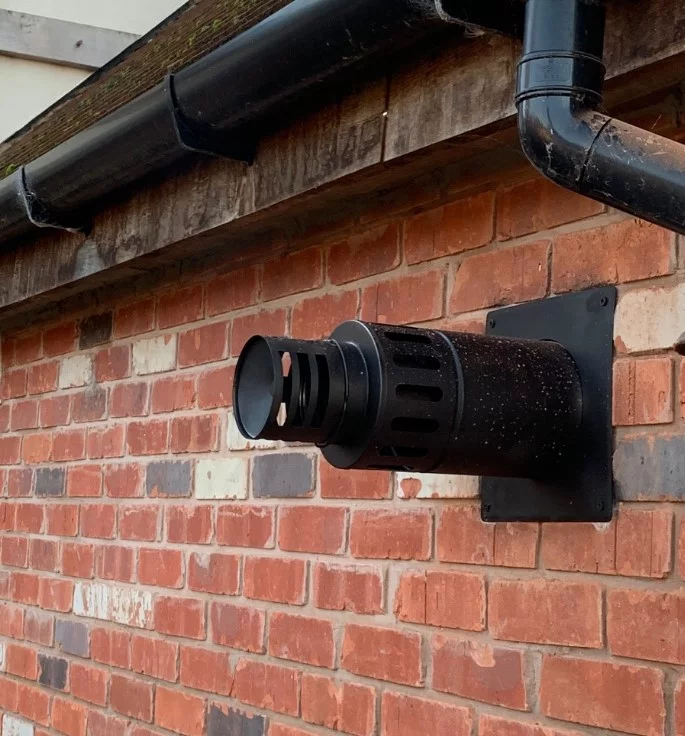
As we explore the world of home heating, one crucial element often goes unnoticed: the chimney. In this article, we’ll delve into the importance of chimneys, their installation norms, and the possibilities of skipping them in certain situations.
What is a Chimney?
A simple question with a complex answer. A chimney serves as a conduit for exhaust gases produced by combustion processes like those found in pellet stoves or wood-burning fireplaces. Its primary function is to direct these harmful gases outside, using natural convection (the upward flow of warm air).
How Does a Chimney Work?
The process involves a combination of two key components: the flue and the chimney. The flue is the passageway within the stove or fireplace where combustion occurs, while the chimney is the outer structure that connects the flue to the outdoors. When gases are released from the combustion process, they move through the flue and into the chimney, propelled by heat (convection) rather than any mechanical force.
Chimney Installation Norms: Uni 10683
According to the relevant legislation (Uni 10683), every heating system (stoves, fireplaces, wood-burning stoves, etc.) must be connected to a separate exhaust pipe. Installing a chimney without proper authorization and certification is strictly prohibited due to the potential risks of explosion and carbon monoxide poisoning.
Chimney Installation Requirements
Here are some key requirements for chimney installation:
- The flue should have an upward slope (at least 45 degrees) to facilitate natural convection.
- The total length of the chimney system must be at least 4 meters in order to ensure effective ventilation.
- There is no upper limit on the length of a flue, but it’s essential that a sufficient draft exists between heating and flue temperatures (typically between 8-12 Pa).
- The diameter of the flue can vary depending on the chosen product or overall chimney height.
- The flue should never be smaller than the outlet size of the combustion appliance (usually around 15 cm in diameter).
Pellet Stoves Without Chimney
The term “pellet stove without chimney” is often misunderstood. A pellet stove inherently requires a means to expel exhaust gases, even if it doesn’t have an external chimney. This can be achieved through a simple pipe connected directly to the stove.
Recent Developments and Evolving Regulations (UNI 10863)
Prior to 2012, regulations allowed for pipes to exit walls, but this approach has been phased out due to safety concerns. As of now, all pellet stoves must be equipped with a chimney or an equivalent exhaust system that complies with UNI 10863 standards.
Chimney Installation Options for Pellet Stoves
There are three primary options for installing chimneys:
- Directly connecting to the roof: This involves running the pipe straight up to the rooftop.
- Exiting through a wall: The flue will be placed in a designated area of the wall and then exit outside, where it can be connected to an external chimney or flue.
- Rerouting an existing flue: This option requires re-routing the existing flue system to connect it with the pellet stove.
Benefits of Installing a Chimney for Pellet Stoves
Installing a chimney provides several benefits:
- Improved Safety: A well-installed chimney ensures that harmful gases are directed outside, reducing the risk of explosion and carbon monoxide poisoning.
- Increased Efficiency: Proper ventilation helps to maintain optimal combustion temperatures, leading to increased efficiency and cost savings.
- Enhanced Comfort: By removing unwanted odors and pollutants from your home, a properly installed chimney enhances overall comfort.
Common Issues with Pellet Stoves Without Chimney
When pellet stoves are used without chimneys, potential issues may arise:
- Poor Ventilation: Inadequate ventilation can lead to decreased combustion efficiency, increased emissions, and reduced system performance.
- Gas Buildup: Poorly installed pipes can cause gas buildup inside the home, leading to safety risks and unpleasant odors.
- System Failure: Without proper installation, pellet stoves may malfunction or fail due to inadequate exhaust gases removal.
By understanding the importance of chimneys in maintaining a safe and healthy home environment, you can ensure that your heating system operates efficiently and effectively.


