
When you’re baking a cake or making a batch of cookies, what are the ingredients that go into making your favorite treats? For honey, it’s not just flour and sugar – but rather something much more complex. In this article, we’ll delve into the fascinating world of beekeeping and explore how these tiny creatures create their signature sweetener.
The Building Blocks of Honey
So, what exactly is made from flowers that eventually becomes our beloved honey? The answer lies in the nectar and pollen collected by bees from various flower sources. While it may seem like a simple combination, there’s more to it than meets the eye. You see, flowers produce nectar specifically for pollinators like bees to visit and collect. This process is crucial for ensuring the survival of both plants and animals.
The Role of Pollen and Nectar
Poll pollen and nectar are not just essential ingredients in making honey; they also play a critical role in plant reproduction. When a bee visits a flower, it collects a mixture of nectar and pollen on its legs. The nectar is used as a source of energy, while the pollen serves as a protein-rich food source.
Here’s a fascinating fact: without bees and other pollinators, many plants wouldn’t be able to reproduce. In fact, some scientists have estimated that one-third of all crops worldwide rely on animal pollination. This highlights just how important these tiny creatures are for our ecosystem.
The Art of Beekeeping
Now that we’ve covered the basics of bee biology and the importance of pollen and nectar, let’s talk about the art of beekeeping itself. Beekeepers carefully manage their colonies to ensure they remain healthy and productive. But did you know that bees produce a type of wax called propolis to seal their hives?
How Bees Make Honey
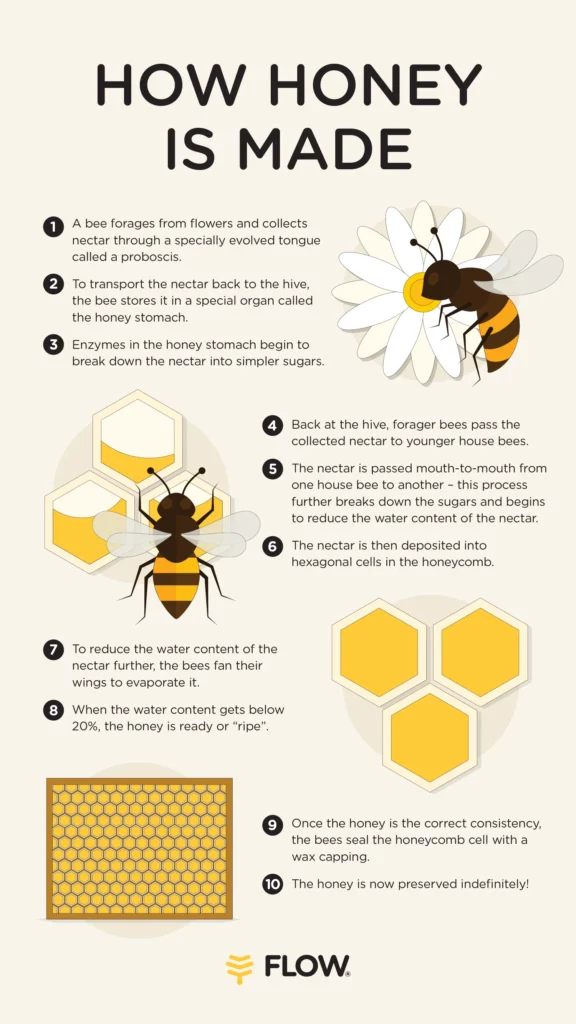
So, how do these busy little creatures turn pollen and nectar into honey? The process begins with the collection of nectar by worker bees from various flower sources. Once they return to the hive, they regurgitate the liquid and mix it with enzymes that break down complex sugars.
Here’s a fun fact: it takes about 60,000 bees collecting nectar from around 2 million flowers to produce just one pound of honey! The amount of time it takes for bees to collect this much nectar can vary greatly depending on factors such as weather conditions and the availability of food sources.
The Science Behind Bee Honey
While the process of making honey may seem straightforward, it’s actually a complex series of biochemical reactions. The enzymes present in bee saliva break down complex sugars into simpler ones, which are then converted into glucose and fructose – the main components of honey.
As the bees fan the nectar with their wings, they create a draft that helps to evaporate excess water content. This process thickens the liquid, creating a syrupy consistency that eventually becomes our beloved honey.
The Role of Melata
But what about melata – the leftover substance from insect suckers? Bees collect this waste product because it’s rich in sugars and amino acids. By incorporating melata into their honey production process, bees create different types of honey with varying nutritional profiles.
For example, “miele di melata” is made by combining melata with nectar and then evaporating the excess water content. This results in a darker, more nutritious honey.
From Nectar to Honey
So, what happens next when we add nectar and melata together? The result is a complex mixture of sugars, acids, and enzymes that eventually becomes our signature sweetener – honey!
Here’s where things get really interesting: as the bees fan the mixture with their wings, they create a draft that helps to evaporate excess water content. This process thickens the liquid, creating a syrupy consistency that eventually becomes our beloved honey.
The Importance of Honey Bees
As we’ve explored in this article, making honey is not just about collecting nectar and pollen – it’s an intricate process involving complex biochemical reactions and teamwork between bees. But why are these tiny creatures so important? Well, for starters, honey bees play a crucial role in maintaining the health of our ecosystem.
They pollinate plants, ensuring that seeds can reproduce and grow into new flowers. They also collect nectar, which is used by humans as a natural sweetener. Without honey bees, many plants wouldn’t be able to produce fruit or nuts, and we’d lose access to this delicious natural resource.
Conclusion
As we’ve explored in this article, the production of honey is an incredible feat of engineering that requires teamwork, communication, and precision from these tiny creatures. By understanding the science behind beekeeping and honey production, we can appreciate these incredible creatures and their essential role in our ecosystem.
We hope you’ve enjoyed this journey into the world of honey bees and the process of making honey. Whether you’re a seasoned beekeeper or just starting out on your apiary adventure, there’s always more to learn about these fascinating insects.
Frequently Asked Questions
-
What do bees eat?
Bees primarily feed on nectar and pollen, which they collect from flowers. -
How do bees make honey?
Bees collect nectar from various flower sources and then mix it with enzymes that break down complex sugars. They fan the mixture with their wings to evaporate excess water content, creating a syrupy consistency that eventually becomes honey. -
Why is bee honey so expensive?
Bee honey can be expensive due to factors like labor costs, equipment expenses, and market fluctuations. However, many small-scale beekeepers produce high-quality, locally sourced honey at affordable prices. -
Can bees make honey in cold weather?
No, bees typically don’t produce honey during extremely cold weather. To mitigate this issue, beekeepers often use specialized equipment or take other measures to ensure the survival of their colonies. -
How long does it take for bees to produce honey?
The time it takes for bees to produce honey varies depending on factors like climate, food availability, and colony size. However, a healthy hive can produce around 10-20 pounds (4.5-9 kg) of honey per year. -
Can I make my own honey at home?
Yes! You can try making your own honey by collecting nectar from flowers, mixing it with water, and then evaporating the excess moisture to create a syrupy consistency. -
What are some common health benefits associated with consuming bee honey?
While there’s limited scientific research on this topic, some studies suggest that consuming bee honey may have various health benefits, such as reducing inflammation, improving allergies, or boosting energy levels. However, more research is needed to confirm these claims.
- How do bees communicate about food sources?
Bees primarily use complex dance patterns and pheromones to communicate with each other about food sources. This intricate language allows them to share information about nectar-rich flowers and navigate their environment effectively.
Additional Resources
If you’re interested in learning more about beekeeping or exploring the fascinating world of honey bees, here are some additional resources to get you started:
- The Bee Conservancy: A non-profit organization dedicated to protecting bee populations and promoting sustainable beekeeping practices.
- American Honey Producers Association: A trade association that represents the interests of beekeepers across the United States.
- The National Honey Board: A partnership between honey producers, researchers, and government agencies that aims to promote education and research on honey production.
We hope you’ve enjoyed this journey into the world of honey bees and the process of making honey. Whether you’re a seasoned beekeeper or just starting out on your apiary adventure, there’s always more to learn about these fascinating insects.


