
Introduction to Special Relativity
Special relativity, a theory developed by Albert Einstein, has revolutionized our understanding of the universe. This concept is no longer reserved for experts; it’s essential for anyone interested in physics to grasp its fundamental principles.
What is Special Relativity?
Special relativity, also known as the theory of special relativity, was introduced in 1905 and marked a significant turning point in the history of physics. Einstein aimed to reformulate and extend the laws of mechanics to better describe high-energy events and speeds approaching the speed of light.
Key Principles of Special Relativity
To comprehend special relativity, we need to examine its two fundamental postulates:
- The Principle of Relativity: The laws of mechanics, electromagnetism, and optics are universal and apply equally in all inertial reference frames.
- The Speed of Light is Constant: The speed of light remains constant regardless of the motion of the source or observer.
The Two Postulates: A Closer Look
Let’s dive deeper into these postulates:
- The Principle of Relativity (Special Relativity): This principle confirms the principle of relativity proposed by Galileo, but extends it to include all inertial reference frames.
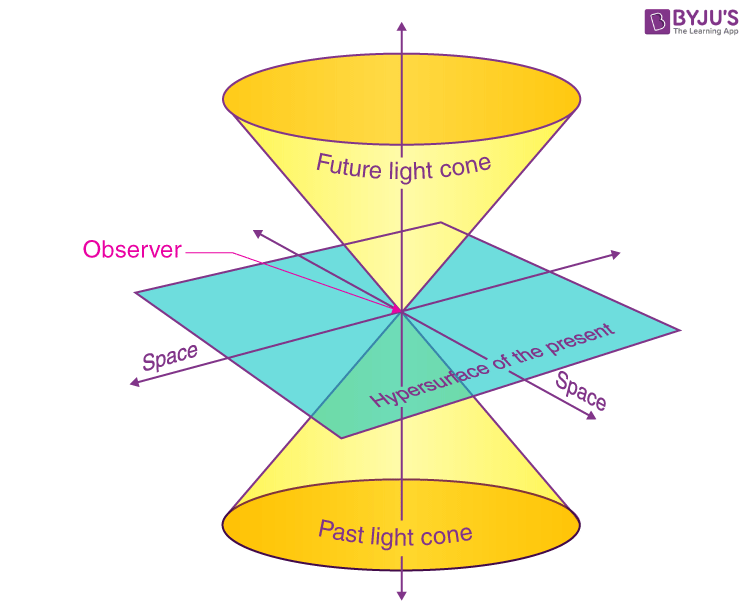
- The Constant Speed of Light: This postulate challenges the long-held idea of an “eternal” luminiferous aether and introduces the concept of spacetime, which combines space and time into a single entity.
Effects of Special Relativity
When observers in different inertial frames measure time and space, they don’t always obtain identical results. This leads to phenomena such as:
- Time Dilation: Time appears to pass slower for an observer in motion relative to a stationary observer.
- Length Contraction: Objects appear shorter to an observer moving at high speeds relative to a stationary observer.
The Lorentz Transformations
To understand these effects, we need to consider the Lorentz transformations, which are an extension of Galileo’s transformations. These transformations describe how space and time coordinates change for an observer in motion relative to another observer.
The Connection between Special Relativity and Energy
Einstein’s famous equation, E=mc², shows that mass (m) is equivalent to energy (E), with c being the speed of light. This equation highlights the relationship between rest mass and energy, which is a fundamental concept in special relativity.
Albert Einstein: The Man Behind Special Relativity
Einstein was instrumental in developing special relativity. His work not only transformed our understanding of space and time but also earned him international recognition as one of the greatest scientists of all time.
A Biographical Account of Albert Einstein
A fascinating biography of Einstein, titled “Albert Einstein: A Life in Science,” offers an engaging look at his life and contributions to physics. Written by Corinne Maier and Anne Simon, this book is a must-read for anyone interested in the history of science.
The Impact of Special Relativity on Modern Physics
Special relativity has had a profound impact on modern physics, influencing various fields beyond physics. Some of the key areas affected include:
- Particle Physics: The concept of time dilation and length contraction have led to a deeper understanding of particle interactions and the behavior of subatomic particles.
- Astrophysics and Cosmology: Special relativity has enabled scientists to better understand the behavior of celestial objects, such as black holes and neutron stars.
- Quantum Mechanics: The introduction of spacetime has influenced the development of quantum mechanics, leading to a deeper understanding of the behavior of matter and energy at the atomic and subatomic level.
The Future of Special Relativity
As our understanding of the universe continues to evolve, special relativity remains a fundamental concept in modern physics. Ongoing research and experiments are pushing the boundaries of what we know about space, time, and energy, and special relativity will continue to play a crucial role in shaping our understanding of the cosmos.
Frequently Asked Questions (FAQs)
-
What is special relativity?
Special relativity is a theory that describes the behavior of objects at high speeds and in environments with strong gravitational fields.
2. Who developed special relativity?Albert Einstein is credited with developing special relativity, which was introduced in 1905.
3. What are the key principles of special relativity?The two fundamental postulates of special relativity are:
- The principle of relativity (the laws of mechanics, electromagnetism, and optics are universal)
- The constant speed of light (regardless of motion or observer position)
-
What effects does special relativity have on space and time?
Special relativity leads to phenomena such as:
- Time dilation (time appears slower for an observer in motion relative to a stationary observer)
- Length contraction (objects appear shorter to an observer moving at high speeds relative to a stationary observer)
-
What is the connection between special relativity and energy?
Einstein’s famous equation, E=mc², shows that mass (m) is equivalent to energy (E), with c being the speed of light.
-
Can anyone understand special relativity?
Special relativity is an advanced concept that requires a solid foundation in physics. However, it’s essential for anyone interested in physics to grasp its fundamental principles.
-
What is the significance of special relativity?
Special relativity has revolutionized our understanding of space, time, and energy, with far-reaching implications for various fields beyond physics.


