
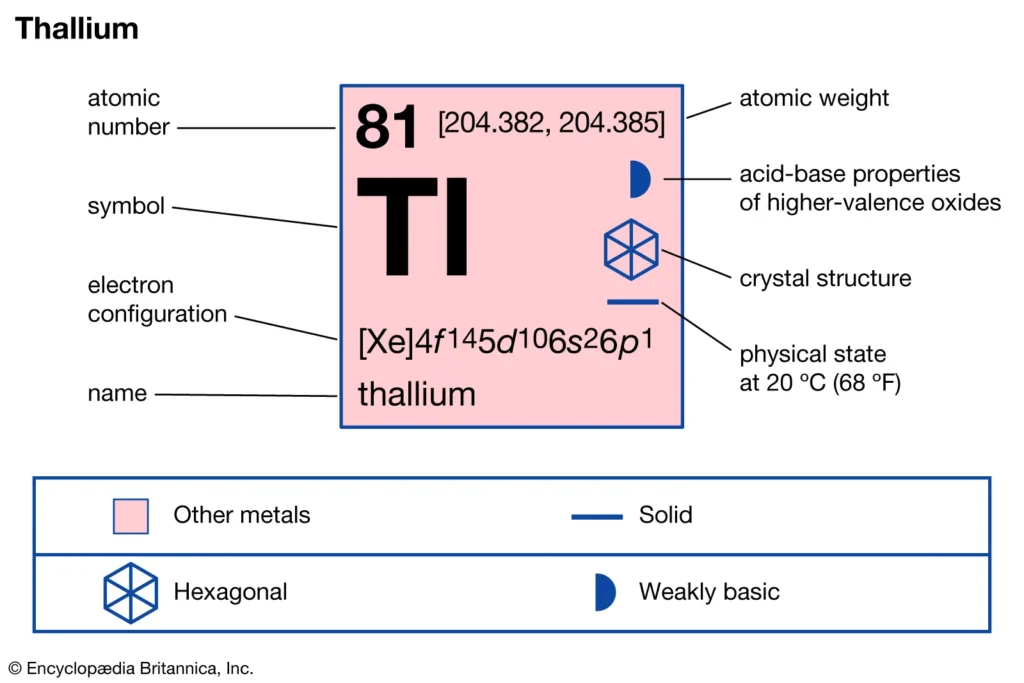
Tallio is an element that has been shrouded in mystery for many years. For some, it’s a box on the periodic table, while others see it as a toxic substance or a metal used in various applications. But what exactly is thallium, and how does it affect our lives?
What is Thallium?
Thallium has the symbol Tl and an atomic number of 81. It’s a post-transition metal that belongs to the block p on the periodic table. Imagine a gray, malleable metal that resembles lead, but with some key differences. When exposed to air, thallium tends to oxidize and become darker.
The Discovery of Thallium
Thallium was discovered in 1861 by two independent chemists, William Crookes and Claude-Auguste Lamy. They stumbled upon it while working on the production of sulfuric acid. Little did they know that their discovery would lead to a complex array of uses, risks, and applications.
The Toxic Properties of Thallium
Thallium is notorious for its toxicity. It can be found in various forms, including insecticides, fireworks, and even some medical treatments. While it’s not necessarily evil, thallium can cause significant harm if ingested or inhaled. The symptoms of thallium poisoning include nausea, vomiting, tachycardia, fever, diarrhea, and abdominal pain.
Thallium: Where is it Found?
Thallium is present in various environments, including:
- Cereals: Thallium can be found in small amounts in certain cereals, such as wheat, oats, and barley.
- Fireworks: Thallium is used in some fireworks to create a green glow.
- Medicinal treatments: Thallium-based compounds are sometimes used to treat certain medical conditions, such as trichophytosis.
Thallium: Uses and Applications
Despite its toxicity, thallium has several uses:
- Semiconductor manufacturing: Thallium is used in the production of semiconductors due to its high conductivity.
- Lamp production: Thallium-based compounds are used in some lamps to create a green glow.
- Medical treatments: Thallium-based compounds are sometimes used to treat certain medical conditions.
Thallium Radioactive Isotopes
One of the most interesting applications of thallium is its use as a radioactive isotope. The 201Tl isotope is commonly used in nuclear medicine for diagnostic purposes, particularly in cardiovascular tests.
History of Thallium Use and Regulation
The history of thallium’s use dates back to ancient times. In the early days, people believed that thallium had medicinal properties and used it to treat various ailments. However, as its toxicity became apparent, regulations were put in place to limit its use and ensure safe handling.
- Thallium poisoning cases: Throughout history, there have been several documented cases of thallium poisoning.
- Regulations: Governments have implemented regulations to control the use of thallium, including strict guidelines for its storage, disposal, and transportation.
- Occupational exposure: Workers in industries that use thallium are at risk of occupational exposure.
The Impact of Thallium on Human Health
Thallium’s toxicity can affect various aspects of human health, including:
- Neurological damage: Exposure to thallium can cause neurological damage, leading to cognitive impairment and other symptoms.
- Cancer risks: There is evidence that long-term exposure to thallium may increase the risk of certain cancers.
Thallium Environmental Impact
Thallium’s environmental impact is a growing concern:
- Water pollution: Thallium can contaminate water sources, posing a risk to aquatic life.
- Soil contamination: Thallium can also accumulate in soil, affecting plant growth and ecosystem balance.
Conclusion
Thallium is a fascinating element with a complex array of properties, uses, and risks. While it can be toxic if ingested or inhaled, thallium also has several applications in semiconductor manufacturing, lamp production, and medical treatments. Understanding the properties and risks associated with thallium is crucial for safe handling and proper use.
Frequently Asked Questions
- Is thallium radioactive?
No, most forms of thallium are not radioactive. - How is thallium used in medicine?
Thallium-based compounds are sometimes used to treat certain medical conditions, such as trichophytosis. - Can I get thallium poisoning from eating food?
Yes, if you consume cereals contaminated with thallium. - Is thallium safe to handle?
No, thallium is highly toxic and requires proper handling and storage. - What are the symptoms of thallium poisoning?
Symptoms include nausea, vomiting, tachycardia, fever, diarrhea, and abdominal pain. - Can I treat thallium poisoning at home?
No, thallium poisoning requires medical attention, including decontamination and treatment with lassatives or emodialysis. - Is there a cure for thallium poisoning?
There is no specific cure for thallium poisoning, but prompt medical attention can help alleviate symptoms and prevent complications. - Can I be exposed to thallium in the environment?
Yes, thallium can be present in small amounts in certain environments, such as cereals, fireworks, or medical treatments.
Thallium Safety Precautions
To minimize risks associated with thallium:
- Handle thallium compounds with caution and wear protective gear.
- Ensure proper storage and disposal of thallium-based products.
- Follow regulations and guidelines for thallium use and handling.
- Be aware of potential sources of exposure, such as contaminated food or water.


