
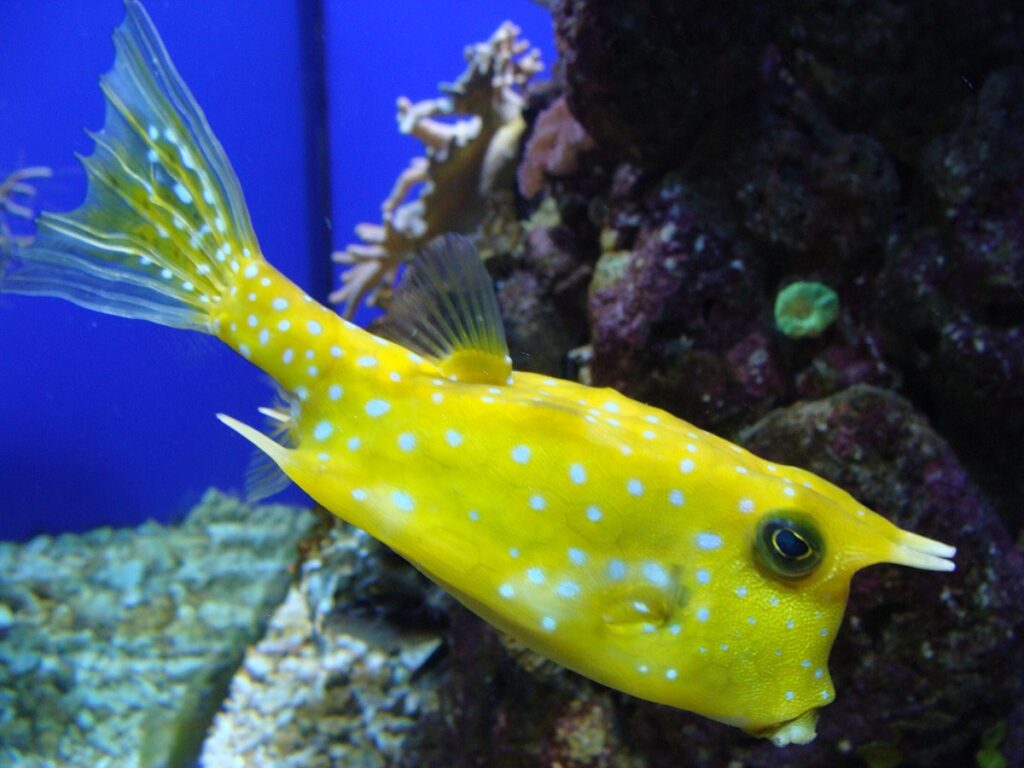
Lactoria cornuta, commonly known as the boxed corned fish, is a species of marine fish that has gained popularity among aquarium enthusiasts. Its unique appearance and fascinating behavior make it a sought-after addition to any marine tank.
Taxonomic Classification
The Lactoria cornuta belongs to the following taxonomic classification:
- Kingdom: Animalia
- Phylum: Chordata
- Class: Actinopterygii
- Order: Tetraodontiformes
- Suborder: Tetraodontoidei
- Family: Ostraciidae
- Genus: Lactoria
Physical Characteristics
The Lactoria cornuta is a relatively large fish, with some individuals reaching up to 45 cm in length. Its body shape is unique, resembling a box with two long appendages on the head. The fish has a mottled brown and yellow coloration, with possible white and blue markings.
One of the most distinctive features of the Lactoria cornuta is its unique way of defending itself from predators. When threatened, it releases a toxic substance that can be lethal to other fish in the same tank. This defense mechanism is triggered by the fish’s unique sensory organs located on its head, which detect even slight changes in water currents and chemical composition.
Habitat and Distribution
In its natural habitat, the Lactoria cornuta can be found in areas with soft mud and sand, typically between 1-9 meters in depth. It is native to the Pacific Ocean, Red Sea, and Eastern Africa, as well as the islands of Marchen and Tuamotu, Japan (southern), and Lord Howe Island.
The Lactoria cornuta prefers to inhabit shallow waters with minimal vegetation, where it can feed on small invertebrates and algae. Its unique body shape allows it to move slowly and efficiently through the water, making it well-suited for its native habitat.
Care and Feeding
When introducing a Lactoria cornuta to an aquarium, it’s essential to provide plenty of space. The fish is not suitable for small tanks due to its large size. A minimum tank size of 600 liters is recommended to ensure the health and well-being of the fish.
The Lactoria cornuta is an omnivore and can be fed a varied diet that includes commercial pellets, frozen or live foods, such as brine shrimp or small snails. It’s also essential to provide a source of calcium and other minerals to support its growth and development.
Acclimation Time and Water Parameters
When acclimating a new Lactoria cornuta to an aquarium, it’s crucial to follow these guidelines:
- Acclimation time: at least 30 minutes
- Salinity: 1020-1026
- pH: 8-8.5
- Temperature: 22-26°C
It’s also essential to monitor the water parameters closely during acclimation, as sudden changes can cause stress and illness in the fish.
Behavior and Compatibility
The Lactoria cornuta is a slow-moving fish that requires a peaceful environment. It’s best to avoid introducing it to tanks with fast-swimming fish, as the stress of predation can trigger its defense mechanism.
When keeping multiple Lactoria cornuta together, it’s recommended to introduce only one individual per tank, as they may become territorial. Providing plenty of hiding places and visual barriers can help reduce aggression and promote a peaceful environment.
Toxicity and Defense Mechanism
The Lactoria cornuta has a unique defense mechanism that involves releasing a toxic substance when threatened or stressed. This toxin can be lethal to other fish in the same tank. If you notice any signs of stress or illness in your fish, it’s essential to isolate it immediately.
Breeding and Reproduction
Lactoria cornuta are not typically kept for breeding purposes due to their complex reproductive cycle and specific requirements. However, with proper care and attention, they can breed successfully in captivity.
The Lactoria cornuta is a sequential hermaphrodite, meaning that the fish’s sex changes from female to male as it matures. The breeding process involves the fertilization of eggs by the dominant male, who will then guard the eggs until they hatch.
Conservation Status
Unfortunately, the Lactoria cornuta is not currently listed on the IUCN Red List, but its populations are declining due to overfishing and habitat destruction. Conservation efforts should focus on protecting its native habitats and promoting sustainable fishing practices.
Conclusion
In conclusion, the Lactoria cornuta is a fascinating and rewarding species for experienced aquarium enthusiasts. With proper care and attention, this unique fish can thrive in a well-maintained marine tank.
However, it’s essential to remember that keeping a Lactoria cornuta requires a significant investment of time, money, and expertise. Before deciding to add one of these remarkable fish to your collection, make sure you have the necessary knowledge and resources to provide the best possible care.
Frequently Asked Questions (FAQs)
- Q: Can I keep multiple Lactoria cornuta together?
A: No, it’s recommended to introduce only one individual per tank due to territorial behavior. - Q: What is the ideal water temperature for a Lactoria cornuta?
A: 22-26°C - Q: How often should I feed my Lactoria cornuta?
A: Feed your fish 2-3 times a day, only as much as it can consume within a few minutes. - Q: Can I keep a Lactoria cornuta with corals?
A: No, it’s not recommended to keep these two species together due to the risk of coral damage and stress. - Q: How long does it take for a Lactoria cornuta to acclimate to an aquarium?
A: At least 30 minutes - Q: What is the average lifespan of a Lactoria cornuta in captivity?
A: Up to 10 years with proper care and attention. - Q: Can I breed Lactoria cornuta in an aquarium?
A: No, breeding this species in captivity is not recommended due to its complex reproductive cycle and specific requirements. - Q: How do I recognize signs of stress or illness in a Lactoria cornuta?
A: Look for changes in color, appetite, or behavior, such as rapid breathing or erratic swimming patterns.
By following these guidelines and providing the necessary care and attention, you can enjoy the unique beauty and fascinating behavior of the Lactoria cornuta.


