
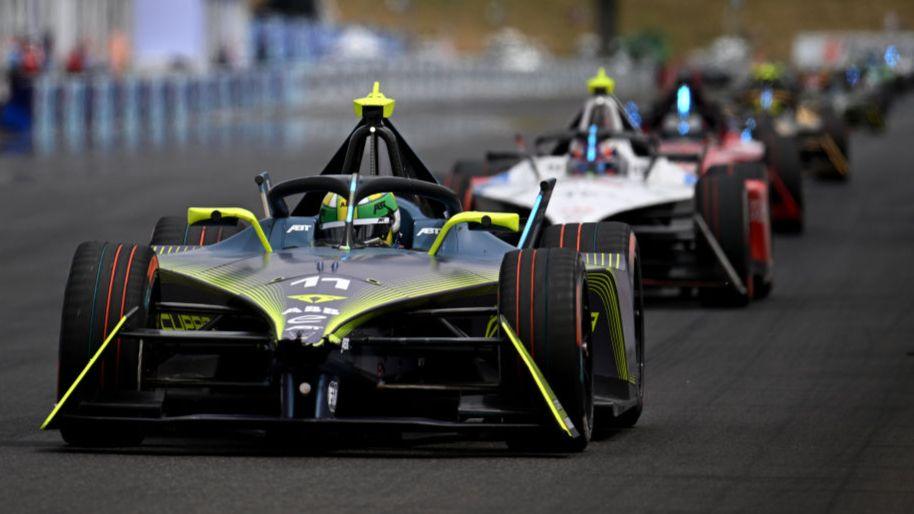
The world’s first electric racing championship, Formula E, has kicked off with a bang, thrilling audiences at the Beijing ePrix and going viral on social media, breaking the one-billion-interaction barrier.
This historic event marked a new chapter in motorsports, with the Beijing Evergrande ePrix being held on a spectacular urban circuit around the iconic Olympic Bird’s Nest stadium. The winner of this inaugural race was Lucas di Grassi of Team Audi Sport ABT, who took home the coveted victory amidst a sea of enthusiastic spectators and millions of TV viewers.
But what makes this electric racing championship so special? Can an electric car really compete in a high-speed race like Formula E?
A New Era for Motorsports
The answer lies in the technology behind these cars. Electric motors are not only more efficient but also provide unparalleled acceleration, making them ideal for the fast-paced world of Formula E.
Electric cars have been gaining popularity in recent years due to their environmental benefits and cost-effectiveness. However, when it comes to high-speed racing, there was always a question about whether they could keep up with their gas-powered counterparts. The answer lies in the innovative designs of these electric vehicles, which have been engineered to deliver exceptional performance and efficiency.
One of the key advantages of electric cars is their instant torque, which allows them to accelerate rapidly from 0-60mph in just a few seconds. This makes them ideal for racing, where quick acceleration is essential for overtaking and maintaining speed.
Another significant benefit of electric cars is their reduced weight, which can improve handling and stability during high-speed maneuvers. Additionally, the electric motors provide more precise control over the car’s movement, allowing drivers to make tighter turns and corner faster with ease.
What to Expect from the First Season
As the first season got underway, fans were treated to a thrilling spectacle that lasted over an hour, with multiple laps, practice sessions, and qualifying rounds. The event was filled with excitement, with both seasoned pros and newcomers vying for the top spot.
However, not everything went smoothly. In fact, there was a minor incident during the race, which had Lucas di Grassi gain an unexpected advantage.
The Dark Horse: Daniel Abt
Daniel Abt, the second driver from Team ABT Sportsline, seemed to be on track for a strong performance, but then disaster struck. He exceeded the allowed energy consumption of 0.2 kilowatt-hours (28 kWh per car) and was subsequently penalized, dropping him to the 10th position in the standings.
Abt’s mistake highlighted the importance of strategy and energy management in electric racing. Drivers must carefully plan their energy consumption to avoid penalties and maximize their performance on the track.
Looking Ahead: The Next Event
The next leg of the championship is scheduled for October 18th in Malaysia, where fans will get to see two talented female drivers in action – Katherine Legge from Britain and Michela Cerruti from Milan. Could this be a turning point for women’s participation in motorsports?
As Formula E continues to gain momentum, it will be exciting to see how these female drivers fare against their male counterparts. The championship’s emphasis on diversity and inclusion has already attracted attention from fans around the world.
A Celeb Connection: Leonardo DiCaprio
In a surprise move, environmentalist and actor Leonardo DiCaprio has become co-owner of one of the 10 teams competing in the championship. Will his involvement inspire more eco-friendly initiatives in the world of motorsports?
DiCaprio’s commitment to sustainability is well-documented, and his involvement in Formula E is a significant step towards promoting environmentally responsible practices in racing. As the series continues to grow in popularity, it will be interesting to see how other celebrities and business leaders become involved.
The Formula E Calendar: A Season to Remember
Here’s a sneak peek at the upcoming events for the 2014/2015 season:
- September 13, 2014 – Beijing, China
- October 18, 2014 – Putrajaya, Malaysia
- December 13, 2014 – Punta del Este, Uruguay
- January 10, 2015 – Buenos Aires, Argentina
- February 14, 2015 – TBA (To be announced)
- March 14, 2015 – Miami, USA
- April 4, 2015 – Long Beach, USA
- May 9, 2015 – Monaco, Montecarlo
- June 30, 2015 – Berlin, Germany
- July 27, 2015 – London, UK
The Future of Electric Racing
As the world becomes increasingly aware of the importance of sustainability and reducing our carbon footprint, electric racing is poised to become a major player in the future of motorsports. With its innovative technology and eco-friendly ethos, Formula E is set to revolutionize the way we think about speed and performance.
Electric cars have already shown their potential on the track, with drivers like Lucas di Grassi and Sam Bird enjoying impressive victories. However, as the series continues to grow in popularity, it will be interesting to see how other manufacturers join the fray and what improvements can be made to the technology.
Frequently Asked Questions (FAQs)
- What is Formula E?
Formula E is the world’s first electric racing championship, featuring cars powered by advanced electric motors. - How fast can these cars go?
Electric cars in Formula E can reach speeds of up to 250 km/h (155 mph). - Are electric cars more efficient than traditional gas-powered cars?
Yes, electric cars are significantly more efficient, with some models achieving an efficiency rate of over 100%. - What is the energy consumption limit for electric cars in Formula E?
The allowed energy consumption per car is set at 28 kWh (kilowatt-hours). - How does the penalty system work in Formula E?
Drivers who exceed the energy consumption limit will incur penalties, which can affect their standing in the championship. - Who are some of the top drivers competing in Formula E?
Some notable drivers include Lucas di Grassi, Daniel Abt, and Katherine Legge. - What is the significance of electric racing for the environment?
Electric racing reduces carbon emissions and promotes sustainable energy consumption. - Will there be more female drivers participating in Formula E in the future?
Yes, with initiatives like the championship’s focus on diversity and inclusion, we can expect to see more women competing in the sport.
By exploring the world of electric racing, we’re not only witnessing a new era in motorsports but also contributing to a more sustainable future for all.


