
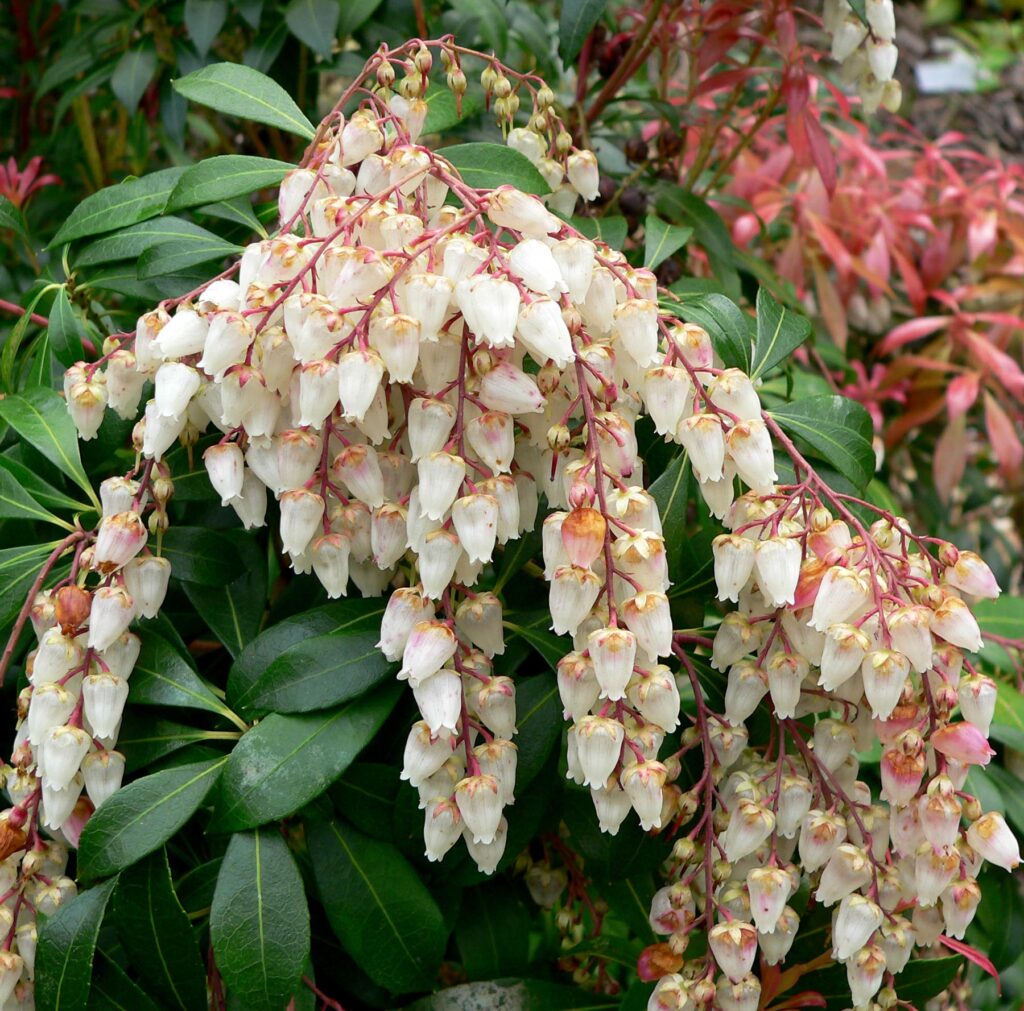
As a connoisseur of ornamental plants, you may have encountered the beautiful Pieris andromedae, also known as the Andromeda pieris. Native to the East, this plant boasts attractive foliage and vibrant flowers that add a touch of elegance to any garden. In this comprehensive guide, we’ll delve into the characteristics, cultivation, care requirements, propagation methods, and frequently asked questions of this lovely plant.
What is Pieris?
The term “Pieris” refers not only to one species but a group of plants with varying growth habits and features. The most commonly cultivated species in Europe is the Pieris japonica, an evergreen shrub originating from Japan and China. This plant thrives in well-draining acidic soil and partial shade.
Characteristics of Pieris andromedae
Imagine a compact, rounded shrub with numerous thin branches adorned by glossy, ovate, or lance-shaped leaves. During spring, the shrub produces small, bell-shaped flowers in white, ranging from pure white to cream-colored. The foliage is an attractive feature even when not flowering, as it takes on shades of red and bronzy hues near the buds.
In addition to its beautiful foliage and flowers, Pieris andromedae also has several other notable characteristics:
- Evergreen habit: As a non-deciduous shrub, it retains its leaves year-round, making it an excellent choice for gardeners in cooler climates.
- Acidic soil tolerance: This plant can thrive in acidic soils with low calcium content, making it suitable for gardens with poor soil quality.
- Low maintenance: Pieris andromedae requires minimal care, including pruning and fertilization.
Cultivation of Pieris andromedae
When planting Pieris andromedae, avoid direct sunlight, which can lead to sunburned leaves. Opt for partial shade or dappled light instead. Keep in mind that this plant is sensitive to extreme temperatures and should be protected from frost.
Pieris andromedae prefers acidic soil with low calcium content. In a garden setting, it’s essential to maintain well-draining conditions to prevent root rot. Avoid overwatering, which can lead to waterlogged soil and reduced growth. Water your Pieris regularly but avoid overwatering.
Terrestrial vs. Container Grown
Pieris andromedae thrives in both terrestrial and container settings. When planted in the ground, it’s crucial to use an acidic potting mix and maintain a slightly acidic soil pH (around 5.5-6.0). If you prefer to grow your Pieris in containers, ensure they have good drainage holes and avoid overwatering.
Tips for Growing Pieris andromedae
To promote healthy growth and flowering, follow these tips:
- Use an acidic potting mix and maintain a slightly acidic soil pH.
- Water regularly but avoid overwatering.
- Provide partial shade or dappled light to prevent sunburn.
- Fertilize with a granular fertilizer in late winter for optimal blooming.
Pieris japonica: A Popular Variety
Among the various species of Pieris, Pieris japonica is one of the most commonly cultivated. This evergreen shrub is native to Japan and China and forms compact, rounded growths with numerous thin branches adorned by glossy leaves.
Pieris floribunda: A Hybrid Variety
Pieris floribunda, a hybrid variety originating from the United States, produces an abundance of small white flowers on slender branches. The foliage is pale green and retains its color even near buds.
Frequently Asked Questions
Q: What is the best way to care for Pieris andromedae?
A: Provide partial shade, maintain acidic soil with low calcium content, and water regularly but avoid overwatering.
Q: How often should I fertilize my Pieris?
A: Fertilize your Pieris in late winter with a granular fertilizer to promote healthy growth and blooming.
Q: Can I grow Pieris andromedae indoors?
A: Yes, but ensure it receives partial shade and maintain an acidic soil pH (around 5.5-6.0).
Q: What is the ideal temperature range for growing Pieris andromedae?
A: This plant prefers temperatures between 15°F (-9°C) and 75°F (24°C), avoiding extreme temperatures.
Q: Can I propagate Pieris andromedae through division?
A: Yes, but divide your shrub in late winter or early spring to maintain its health and encourage new growth.
Q: How often should I prune my Pieris?
A: Prune your Pieris after flowering to maintain shape and promote new growth.


