
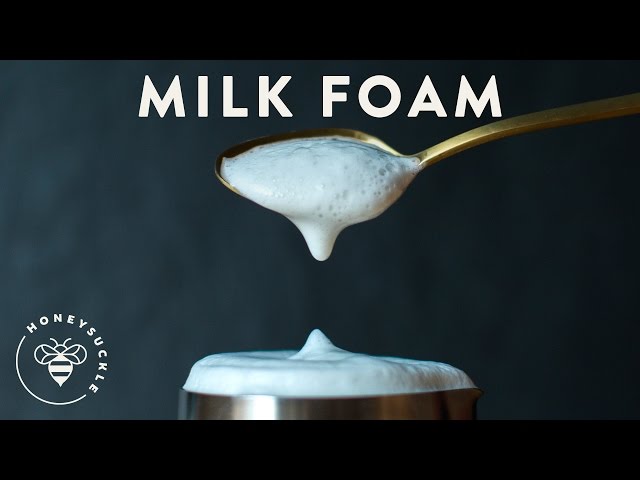
Making foam with milk is a versatile process that can be used to create both cappuccinos and classic frothy lattes without added coffee. In this guide, we will explore how to make foam that characterizes the cappuccino taken at the bar or the classic frothy latte, using various tools.
Understanding Milk Foam
After seeing how to condense milk, let’s talk about milk and cappuccinos foam.
Making milk foam with the Bimby
The Bimby is an excellent tool for making cappuccinos like those found at bars or excellent frothy lattes. With the Bimby, you will get a foam that is so thick it’ll make your hair feel sticky… of foam! How to make frothy milk in home with the Bimby?
Pour the milk into the container for 5 minutes at 80°C and speed 3
Heat for 30 seconds at speed 10
Pour the milk into the cups adding hot coffee.
How to Make Milk Foam
The most economical method for making milk foam, both hot and cold, is using a small battery-powered device: the milk frother.
To use it successfully you need to practice a bit. When you’ve mastered it, you’ll be happy: thanks to the foam produced, your milk volume will double up! This is by personal experience.
When using it now is important that the rounded surface of the device sits just under the surface of the milk, so as to absorb as many air bubbles as possible: this way the milk becomes foamy and especially frothy. Incline the cup and move it up and down the rounded surface rotating.
The milk frother immersion is the most economical tool for getting a dense foam similar to that found at bars. You can find milk frothers immersed in stores for 10-15 euros, as well as on Amazon. The one offered by the brand Severin is available for 9.90 euros with free shipping. For all details: Severin SM Milk Frother Immersion
The only advice for optimal use of this tool is to use it with fully charged batteries. To me, the batteries last about two months (using them every morning to make 2 frothy cappuccinos) but as soon as they lose power, the process becomes longer. Remember to always have a spare battery.
How to Make Cappuccino Foam
The procedure for making a foamy cappuccino is just a bit longer than that of a foamy latte. In practice, you’ll need to make the frothy milk and then add the desired amount of coffee. Mix slowly and… enjoy!
We strongly advise against doing the opposite, i.e., adding coffee before “foaming” or “mounting” the milk. If you add coffee first, it will be harder to incorporate air bubbles and create foam in the milk.
Tools for Making Foam
There are many tools available for making foam in milk and cappuccinos. In our article on homemade frothy lattes, we described prices, advantages, disadvantages, and uses of tools like:
Tazza milk frother
Milk Frother Immersion
Cappuccinatore Milk Frother Induction
Frothy Latte using a Blender
Cold or Hot Frothy Latte
How Does Foam Form in Milk and Coffee?
How does foam form in coffee, milk, or even beer? And what’s the connection between beer? The principle is the same. Foam forms because substances are absorbed by gaseous elements in a liquid phase.
In the case of beer, many breweries use high-pressure nitrogen to create bubbles and foam.
In the case of cappuccinos and frothy lattes made at home, we incorporate air through the movement of various tools. In contrast, bar-made cappuccino foam is achieved using a machine that can trap stable water vapor in the liquid phase.
You might also find this interesting
Milk Warm and Honey: Properties
Published by Anna De Simone on April 2, 2017
The Science Behind Foam Formation
Before we dive into the world of milk foam, let’s explore the science behind foam formation. Foam is a complex mixture of air bubbles trapped in a liquid phase. This occurs when the surface tension of the liquid allows it to adhere to tiny air bubbles, creating a film around each bubble.
In the case of coffee and milk, the process is similar. When you froth or steam milk, you introduce air into the liquid phase, which then becomes trapped by the surface tension of the milk. The type and amount of foam created depend on various factors, including:
- Temperature: Hotter liquids are more prone to forming foam than cold ones.
- Surface tension: Liquids with higher surface tension can trap more air bubbles, resulting in thicker foam.
- Air pressure: Higher air pressure can force more air into the liquid phase, leading to denser foam.
Tools for Making Foam
As mentioned earlier, there are several tools available for making foam in milk and cappuccinos. Here’s a brief overview of each:
- Tazza Milk Frother: A battery-powered frother that uses a spinning motion to incorporate air into the milk.
- Milk Frother Immersion: An immersion-style frother that sits in the milk, allowing it to absorb air bubbles as it rotates.
- Cappuccinatore Milk Frother Induction: An induction-based frother that uses electromagnetic fields to heat and froth milk.
- Frothy Latte using a Blender: A blender can be used to create frothy lattes by blending hot milk with air.
The Benefits of Making Foam
Making foam in milk and cappuccinos offers several benefits, including:
- Improved flavor: Frothing milk can bring out the natural flavors of the coffee or other ingredients.
- Increased texture: The creamy texture of frothed milk adds to the overall appeal of a coffee drink.
- Enhanced aroma: The release of aromas during the frothing process can enhance the overall experience of drinking a coffee-based beverage.
Tips and Tricks for Making Foam
To get the most out of your foam-making experience, here are some tips and tricks to keep in mind:
- Use high-quality milk: Fresh, cold milk is essential for creating good foam.
- Experiment with temperatures: Find the optimal temperature for frothing milk to achieve the desired texture.
- Practice makes perfect: Don’t be discouraged if your first attempts at making foam don’t yield the desired results – practice will help you develop the skills and techniques needed.
Conclusion
Making foam in milk and cappuccinos is an art that requires patience, practice, and a willingness to experiment. By understanding the science behind foam formation and using the right tools, you can create delicious and visually appealing coffee-based beverages at home. Whether you’re looking to improve your coffee game or simply want to enjoy a unique drinking experience, making foam in milk and cappuccinos is definitely worth trying.
With this guide, we hope you’ve gained a better understanding of how to make foam with milk and what tools are available for this process. Happy frothing!


