
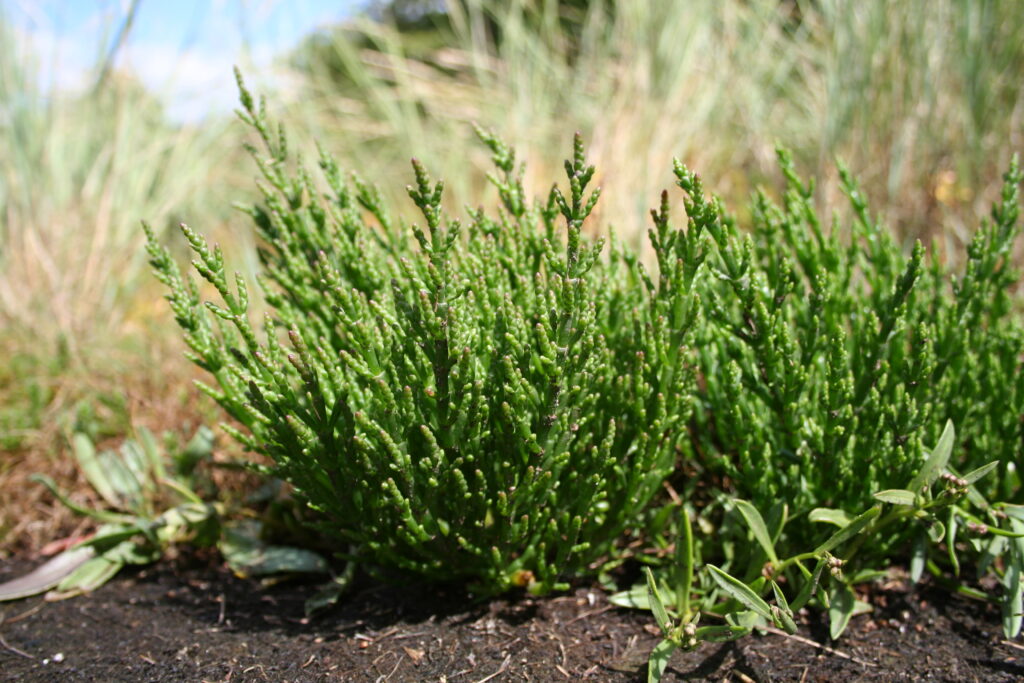
As we explore the fascinating world of plants, one species that often catches our attention is the salicornia. This alophytic plant, which belongs to the amaranth family, has been a subject of interest for many years due to its unique characteristics and versatility.
What is Salicornia?
Before diving into the details, let’s first understand what salicornia is. The term “salicornia” refers to a family of about 60 diverse species of this plant, each with its own specific origin. These plants can be found in North America, Europe, Asia, and Africa.
Characteristics of Salicornia
So, what makes salicornia so special? Let’s take a closer look at some of its key characteristics:
- Alophytic nature: As an alophytic plant, salicornia grows in areas with high salt content in the soil. This is why it can be found along coastlines and in saline environments like mangroves.
- Rapid colonization: Salicornia can colonize quickly in areas like paludis salmastre (pioneer habitats) where other plants cannot survive.
- Versatility: Humans have cultivated salicornia for its food, oil, and carburant properties.
Physical Appearance
Now that we’ve covered some of the plant’s characteristics, let’s take a look at how it appears:
- Low-growing habit: Salicornia has a low-growing habit with a smooth, fleshy stem that is multi-ramified with prominent nodes.
- Small, succulent leaves: The plant produces numerous small, squamose leaves that are succulent and have an unusual shape. This results in the appearance of bare stems.
Fruits and Flowers
In addition to its physical characteristics, salicornia also has some fascinating fruits and flowers:
- Greenish-yellow flowers: Salicornia produces greenish-yellow flowers arranged in spigues that grow from the “ascle” of the stem.
- Seed-producing fruit: The plant’s fruit is a succulent with only one seed, which grows into a new generation of salicornia during the spring.
Uses and Benefits
Salicornia has been used for various purposes throughout history:
- Food source: Salicornia is an important food source for many birds, insects, and mammals in the wild.
- Biodiesel production: The plant can be used to produce biodiesel, a more eco-friendly alternative to traditional fuels.
- Medicinal properties: The succulent sap of salicornia has been found to have diuretic properties, making it useful for treating water retention issues.
Where to Find Salicornia in Italy
Salicornia is widely distributed throughout Italy, particularly along the Adriatic and Tyrrhenian coasts. This plant can also be found growing in wetlands and mangrove forests under the common names of “maritime asparagus” or “finocchio di mare”.
Conclusion
In conclusion, salicornia is a fascinating plant with many unique characteristics and uses. From its alophytic nature to its versatility, this plant has captured the attention of scientists and naturalists alike.
Interesting Facts About Salicornia
There are several interesting facts about salicornia that are worth mentioning:
- Salt tolerance: As an alophytic plant, salicornia is incredibly salt-tolerant. This allows it to thrive in environments where other plants would be unable to survive.
- Nutrient-rich soil: Salicornia grows well in nutrient-poor soils and can tolerate high levels of salinity. This makes it an ideal plant for areas with poor soil quality.
- Water conservation: The succulent leaves of salicornia help the plant conserve water, making it a valuable resource for animals that live in arid environments.
- Food source for wildlife: Salicornia is an important food source for many birds, insects, and mammals in the wild. This makes it a vital component of ecosystems.
- Medicinal properties: The succulent sap of salicornia has been found to have diuretic properties, making it useful for treating water retention issues.
The Future of Salicornia
As researchers continue to study salicornia, they are uncovering new uses and benefits for this unique plant. Some potential applications include:
- Biodiesel production: The plant can be used to produce biodiesel, a more eco-friendly alternative to traditional fuels.
- Food source: Salicornia is an important food source for many birds, insects, and mammals in the wild.
- Medicinal properties: The succulent sap of salicornia has been found to have diuretic properties, making it useful for treating water retention issues.
Conclusion
In conclusion, salicornia is a fascinating plant with many unique characteristics and uses. From its alophytic nature to its versatility, this plant has captured the attention of scientists and naturalists alike. As research continues to uncover new applications and benefits for salicornia, it’s likely that this plant will become an increasingly important component of ecosystems around the world.
Glossary
Here is a list of terms related to salicornia:
- Alophytic: Growing in areas with high salt content in the soil.
- Biodiesel production: Producing energy from living organisms, such as plants or algae.
- Diuretic properties: Having a property that causes urine to flow more easily.
- Food source: A plant or animal that is eaten by other animals for nutrition.
- Medicinal properties: Properties of a plant that can be used for health benefits.
Conclusion
In conclusion, salicornia is a fascinating plant with many unique characteristics and uses. From its alophytic nature to its versatility, this plant has captured the attention of scientists and naturalists alike. As research continues to uncover new applications and benefits for salicornia, it’s likely that this plant will become an increasingly important component of ecosystems around the world.
Frequently Asked Questions
Here are some frequently asked questions about salicornia:
- What family does the salicornia belong to?
- The salicornia belongs to the amaranth family.
- Where can you find salicornia?
- Salicornia can be found in North America, Europe, Asia, and Africa.
- Why is salicornia considered a pioneer plant?
- Salicornia is considered a pioneer plant due to its ability to quickly colonize areas that are difficult for other plants to survive in.
- What are the medicinal properties of salicornia?
- The succulent sap of salicornia has been found to have diuretic properties, making it useful for treating water retention issues.
- Can salicornia be used as a food source for humans?
- Yes, salicornia can be consumed by humans and is also known as “fagioli di mare”.
- What are some of the uses of salicornia oil?
- Salicornia oil can be used to produce biodiesel, making it an eco-friendly alternative to traditional fuels.
- How does salicornia grow in wetlands?
- Salicornia grows in wetlands under the common names of “maritime asparagus” or “finocchio di mare”.
- Why is salicornia also known as “asparago di mare”?
- Salicornia is also known as “asparago di mare” due to its similarity in appearance and taste to a type of marine asparagus.


