
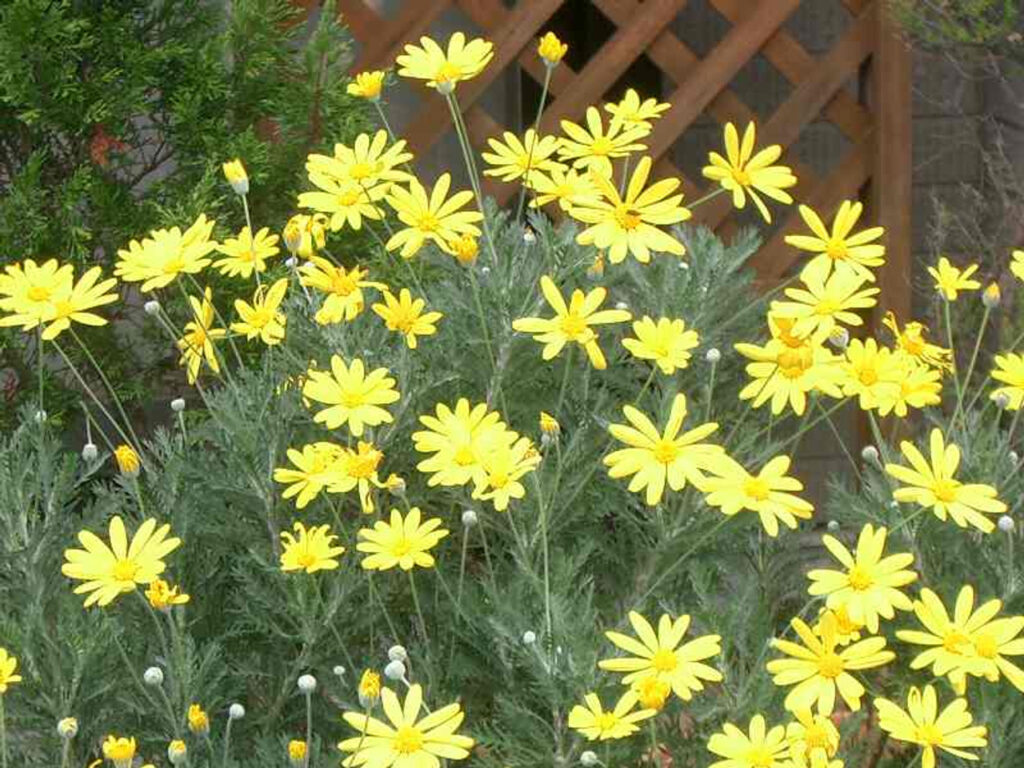
As we wander through our gardens or balconies, it’s not uncommon to stumble upon a beautiful yellow flower that catches our eye. But have you ever stopped to think about its name? For many of us, this stunning bloom is known as the Euryops pectinatus, also affectionately referred to as the Yellow Marguerite. In this in-depth article, we’ll delve into the world of this lovely plant, exploring its origins, cultivation requirements, and some expert tips on how to grow it.
Origins and Habitat
Euryops pectinatus hails from Africa, where it thrives in coastal regions with mild temperatures. This makes it an ideal choice for gardeners living in warmer climates. Its striking yellow flowers are a sight to behold, and its ability to bloom year-round has earned it a special place in the hearts of many plant enthusiasts.
The Euryops pectinatus is a flowering shrub that belongs to the Proteaceae family. It’s native to the coastal regions of South Africa, where it grows wild in areas with mild winters and cool summers. This adaptability has led to its popularity among gardeners and horticulturists looking to add some color and beauty to their outdoor spaces.
Characteristics
This lovely flower boasts beautiful, golden-yellow blooms that appear throughout the summer months. The leaves, which emerge early in spring, have a silver-green hue, while the stems are sturdy and upright. As an evergreen shrub, Euryops pectinatus can grow up to 1.5 meters tall and wide, making it an excellent choice for adding a pop of color to your garden or balcony.
The Yellow Marguerite is known for its striking yellow flowers, which are arranged in clusters along the stems. The blooms themselves are approximately 3-4 cm in diameter and have a delicate, cup-shaped structure. They’re highly fragrant and attract a variety of pollinators, including bees and butterflies.
Cultivation Requirements
To bring this beautiful plant into your life, you’ll need to provide it with the right conditions. Here are some key tips:
- Soil: Euryops pectinatus prefers well-draining soil that’s rich in organic matter. A mix of compost, peat moss, and perlite would be an excellent starting point.
- Sunlight: This plant loves full sun, but it can tolerate partial shade if necessary.
- Watering: During the spring and summer months, water your Euryops pectinatus regularly, making sure not to overwater. In the winter, reduce watering significantly, as this will help prevent root rot.
Planting and Sowing
If you’re new to gardening or looking to start growing the Yellow Marguerite from seed, here are some tips:
- Sow seeds: Sow Euryops pectinatus seeds in well-draining soil with a mix of compost and perlite. Keep the soil moist but not waterlogged.
- Plant seedlings: If you prefer to start with seedlings, choose healthy plants with sturdy stems and leaves. Plant them in well-draining soil and provide adequate sunlight.
Pruning and Maintenance
To keep your plant looking its best, regular pruning is essential. Prune your Euryops pectinatus in late spring or early summer, removing any dead or damaged leaves or stems. This will encourage new growth and maintain the plant’s shape.
Some additional tips for pruning and maintaining your Yellow Marguerite include:
- Remove dead flowers: Remove dead or wilted flowers to prevent seed production and encourage new blooms.
- Trim back stems: Trim back long stems to maintain a bushy, compact shape.
- Fertilize regularly: Fertilize your Euryops pectinatus regularly during the growing season to promote healthy growth.
Pest and Disease Management
To keep your plant healthy and thriving, it’s essential to monitor for pests and diseases. Here are some common issues to watch out for:
- Aphids: Aphids can be a significant problem for Yellow Marguerite plants. Use insecticidal soap or neem oil to control infestations.
- Root rot: Root rot can occur if the plant is overwatered or exposed to excessive moisture. Prune affected roots and adjust watering habits.
Propagation
If you want to share your Yellow Marguerite with friends or family, propagation is a great option. Here are some methods:
- Cuttings: Take 10-15 cm stem cuttings from mature plants in late spring or early summer. Remove lower leaves, dip the cut ends in rooting hormone, and plant in well-draining soil.
- Division: Divide mature plants in the fall to create new offsets. Dig up the entire plant, separate the roots, and replant individual sections.
FaqS: Frequent Questions about Euryops Pectinatus
- Q: How often should I water my Euryops pectinatus?
A: Water your Euryops pectinatus regularly during the spring and summer months, but reduce watering in the winter to prevent root rot. - Q: Can I grow Euryops pectinatus in a container?
A: Yes, but make sure your pot is at least 30 cm in diameter to provide enough room for the plant’s roots. - Q: How often should I prune my Euryops pectinatus?
A: Prune your Euryops pectinatus in late spring or early summer, removing any dead or damaged leaves or stems.
Conclusion
Euryops pectinatus is a stunning addition to any garden or balcony, with its bright yellow flowers and striking silver-green leaves. By following these simple tips on cultivation requirements, pruning, and maintenance, you’ll be well on your way to growing this beautiful plant in no time. Whether you’re a seasoned gardener or just starting out, the Euryops pectinatus is sure to bring joy and beauty to your outdoor space.


