
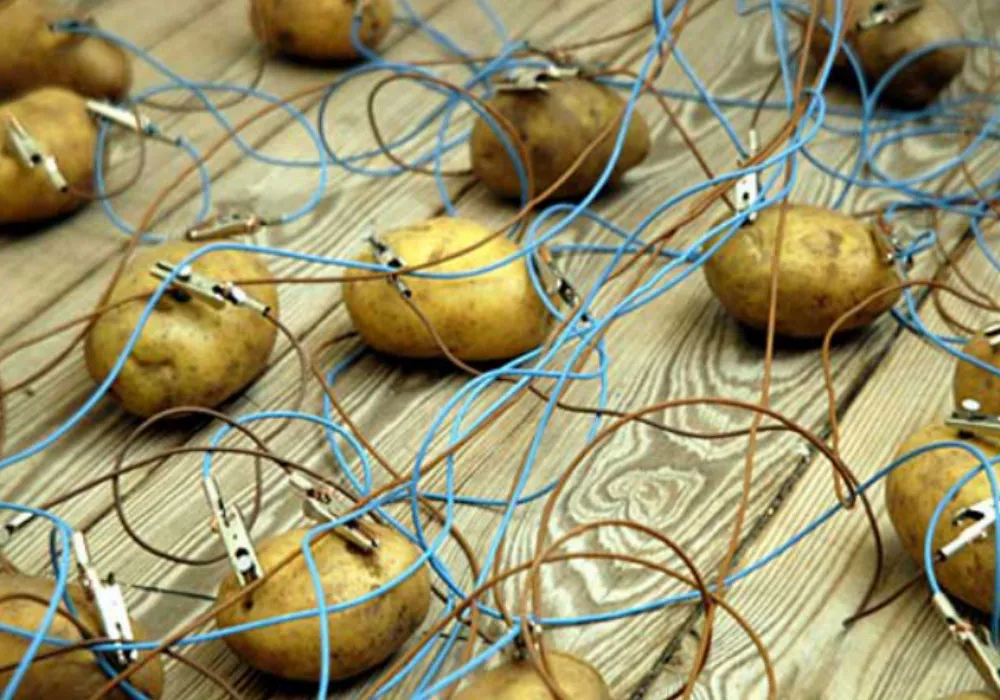
Have you ever wondered how to harness the power of potatoes to generate electricity? In this article, we’ll explore the fascinating world of potato-based electricity generation and provide a step-by-step guide on how to build your own homemade battery using a potato or lemon.
How Does it Work?
The principle behind generating electricity from potatoes is based on the concept of electrolysis. When two different metals are placed in contact with an electrolyte (in this case, the potato or lemon), they react with each other, producing electrons that flow through a circuit and create electricity. This process is similar to how traditional batteries work.
The Science Behind it
In a traditional battery, there are two electrodes (positively charged and negatively charged) connected by an electrolyte. When a chemical reaction occurs between the electrodes and the electrolyte, it releases electrons that flow through the circuit, creating electricity. In our case, we’re using a potato or lemon as the electrolyte, which contains water and other compounds that can facilitate the electrochemical reaction.
Materials Needed
To build your homemade battery using a potato or lemon, you’ll need the following materials:
- Potatoes or lemons
- Two aluminum (or copper) wires
- A small LED light or low-voltage device
- Optional: a multimeter to measure the voltage produced
Step-by-Step Instructions
- Prepare the Potato or Lemon: Cut the potato or lemon in half and make sure they’re dry and free of any dirt.
- Create the Electrodes: Insert one end of each wire into the potato or lemon, making sure they’re not touching each other.
- Connect the Circuit: Connect the two wires to a small LED light or low-voltage device. The positive terminal of the LED should be connected to the aluminum wire, and the negative terminal should be connected to the copper wire.
- Measure the Voltage: If you have a multimeter, use it to measure the voltage produced by your homemade battery.
Tips and Variations
- Use different types of fruits or vegetables to see which one produces the most electricity.
- Experiment with different materials for the electrodes, such as copper wire or metal clips.
- Build a more efficient circuit using multiple potatoes or lemons in series or parallel.
- Add a small capacitor to store excess energy and stabilize the voltage output.
- Use a solar panel or wind turbine to generate additional power and recharge your potato-based battery.
Conclusion
Harnessing the power of potatoes is a fun and educational project that can help you understand the basics of electricity generation. By following these steps and experimenting with different materials, you can create your own homemade battery and start exploring the world of renewable energy. So, go ahead and give it a try – who knows what amazing things you’ll discover?
Frequently Asked Questions (FAQs)
Q: Can I use other fruits or vegetables to generate electricity?
A: Yes! You can experiment with different types of fruits or vegetables to see which one produces the most electricity.
Q: How do I measure the voltage produced by my homemade battery?
A: Use a multimeter to measure the voltage produced by your homemade battery.
Q: Can I use this technology for commercial applications?
A: Currently, this technology is not suitable for commercial applications due to its low voltage output. However, it can be used as an educational tool or for small-scale experiments.
Q: Is this technology environmentally friendly?
A: This technology uses organic materials like potatoes and lemons, making it a more environmentally friendly option compared to traditional batteries.
Q: Can I build a larger battery using multiple potatoes or lemons?
A: Yes! You can experiment with building a larger battery using multiple potatoes or lemons in series or parallel.
Q: How long does the electricity generated by this technology last?
A: The duration of the electricity generated depends on various factors, including the type of fruit or vegetable used, the size of the battery, and the load being powered.
Real-World Applications
While the potato-based battery may not be suitable for commercial applications, it can have a range of real-world applications:
- Education: Use this technology to teach children about electricity generation and renewable energy.
- Emergency Power: In remote areas where traditional power is not available, a potato-based battery could provide emergency lighting or communication devices.
- Sustainable Living: By harnessing the power of potatoes and lemons, we can reduce our reliance on fossil fuels and live more sustainably.
The Future of Potato-Based Electricity
While this technology is still in its infancy, it has the potential to revolutionize the way we think about electricity generation. As research and development continue, we may see:
- Improved Efficiency: More efficient potato-based batteries could be developed, increasing their ability to generate power.
- Scalability: Potato-based batteries could be scaled up for commercial use, providing a sustainable source of energy.
- New Applications: This technology could be used in new and innovative ways, such as powering medical devices or creating sustainable lighting systems.
Conclusion
Harnessing the power of potatoes is an exciting and innovative way to generate electricity. By understanding how it works and experimenting with different materials, you can create your own homemade battery and start exploring the world of renewable energy. Who knows what amazing things you’ll discover?


