
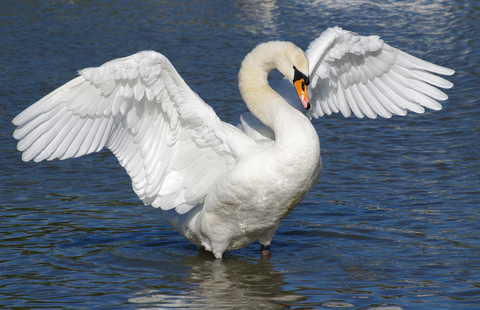
As we delve into the world of birds, few species captivate our imagination like the majestic royal swan. With its stunning white plumage and graceful movements, this elegant creature has been a symbol of beauty, harmony, and transformation for centuries. In this article, we’ll explore the fascinating realm of the royal swan, from its natural habitat to its behavior, characteristics, and conservation status.
The Royal Swan: A Symbol of Change
In folklore and mythology, the royal swan represents a powerful symbol of change and metamorphosis. The classic tale of “The Ugly Duckling” tells the story of a young swan who undergoes a remarkable transformation from a clumsy, ugly duckling to a majestic, beautiful swan. This mythological narrative has captivated our imagination for generations, and we’ll delve into its significance later.
Habitat and Migration
The royal swan (Cygnus olor) is a migratory species that thrives in wetland areas, including lakes, marshes, and rivers. Its natural habitat ranges from the Arctic tundra to sub-Saharan Africa, with populations found in Europe, Asia, and North America. However, not all royal swans migrate; those living in temperate climates, like Italy, are resident birds that do not travel long distances.
In contrast, migratory populations of royal swans travel thousands of miles each year, often gathering in large flocks to overwinter in more southerly latitudes. For instance, the largest concentration of royal swans can be found in the Russian Far East and the Pacific coast of North America. In Europe, these birds typically congregate near Ugento (Puglia) during winter.
Behavior and Characteristics
The royal swan is a territorial bird that exhibits strong social behavior. Both male and female royal swans are known to form long-term monogamous relationships, with some pairs staying together for many years. The couple’s bond is so strong that they’ll work together to incubate eggs and care for their young.
As adults, royal swans display striking white plumage, black beaks, and black legs. Males tend to have a more pronounced “bill” (beak) than females, which can be an indicator of age or dominance. Despite its size, the royal swan is an agile swimmer, with a remarkable ability to dive and maneuver in the water.
Reproduction and Nesting
Royal swans are prolific breeders, with females typically laying between 5 and 8 eggs per clutch. Both parents take turns incubating these eggs for approximately 35 days. The newly hatched cygnets (baby swans) are precocial, meaning they’re relatively mature and able to swim within minutes of hatching.
During this time, the entire family becomes incredibly protective of their territory, often displaying aggressive behavior towards other birds or potential predators. This is particularly true during the incubation period and after the cygnets have hatched. In some cases, parents will even transport their young on their backs to ensure their safety.
The Royal Swan vs. The Black Swan
In contrast to its majestic white plumage, the black swan (Cygnus atratus) is a distinct species found primarily in Australia and southern regions of Asia. These birds are known for their predominantly black feathers, pinkish-red beaks, and webbed feet.
While both species share some similarities, they exhibit notable differences. For instance, the black swan is more sedentary than the royal swan and does not migrate as far. They also tend to form smaller groups or pairs compared to the more social royal swans.
Conservation Status
Unfortunately, many royal swan populations face threats from habitat loss, pollution, and hunting. The species’ numbers have decreased significantly over the years due to these factors, leading to increased vulnerability in certain regions.
However, conservation efforts are underway to protect these magnificent creatures. In Italy, for example, there are initiatives aimed at preserving wetland habitats and promoting sustainable land use practices.
Frequently Asked Questions
Here are some answers to common questions about the royal swan:
- Where can I find a royal swan?
Royal swans can be found in Europe, Asia, Africa, and North America, typically inhabiting wetlands, lakes, and rivers. - What do royal swans eat?
These birds are omnivores, feeding on aquatic plants, insects, and small crustaceans. - Can I keep a royal swan as a pet?
Unfortunately, it’s not recommended to keep royal swans in captivity due to their complex social needs and large space requirements. - Are royal swans endangered?
Some royal swan populations are considered vulnerable or endangered, primarily due to habitat loss and hunting practices. - Can I help protect the royal swan?
Yes! By supporting conservation efforts, reducing your carbon footprint, and promoting sustainable land use practices, you can contribute to the protection of these magnificent creatures.
Interesting Royal Swan Facts
- The royal swan is known for its unique mating ritual, where males perform elaborate courtship displays to attract females.
- These birds are monogamous, with some pairs staying together for over 20 years.
- Royal swans are able to reach speeds of up to 30 km/h (18.6 mph) when swimming, making them well-adapted to their aquatic environment.
- The royal swan’s distinctive white plumage may be a result of its unique genetics, with some populations displaying subtle variations in coloration.
The Royal Swan in Art and Literature
Throughout history, the royal swan has been a popular subject for artists, writers, and musicians. From classical paintings to modern literature, this majestic bird continues to captivate our imagination.
One notable example is the famous poem “The Swan” by Alfred Lord Tennyson, which explores the themes of beauty, mortality, and transformation.
Conservation Efforts
There are several organizations working tirelessly to protect royal swan populations and their habitats. Some examples include:
- The Royal Society for the Protection of Birds (RSPB)
- The World Wildlife Fund (WWF)
- The International Union for Conservation of Nature (IUCN)
By supporting these efforts, we can help ensure the long-term survival of this incredible species.
Conclusion
In conclusion, the royal swan is a truly majestic species that embodies beauty, elegance, and transformation. Through our exploration of its habitat, behavior, characteristics, and conservation status, we’ve gained a deeper appreciation for this incredible bird.
As we continue to face the challenges of climate change, habitat destruction, and human-wildlife conflict, it’s essential that we prioritize the protection of species like the royal swan.
By working together, we can ensure that these magnificent creatures thrive for generations to come.


