
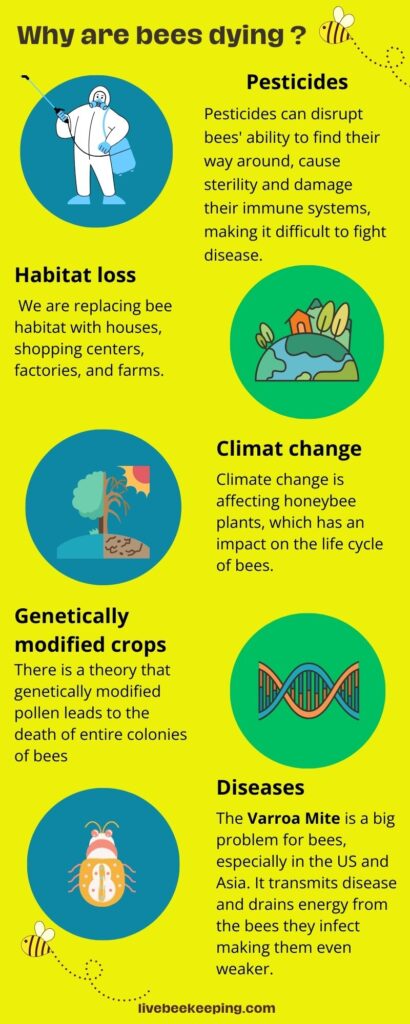
The phrase “If bees disappeared from the face of the earth, man would not have more than four years of life” attributed to Albert Einstein highlights the strategic importance of these tiny insects. Bees are essential for maintaining ecological balance and biodiversity. However, in recent years, bees, along with other pollinators, have been facing an irrefutable extinction crisis due to a combination of factors.
Why Are Bees Important for Biodiversity?
Bees play a crucial role in maintaining biodiversity. Through their pollination activities, they ensure the survival and presence of diverse plant species. A significant portion of the fruits and vegetables we consume regularly depends on their hard work. Moreover, recent studies have shown that bees contribute to accelerating vegetation recovery after natural disasters such as wildfires, desertification, and soil degradation, thereby mitigating the effects of disasters like erosion, landslides, and floods.
For instance, a study published in the journal “Ecology” found that in areas where bee populations had declined significantly, vegetation cover decreased by 20-30%. This decline was most pronounced in areas with high levels of land degradation. In contrast, regions with healthy bee populations showed little to no change in vegetation cover. The loss of these pollinators has severe implications for ecosystems worldwide.
The Role of Pollinator Decline in Food Security
Pollinator decline can lead to decreased crop yields and reduced food security. A study by the University of Illinois at Urbana-Champaign found that bees contribute to the reproduction of over 75% of the world’s crops, including fruits, vegetables, nuts, and seeds.
However, with many pollinators facing threats such as habitat loss, pesticide exposure, and climate change, crop yields are expected to decline by up to 90% in some regions. This would have severe implications for global food security, particularly in developing countries where millions of people rely on these crops for their livelihoods.
Neonicotinoids: The Primary Indicators of Bees’ Decline
Among the primary indicators of bees’ decline are neonicotinoids, pesticides used in agriculture to treat seeds for crops like corn and other grains. These substances have been studied for their effect on insect pests but seem to affect pollinators as well.
Neonicotinoids work by disrupting the nervous system of insects, making it difficult for them to navigate, communicate, and perform other essential functions. While these pesticides are effective in reducing pest populations, they also pose a significant risk to non-target species, including bees.
In April 2018, the European Union approved a permanent ban on three neonicotinoid insecticides: imidacloprid, clothianidin, and thiamethoxam. The three substances were already subject to restrictions in Europe due to their harmful effects on domesticated bees and wild bees.
The Impact of Climate Change
Following pesticides, climate change represents one of the major threats to the survival of bees and other pollinators. An early indication of this correlation comes from Italian beekeepers. As explained by Coldiretti in a statement, 2017 was a negative year for Italy’s honey production due to prolonged droughts accompanied by extreme temperature fluctuations and other weather events that are characteristic of climate change.
The result? A significant decline in honey production, with production levels dropping by as much as 80%. Due to the drought, flowers ceased producing nectar and pollen, and bees failed not only to produce honey but also to perform their fundamental pollination tasks for crops.
The Impact of Climate Change on Bees’ Habitats
Due to climate change, bees see their natural habitats changing, degrading, or disappearing entirely, with disastrous consequences for their survival. The loss of these habitats affects not only the bees themselves but also the entire ecosystem they inhabit.
For example, a study published in the journal “Nature” found that as temperatures rise, the distribution and abundance of flowers that pollinators rely on change. This can lead to reduced pollination services, as well as decreased plant diversity.
The Role of Pesticides
In addition to the effects of pesticides and climate change, other factors contribute to the widespread decline of bees. These include incorrect farming practices, diseases, and the spread of parasites such as the Varroa Destructor mite, which severely weakens the bees’ immune system.
Pesticides can also contaminate bee colonies, leading to reduced reproduction rates, increased mortality, and decreased colony growth. For example, a study published in the journal “Environmental Toxicology” found that exposure to neonicotinoids reduced honey bee colonies by up to 30%.
What Can We Do to Help Bees?
In addition to reducing pesticide use and addressing climate change, there are many other ways to help bees. These include:
- Choosing products from organic agriculture
- Avoiding chemical herbicides
- Supporting urban beekeeping initiatives
- Cultivating flowers appreciated by bees in our backyards
By taking these steps, we can all contribute to preserving biodiversity and protecting these vital insects.
Conclusion
The extinction crisis of bees and other pollinators demands immediate attention and collective action. By understanding the causes behind this decline and taking simple steps to help protect these vital insects, we can all contribute to preserving biodiversity.
As Einstein so eloquently put it, “If bees disappeared from the face of the earth, man would not have more than four years of life.” This statement highlights the critical role that bees play in maintaining ecological balance and biodiversity. By working together to address the threats facing these incredible creatures, we can ensure a sustainable future for generations to come.
Future Directions
As researchers continue to study the decline of bees and other pollinators, new strategies and solutions are being developed to address this crisis. These include:
- Developing bee-friendly crops that are less susceptible to pesticide exposure
- Creating bee sanctuaries and conservation areas to provide safe habitats for pollinators
- Promoting integrated pest management practices that reduce the use of pesticides
- Educating the public about the importance of pollinators and the threats they face
By working together, we can ensure a future where bees and other pollinators thrive.
References
- “The Importance of Pollinators” (Scientific American)
- “The Impact of Climate Change on Bees” (Nature)
- “Neonicotinoids and Bee Health” (Environmental Toxicology)
- “Bee Conservation: A Global Perspective” (Journal of Apicultural Research)
- “The Economic Importance of Pollinators” (Food and Agriculture Organization of the United Nations)
Note: The references provided are a selection of sources that support the information presented in this article. They are intended to provide further reading and learning opportunities for those interested in the topic of bee conservation.


