
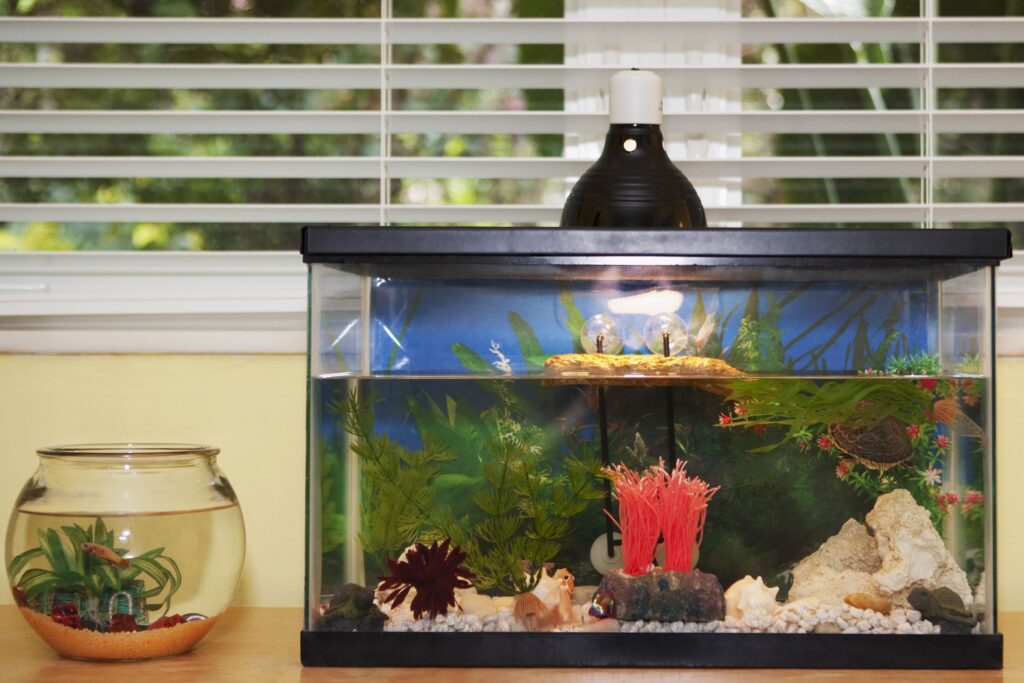
As you embark on transforming your freshwater aquarium into a thriving marine environment, it’s essential to understand that only two components are required for success:
- Heater
- Tank
Don’t worry; we’ll guide you through the process step by step.
Preparing Your Freshwater Aquarium for Marine Life
If your aquarium is covered, you can remove the lid with lights attached. For an uncovered aquarium, simply clean and prepare a new tank to accommodate:
- Gravel (tropical sand, preferably quarzated)
- Live rocks
- Skimmer (optional but highly recommended)
- New filter
- Lights
- Water pump (optional)
Now, let’s focus on the most expensive components: the skimmer and lights.
The Cost of Transforming Your Freshwater Aquarium
The cost of converting your freshwater aquarium into a marine environment varies greatly depending on the size of your tank and the number of fish you plan to keep. We’ll break down some estimated costs for each component:
Filter for Marine Aquariums
We recommend purchasing an external filter, which will not take up space in your new aquarium and won’t ruin the appearance of your marine setup. A good external filter that can filter 100-120 liters of water per hour is available for around $60.
If you prefer to keep your old freshwater filter, it’s essential to note that it may only have activated carbon, which will not provide the same level of filtration as a dedicated marine filter. Your new external filter will require additional components, including activated carbon (around $10-13 per 3-4 months), sponge filters, and chemical filters (around $15-20 per 2 months).
Skimmer
A skimmer is an essential component for maintaining your marine aquarium’s water quality. It helps remove proteins from the water, which can be detrimental to fish health. Without a skimmer, you’ll need to perform frequent water changes. A high-quality skimmer can be purchased for around $90-170, depending on its capacity and brand.
Some popular options include:
- Tunze Skimmers (around $85)
- MagTool Proteic Skimmers (around $75)
You can store these components in a closet or hidden area to maintain the appearance of your aquarium during setup.
Lights for Marine Aquariums
The cost of lights is directly related to the depth and size of your tank, as well as the type of lighting you choose. It’s essential to invest in high-quality lights that will provide the necessary light spectrum for your marine life.
A water pump can also be beneficial, as it will help maintain water circulation and prevent stagnation. While pumps are relatively inexpensive, a good quality one can range from $20 to $50, depending on its size and capacity.
Live Rocks
Live rocks are an essential component of any marine aquarium, providing a base for your ecosystem and serving as a food source for your fish. The cost of live rocks varies greatly depending on their origin and quality. Fiji coral reefs are renowned for their high-quality corals, but there are also affordable alternatives available.
For a 60-liter tank, you’ll need around 6 kg of live rocks, which can cost between $80-90 per kilogram.
Gravel
We recommend using tropical sand (around $5-10 per kilogram) instead of regular gravel. This type of sand is less prone to staining and requires minimal maintenance before use.
Setting Up Your Marine Aquarium
Now that we’ve covered the necessary components, let’s dive into setting up your marine aquarium. Here are some additional tips:
- Set up your filter and skimmer according to the manufacturer’s instructions.
- Connect your lights and water pump (if using).
- Rinse your live rocks in a bucket of saltwater to remove any debris or sediment.
- Place your gravel in the tank, following the manufacturer’s recommended depth.
- Add decorations and other ornaments as desired.
The Stabilization Phase
After setting up your new marine aquarium, you’ll need to allow it to stabilize for a month or so. During this time, your live rocks will begin to activate, and your fish will acclimate to their new environment. This period of stabilization is crucial for the health and well-being of your aquatic life.
During this initial phase, you may experience an “algae boom” due to the sudden change in water chemistry. Don’t worry; this is a normal response, and the algae should disappear naturally within a short period.
Tips for a Successful Marine Aquarium
To ensure a successful transition from freshwater to marine, follow these additional tips:
- Maintain proper water chemistry, including pH levels, ammonia, nitrite, and nitrate.
- Regularly perform water changes (around 10-20% every week).
- Monitor your fish’s behavior and health closely.
- Perform regular tank maintenance, including cleaning the glass, gravel, and decorations.
Conclusion
Transforming your freshwater aquarium into a thriving marine environment requires careful planning, attention to detail, and a willingness to invest time and money. By following these steps and choosing high-quality components, you’ll be well on your way to creating a stunning and healthy marine ecosystem.
Frequently Asked Questions (FAQs)
- What is the most expensive component of transforming a freshwater aquarium into a marine environment?
The skimmer and lights are the two most expensive components, with prices ranging from $90-170 for a skimmer and $20-50 for a water pump.
- How long does it take for my new marine aquarium to stabilize?
It’s recommended to allow your new marine aquarium to stabilize for at least a month before introducing fish and other aquatic life.
- What type of gravel should I use in my marine aquarium?
We recommend using tropical sand (around $5-10 per kilogram) instead of regular gravel, as it’s less prone to staining and requires minimal maintenance.
- Can I keep the same filter used for my freshwater aquarium?
No, it’s not recommended to reuse your old freshwater filter with a marine aquarium. Instead, invest in a dedicated external filter that provides better filtration and water quality.
- What is an algae boom, and how can I prevent it?
An algae boom is a normal response to the sudden change in water chemistry during the stabilization phase of your new marine aquarium. To prevent it, ensure proper lighting, maintain good water circulation, and perform regular water changes.
- How often should I perform water changes in my marine aquarium?
It’s essential to perform regular water changes (around 10-20% every week) to maintain optimal water quality and stability in your marine aquarium.
- What are some popular brands for skimmers and other marine aquarium components?
Some popular options include Tunze, MagTool, and Eheim.
- How do I choose the right lighting for my marine aquarium?
When choosing lighting for your marine aquarium, consider factors such as tank size, depth, and the type of fish you’ll be keeping. It’s essential to invest in high-quality lights that provide the necessary light spectrum for your aquatic life.


