
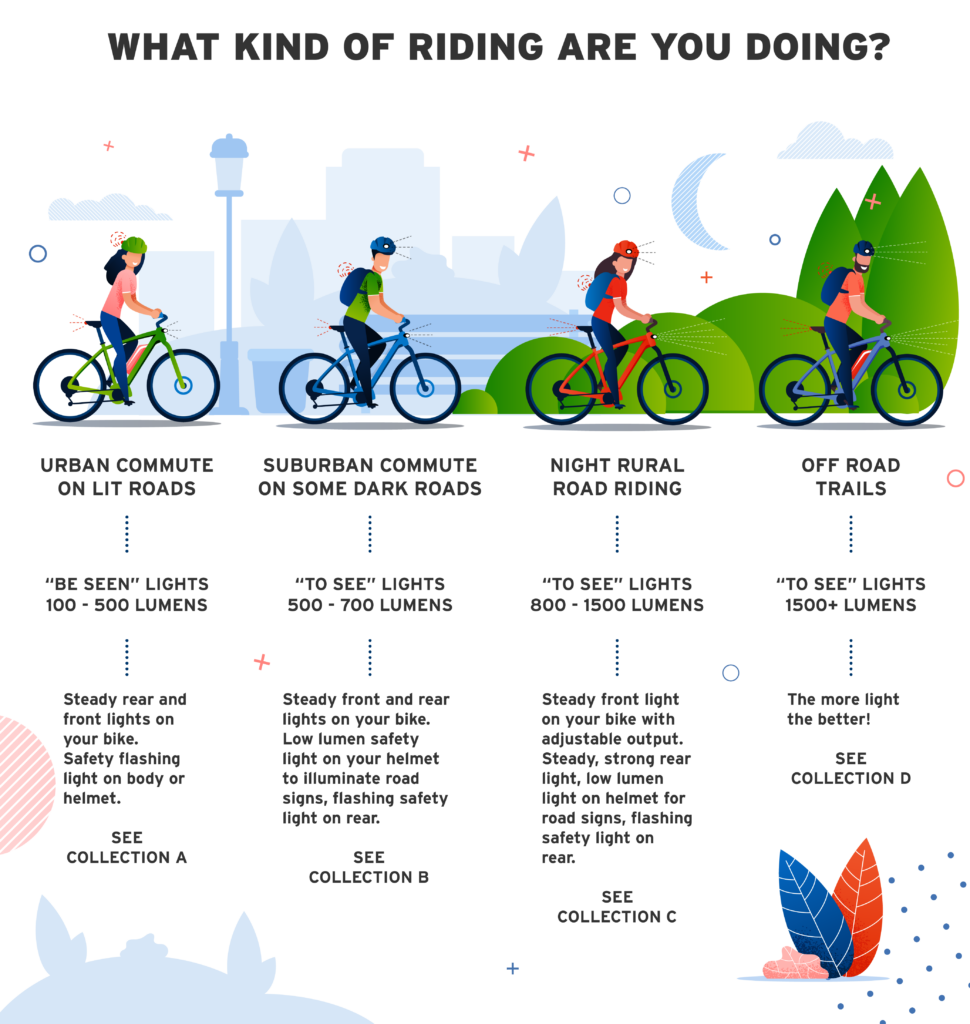
As a regular cyclist, you’re likely aware that riding in low-light conditions can be challenging. To ensure your safety and visibility, it’s essential to choose the right lights for your bike. With various options available, selecting the perfect lights can seem overwhelming. In this article, we’ll guide you through the different types of lights, their features, and how to choose the best one for your needs.
Light Types
Before diving into the specifics, let’s familiarize ourselves with the main light types:
- Dynamo Lights: A vintage option that uses the bike’s dynamo to generate electricity. While still available, these lights can be cumbersome and less efficient.
- LED Lights: The most popular choice, LED lights are energy-efficient and produce a high lumen output. They’re also relatively affordable and come in various styles.
- Incandescent Lights (Halogen or HID): These lights use a filament to produce light and are less common nowadays. However, they can still be found and offer a unique feature set.
- High-Intensity Discharge (HID) Lights: These lights use an electric arc to produce light and are known for their high lumen output.
The Evolution of Bike Lighting
Bike lighting has come a long way since the early days of dynamo lights. Modern bike lights have become more efficient, affordable, and accessible. LED lights, in particular, have revolutionized the industry with their energy efficiency and versatility. When choosing a bike light, it’s essential to consider the type of light that suits your riding needs.
Installing Bike Lights
When it comes to installing bike lights, there are three primary positions:
- Front Light: Mounts on the handlebars or fork, providing light in front of the rider.
- Rear Light: Mounted under the saddle or tube, illuminating the road behind the cyclist.
- Headlight: For added visibility, some lights attach to the helmet.
When choosing a bike light, consider the following installation options:
- Handlebar-mounted lights: These are the most common type of front light and offer ease of installation.
- Fork-mounted lights: These provide additional mounting options for handlebars or forks.
- Saddle-mounted lights: Rear lights can be mounted under the saddle or tube for easy visibility.
Choosing the Right Lights for Your Bike
When selecting bike lights, consider the following factors:
- Lumen Output: Aim for a minimum of 300 lumen for urban cycling and up to 700 lumen for longer rides or low-light conditions.
- Certification: Look for FL-1 certification to ensure the claimed lumen output is accurate.
- Adjustability: A regalable light can be useful for adjusting brightness based on the environment.
- Water Resistance: Ensure the lights are water-resistant (IP67 rating) to withstand unexpected rain or snow.
Practical Considerations
When choosing bike lights, think about:
- Ease of Installation and Removal: Opt for lights with simple designs that make installation and removal easy.
- Rechargeability: Consider lights with USB rechargeable batteries or a built-in battery for convenient operation.
- Additional Features: Some lights come with additional features like flash modes or adjustable beam patterns.
Types of Bike Lights
There are various types of bike lights available, each with its unique features and benefits. Here are some common types:
- Standard LED lights: These provide a high lumen output and are suitable for urban cycling.
- High-visibility LED lights: These offer increased visibility and are designed for longer rides or low-light conditions.
- LED light bars: These provide additional lighting options and can be mounted on the handlebars or fork.
The Benefits of LED Lights
LED lights have become a popular choice among cyclists due to their energy efficiency, durability, and versatility. Some benefits of LED lights include:
- Energy Efficiency: LED lights consume less power than traditional incandescent lights.
- Durability: LED lights are resistant to corrosion and can withstand extreme temperatures.
- Versatility: LED lights come in various styles and can be mounted on different parts of the bike.
The Future of Bike Lighting
As technology advances, bike lighting is becoming increasingly sophisticated. Some trends that are shaping the future of bike lighting include:
- Wireless charging: Wireless charging systems are becoming more common, allowing riders to charge their lights without the need for cables.
- Smart bike lights: Smart bike lights can be connected to a rider’s smartphone or computer, providing real-time data on battery life and light performance.
Conclusion
Choosing the right bike lights can be overwhelming, but by considering your needs and preferences, you can find the perfect set. Remember to prioritize lumen output, certification, adjustability, and water resistance when making your selection. With the right lights on your bike, you’ll be better equipped to navigate low-light conditions safely and confidently.
Frequently Asked Questions
- What is the minimum lumen output for bike lights?
A minimum of 300 lumen is recommended for urban cycling. - How do I choose the best LED light for my bike?
Consider factors like lumen output, certification, adjustability, and water resistance when selecting an LED light. - Can I use a regular flashlight as a bike light?
No, it’s not recommended to use a regular flashlight as a bike light due to safety concerns and limited visibility. - How often should I replace my bike lights?
Replace your bike lights every 1-2 years or when the battery is no longer holding a charge. - Can I use a bike light in both urban and rural areas?
Yes, many bike lights are designed to be versatile and suitable for both urban and rural areas.
By following these guidelines and considering your specific needs, you can find the perfect set of bike lights to enhance your cycling experience.


