
The Fascinating World of Sarracenia: Carnivorous Plants Like No Other
Tucked away in the Americas, there’s a unique group of plants that will leave you wondering – are they predators or prey? Welcome to the fascinating world of Sarracenia, carnivorous plants like no other. In this article, we’ll delve into their characteristics, habitats, and species, exploring what makes them so intriguing.
What Are Sarracenia Plants?
Belonging to the Sarraceniaceae family, these plants have been captivating plant enthusiasts for centuries. Originating from America, they thrive in temperate climates with paludose soils and moderate humidity levels. But what sets them apart is their unique ability to capture prey using specialized mechanisms.
Sarracenia Characteristics
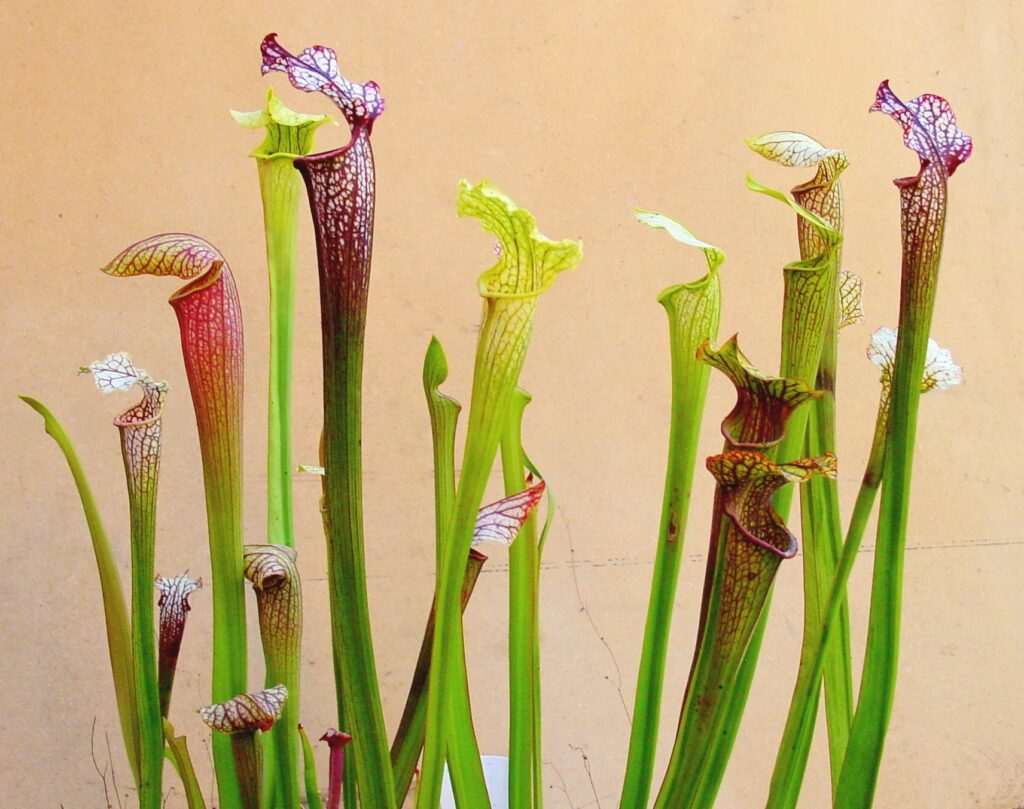
One of the most striking features of Sarracenia plants is their unique shape. The ascidio, a tubular structure, serves as the main trap for insects. This cone-shaped structure varies in length and width depending on the species. The ascidio’s coloration also plays a crucial role, with shades ranging from green to reddish hues.
These plants are herbaceous perennials with developed rhizomes and tubular leaves that form rosettes at their base. The leaves act as traps for insects attracted by nectar or vibrant colors. Additionally, the leaves contain enzymes necessary for breaking down prey, making Sarracenia plants efficient predators.
How Do Sarracenia Plants Capture Prey?
The mechanism of capture is fascinating and complex. Inside the ascidio, there are three to five distinct zones: the opercolo (outer layer), peristoma (middle zone), and microflora-containing areas (zones 3-4). The fifth zone, if present, houses specialized enzymes for digestion.
Insects entering the ascidio die due to asphyxiation or drowning in water. Microorganisms already present within the trap begin breaking down the prey’s remains. This process is enhanced by enzymes produced by the plant itself. However, it’s worth noting that these enzymes play a minor role compared to the microbial community.
Sarracenia Habitat
These plants are relatively rare and limited to specific regions, primarily found on southeastern US coastlines. The S. purpurea species has been known to venture northward into the Great Lakes region of Canada and even naturalized in countries such as Ireland, the UK, Germany, and Switzerland.
In general, Sarracenia thrive in humid environments with low pH levels, requiring nutrient-poor conditions that can only be fulfilled by capturing insects. This adaptation allows them to survive and grow in areas where other plants would struggle.
Sarracenia Species
Let’s explore some of the most fascinating species within this group:
- Sarracenia Alata: Widely distributed throughout southern US states, such as Texas and Alabama. Requires a specific substrate (torf bough brown peat or quartz sand) with pH levels between 3-4.5.
- Sarracenia Purpurea: Notable for its lack of digestive enzymes, it relies on external microorganisms to break down prey.
When cultivating these plants, it’s essential to provide distilled water only through a sittewatering system or carefully pouring water over the plant without overflowing. As winter approaches, remove the substrate and maintain a moist environment to simulate growth.
Frequently Asked Questions
Q: What is unique about Sarracenia plants?
A: Their carnivorous nature allows them to capture prey using specialized mechanisms like nectar, colors, or shape of their leaves.
Q: How do Sarracenia plants digest their captured prey?
A: They use both enzymes from the plant itself and microorganisms within the trap for digestion.
Q: Are all Sarracenia plants carnivorous?
No, some species like Sarracenia Purpurea lack digestive enzymes but still capture and digest insects using external organisms.
Q: What is required to cultivate Sarracenia plants?
A suitable substrate, moderate humidity levels, and controlled watering are necessary for successful cultivation.
Q: Where can I find Sarracenia plants in the wild?
They are primarily found on southeastern US coastlines and have naturalized in countries like Ireland and Switzerland.
Understanding these fascinating carnivorous plants requires attention to detail. By exploring their unique characteristics, habitats, and species, we can gain a deeper appreciation for the intricate mechanisms that allow them to thrive in challenging environments.


