
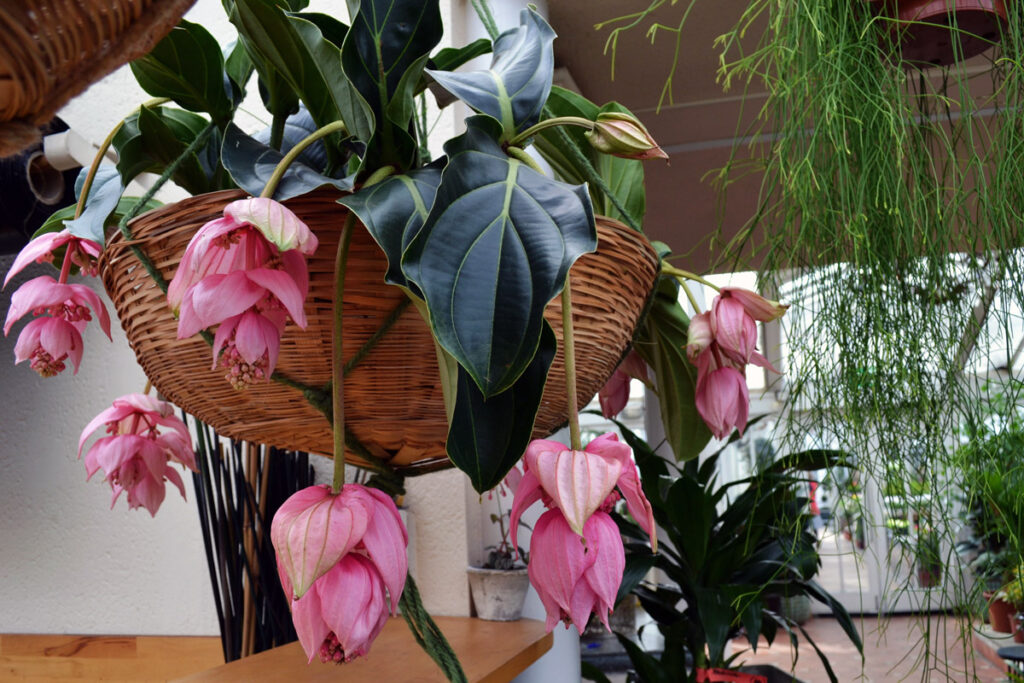
Medinilla magnifica, also known as the majestic medinilla, is a tropical plant native to the Philippines. Its large leaves and showy pendulous flowers have made it a popular choice among plant enthusiasts. With its low-maintenance requirements and ability to thrive in indoor conditions, medinilla magnifica has become a sought-after species for apartment dwellers.
Origin and History
Medinilla magnifica is named after Josè Medinilla de Pineda, the first person to observe this beautiful plant in the Marianne Islands. Despite its popularity, the medinilla magnifica remains relatively unknown outside of tropical regions. The plant’s discovery was a significant moment in botany, as it introduced new species and characteristics to the scientific community.
Characteristics and Care
Medinilla magnifica can grow up to 1 meter in height with a diameter of about 60 cm. The plant requires minimal care, making it an ideal choice for busy individuals. However, it does need proper lighting, watering, and fertilization to thrive. Medinilla magnifica has a moderate growth rate, meaning it will grow faster in the right conditions.
Flowering and Fruiting
The medinilla magnifica blooms from spring onwards until summer, typically around June-July. The flowers are pendulous, making them a stunning addition to any indoor space. To encourage continuous blooming, remove dead flowers as they fade. Medinilla magnifica can produce small white or yellowish berries, but this is not a common feature in most plants.
Caring for Medinilla Magnifica: Essential Tips
To keep your medinilla magnifica happy and healthy:
- Provide bright, indirect light but avoid direct sunlight
- Maintain proper humidity levels (around 50-60%) to prevent leaf drop
- Water regularly, allowing the soil to dry slightly between waterings
- Fertilize with a balanced liquid fertilizer during the growing season
- Prune dead flowers and foliage to maintain plant shape
Common Issues and Solutions
If your medinilla magnifica is experiencing issues:
- Leaf drop: Check humidity levels, watering schedule, and fertilization. Avoid over-fertilizing.
- Lack of blooms: Ensure proper lighting, watering, and fertilization.
- Pests or diseases: Inspect the plant regularly for signs of pests or disease. Treat promptly if necessary.
Propagation and Reproduction
One of the most popular methods for propagating medinilla magnifica is through stem cutting (or “talea”). Cut a 10-15 cm section from a healthy stem in late summer or early fall. Allow the cut end to dry for a few days before planting it in a well-draining potting mix.
Propagation Techniques
In addition to stem cutting, you can also propagate medinilla magnifica through division, layering, and seed germination. However, these methods are less common and require careful handling to avoid damaging the roots or plant tissue.
- Division: Divide mature plants in late winter or early spring by separating the rhizome into sections.
- Layering: Bend a long stem down towards the soil and secure it with a rock or U-shaped wire. Fill the area between the stem and soil with potting mix, then wait for roots to develop before planting.
- Seed germination: Medinilla magnifica seeds are rare in cultivation, but you can try sowing them indoors in the spring.
Conclusion
With its stunning appearance and low-maintenance requirements, medinilla magnifica has become a favorite among plant enthusiasts. By following proper care guidelines and understanding common issues, you can enjoy this tropical beauty in your home for years to come.
Frequently Asked Questions (FAQs)
- Q: Is Medinilla Magnifica easy to care for?
A: Yes, medinilla magnifica is a low-maintenance plant that thrives in indoor conditions with proper care. - Q: Can I grow Medinilla Magnifica outdoors?
A: While it can be grown outdoors in tropical regions, medinilla magnifica is typically grown indoors due to its sensitivity to extreme temperatures and humidity fluctuations. - Q: How often should I water my Medinilla Magnifica?
A: Water your medinilla magnifica when the top inch of soil feels dry to the touch. Avoid overwatering, which can lead to root rot. - Q: Can I fertilize my Medinilla Magnifica during winter?
A: Yes, you can fertilize your medinilla magnifica year-round with a balanced liquid fertilizer. - Q: How do I propagate Medinilla Magnifica through stem cutting?
A: Cut a 10-15 cm section from a healthy stem in late summer or early fall. Allow the cut end to dry for a few days before planting it in a well-draining potting mix. - Q: Can I grow Medinilla Magnifica in low-light conditions?
A: No, medinilla magnifica requires bright, indirect light to thrive. Avoid placing it near windows or doors that receive direct sunlight. - Q: Is Medinilla Magnifica toxic to pets or humans?
A: While medinilla magnifica is non-toxic to humans, it may cause gastrointestinal upset if ingested by pets. Keep an eye on your pets around the plant. - Q: Can I propagate Medinilla Magnifica through division?
A: Yes, you can divide medinilla magnifica plants in late winter or early spring. However, this method is less common and requires careful handling to avoid damaging the roots.
Medinilla Magnifica Varieties
While medinilla magnifica is a popular species, there are several variations available:
- ‘Majestic’ Medinilla: A classic variety with showy pendulous flowers
- ‘Gold Leaf’ Medinilla: Features bright golden leaves and smaller flowers
- ‘Alba’ Medinilla: White-flowered variant with more compact growth
Growing Tips for Beginners
For those new to plant care, here are some tips for growing medinilla magnifica:
- Choose a container with good drainage holes
- Use a well-draining potting mix specifically designed for tropical plants
- Water regularly but avoid overwatering
- Provide bright, indirect light and maintain proper humidity levels
Common Mistakes to Avoid
When growing medinilla magnifica, be aware of the following common mistakes:
- Over-watering: This can lead to root rot and plant death.
- Under-lighting: Medinilla magnifica requires bright, indirect light to thrive.
- Pests or diseases: Regularly inspect your plant for signs of pests or disease.
By following these guidelines and tips, you’ll be well on your way to growing a healthy and thriving medinilla magnifica in your home.


