
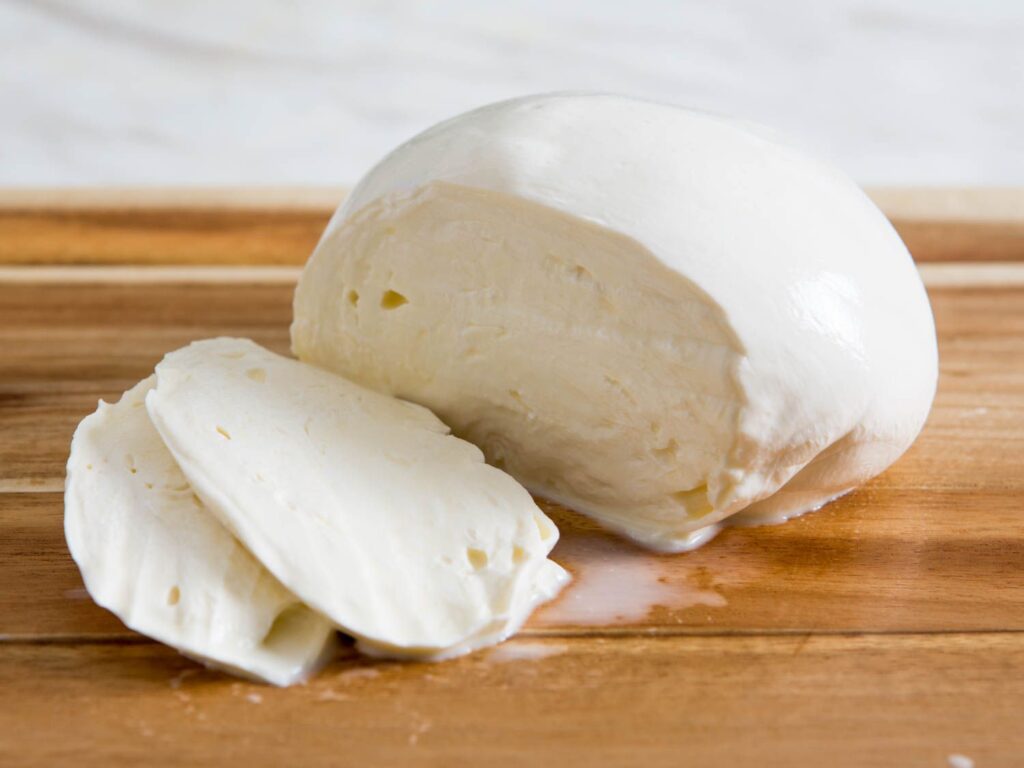
As we begin our journey to learn how to make mozzarella, let’s consider the fact that we can produce it ourselves and that achieving good results isn’t too difficult. Let’s take a look: mozzarella is one of the few cheeses that can be made at home, despite its softness and deliciousness, making it perfect for any ordinary bread, pizza or salad.
A curiosity that may seem obvious but I had not realized until now: the term “mozzarella” comes from the operation called “mozzatura”, used to separate the dough into various pieces. It’s not a regal name by any means, but it’s certainly royal in the world of Mediterranean cuisine and the golden white or pearl of our table and ambassador of taste throughout the world.
Making Mozzarella at Home: Ingredients
To start learning How to make mozzarella at home, we’ll need 3.8 liters of Whole milk pasteurized. Don’t use ultra-pasteurized milk, as it won’t form a solid curd to make mozzarella. It may seem strange, but we’ll understand everything later. In addition to the milk, we’ll also need half a sheet or 2.5 ml of liquid rennet, 175 ml of distilled water, 2 teaspoons of citric acid powder (or 10 ml of lemon juice) and a pinch of salt, approximately 50 grams.
The Importance of Using High-Quality Ingredients
When it comes to making mozzarella at home, the quality of the ingredients used is crucial. The type of milk you use will greatly impact the flavor and texture of your final product. Whole milk pasteurized is the preferred choice for making mozzarella, as it provides a rich and creamy texture.
The rennet used should be liquid and specifically designed for cheese production. Some cheeses may require a different type of rennet, so make sure to check the instructions before using any recipe. Citric acid powder or lemon juice will help to lower the pH of the milk and create an environment that allows the curds to form properly.
A Reminder When We’ve Finally Mastered How to Make Mozzarella at Home
After we’ve learned How to make mozzarella at home and got it right, let’s remember to store it by wrapping it in transparent plastic wrap or placing it in an airtight container. It should be stored in the fridge and will last up to a week, even when frozen for up to a month.
The Making Process of Mozzarella: Step-by-Step
While making mozzarella at home is not overly complicated, we’ll break down the process into steps so that you won’t miss anything. Here’s how it goes:
-
Pasteurizing the Milk: Begin by heating the milk to 82°C in a large pot. Hold the temperature for 10-15 minutes to kill any bacteria or other microorganisms that may be present.
-
Adding Rennet and Citric Acid: Once the milk has cooled slightly, add the liquid rennet to 1/4 cup of chilled distilled water and mix until dissolved. Add the citric acid powder or lemon juice to 120 ml of chilled distilled water and mix well.
-
Mixing the Milk: Pour the acidic mixture into the pasteurized milk and gently mix it with a whisk until just combined.
-
Heating the Mixture: Continue heating the mixture at low heat, stirring occasionally, until it reaches 31°C. Be careful not to overheat the mixture, as this can cause the curds to become too firm or even separate from the whey.
-
Adding Rennet Solution: Once the mixture has reached 31°C, add the rennet solution and mix gently for about a minute. This will help to strengthen the casein network in the milk.
-
Resting the Mixture: Remove the pot from the heat and let it rest for 15 minutes. During this time, allow the curds to separate from the whey. You can check on the mixture by gently cutting into it with a knife or cheese cutter. If it’s still too liquid, let it rest for another 5-10 minutes.
-
Cutting the Curds: Once the mixture has rested for the desired amount of time, cut it into small cubes using a cheese cutter or sharp knife. This will help to release more whey and create a smooth, even texture.
-
Draining the Whey: Transfer the curd mixture to a colander lined with cheesecloth or a clean, thin kitchen towel. Allow the whey to drain off for about 30-40 minutes, or until most of it has been removed.
-
Shaping the Mozzarella: Gather up the edges of the cheesecloth and give the curds a gentle squeeze to remove any remaining whey. Transfer the mozzarella to a plate or cutting board and use your hands to shape it into a ball or other desired form.
-
Final Shaping: Once you’ve shaped your mozzarella, gently press down on it with your thumbs to create a smooth, even surface. You can also add any final touches, such as sprinkling with salt or flavorings like basil or oregano.
Types of Mozzarella: A Guide
Did you know that there are many types of mozzarella? As cheese enthusiasts, we should know them all! Let’s start with the well-known mozzarella di bufala campana, produced in Campania, particularly in the provinces of Caserta and Salerno. It can also be called “Avellinese” or “Piana del Volturno”, depending on where it’s produced. There are different shapes: round, small to large (up to half a kilogram), the treccia shape, which is very popular in the Avellino region, and then there’s the version of dried mozzarella.
There are also other types of mozzarella, such as mozzarella vaccina, also known as fior di latte, mainly produced in Campania, Puglia, Calabria, Basilicata, Marche, Lazio meridionale, Abruzzo and Molise. Then there’s the pecorino-style mozzarella, also called “mozzarellapecorella”, typical of Sardinia, Abruzzo and Lazio. In Lazio, it’s also known as “mozzapecora”.
The caprine-style mozzarella is a recent variety that has gained popularity among those who can’t digest milk from cows. There’s also the variation made with mixed milk.
For pizza lovers, there’s even a special type of mozzarella according to a law, recognized for having less water and fat.
In the world of mozzarella shapes, today we have various forms: round, spheroidal, in different pieces: bocconcino (80-100 grams), larger than that, treccia shape, and roly-poly. Only industrial mozzarella is used as a finishing touch. In Molise or Puglia, you can also find the version of fiaschetto.
Common Questions About Mozzarella
As we’ve learned how to make mozzarella at home, here are some common questions that may come up:
Q: How long does it take to make mozzarella?
A: The time it takes to make mozzarella will depend on the recipe and the desired texture. Generally, it can take anywhere from 30-60 minutes to an hour to make mozzarella.
Q: Can I use different types of milk to make mozzarella?
A: Yes, you can use different types of milk to make mozzarella, but be aware that some may not produce the same results as whole milk pasteurized. Experiment with different milks to find what works best for you.
Q: How do I store my homemade mozzarella?
A: To store your homemade mozzarella, wrap it in transparent plastic wrap or place it in an airtight container. Store it in the fridge and it will last up to a week, even when frozen for up to a month.
Tips and Variations
As we’ve learned how to make mozzarella at home, here are some tips and variations you can try:
- Add flavorings: Try adding different herbs or spices to your mozzarella for unique flavors. Some popular options include basil, oregano, garlic, and chili flakes.
- Experiment with shapes: While traditional mozzarella is made in balls, feel free to experiment with other shapes like spheres or cylinders.
- Use different milks: As mentioned earlier, you can use different types of milk to make mozzarella. Try using goat’s milk or sheep’s milk for a unique flavor and texture.
If you enjoyed this article, please follow me on:
Twitter:
Facebook:
Google+:
Pinterest
And maybe somewhere else!
If you found this article interesting, here are some additional recipes to try out:
How to Make Mozzarella While Carrying On
Zucchini in Oven with Mozzarella
Mozzarella and Vegetable Stuffed Potatoes


