
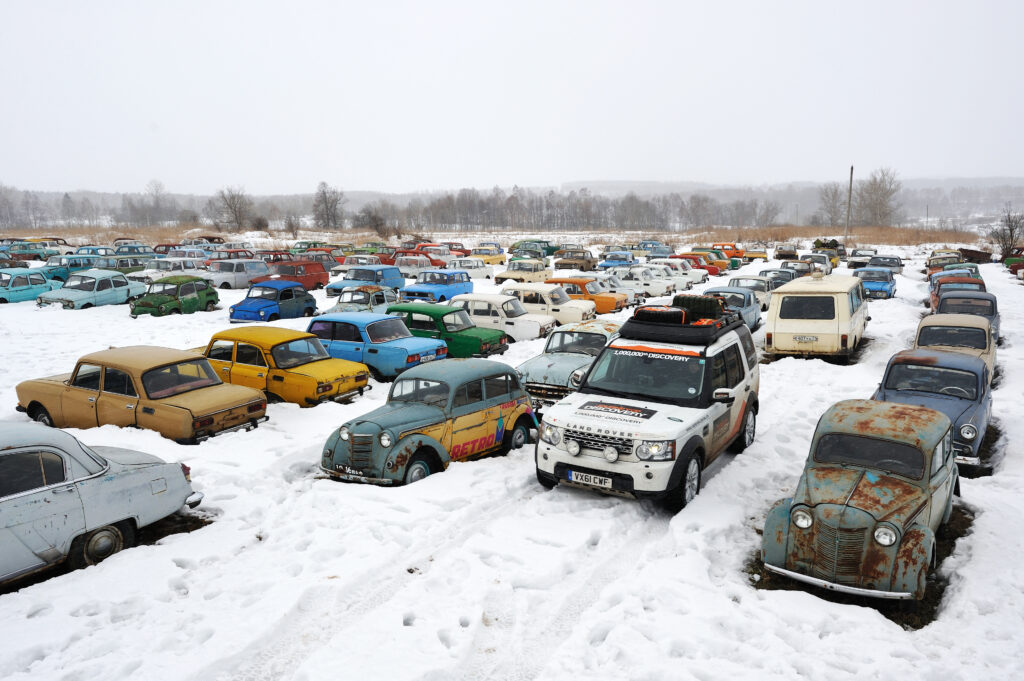
Deep in the countryside, near Moscow, lies a peculiar automobile museum. When we think of museums, we imagine large halls, guides, and exhibits on display. However, this Russian museum is an open-air museum that’s bringing back a forgotten generation of cars.
The Russian cars on display in Tula, south of Moscow, would have been lost to the world, forgotten or even stolen; but it was Mikhail Krasinets who intervened. A former rally pilot and test driver for the Moskovich, he curated a genuine outdoor museum of Soviet-era cars.
A Rare Find
The Russian automobile museum is not easily accessible, with economic factors contributing to its exclusivity. The museum’s location makes it difficult to reach, nestled at the end of a rough terrain road lined with potholes and ruts. A Land Rover that was part of the “Journey of Discovery” team had to navigate through snow-covered roads during a fierce storm to get there.
The Journey of Discovery
The “Journey of Discovery” expedition began in Birmingham, aiming to reach Beijing with a vehicle capable of handling every terrain type and covering 8,000 miles (13,000 km) over 50 days. This incredible journey allowed the team to witness many marvels along the way, including the Russian automobile museum.
A Hidden Gem
The “Journey of Discovery” was not just a test for Land Rover’s vehicles but a campaign to raise £1 million in funds for the International Federation of Red Cross and Red Crescent Societies. As part of this journey, they stumbled upon the forgotten generation of cars at the Russian automobile museum.
A Look Inside
The museum features hundreds of cars from every year of production by Russia’s major manufacturers. Every car is meticulously preserved and maintained as if it were still on the road today. Visitors can see a diverse collection of vehicles that include Soviet-era cars, which were never seen in such an extensive quantity before.
Some of the notable cars on display include:
- The ZIL-41041, also known as the “Moscow” or “Zil Limousine”, was used by Soviet leaders including Nikita Khrushchev and Leonid Brezhnev.
- The Moskovich 214, a prototype car that could reach speeds of up to 150 km/h (93 mph), making it one of the fastest cars in its time.
- The Lada Riva, a popular model produced by AvtoVAZ in the Soviet Union.
The Story Behind the Museum
Mikhail Krasinets’ dedication to collecting Russian-made cars is more than just a passion; it’s a tribute to their innovative spirit and engineering prowess. His team spent years sourcing these rare cars from all over Russia, often traveling through challenging terrain to get them to the museum.
Krasinets’ journey began in 2004 when he stumbled upon an old Lada Riva in his hometown of Moscow. He was immediately captivated by its unique design and decided to start collecting more Soviet-era cars. Over the years, he traveled extensively throughout Russia, searching for rare models that could be added to his collection.
Getting There
The journey to the Russian automobile museum can be a challenge in itself. Visitors will need to navigate through rough roads lined with potholes and ruts, using vehicles capable of handling such conditions. However, for car enthusiasts, this adventure is worth it to see these incredible cars up close.
For those who are planning to visit the museum, here are some tips:
- Rent a 4×4 vehicle or bring your own to ensure safe passage.
- Pack warm clothing and food as you’ll need them for the journey.
- Be prepared for rough terrain and possible delays due to weather conditions.
A Glimpse into Soviet History
The Russian automobile museum offers a glimpse into the history of Soviet-era cars, showcasing their unique designs and engineering capabilities. It’s an opportunity for visitors to learn about Russia’s automotive past and its significance in the country’s development.
Soviet-era cars were known for their innovative designs, using materials such as steel and aluminum that were not commonly used at the time. These cars also featured advanced technology, including fuel injection systems and anti-lock braking systems (ABS).
The Impact of Soviet Cars on Russia
The production of Soviet cars had a significant impact on Russia’s economy and society. Cars became an affordable mode of transportation for many Russians, providing them with access to employment opportunities and social mobility.
However, the Soviet car industry was not without its challenges. The country faced numerous economic constraints, including lack of resources and technological limitations. Despite these obstacles, Soviet cars continued to be produced and enjoyed by millions of people around the world.
A Must-Visit Destination
For car enthusiasts and those interested in learning more about Soviet history, the Russian automobile museum is a must-visit destination. Although it may be difficult to reach due to its remote location, the experience of exploring this outdoor museum is worth the effort.
The museum has become a popular destination for tourists and car enthusiasts alike. Visitors can spend hours exploring the vast collection of cars, learning about their history, and marveling at their unique designs.
Conclusion
The Russian automobile museum is an unusual find for car enthusiasts and history buffs alike. Its unique collection of cars from every year of production by Russia’s major manufacturers offers a glimpse into the country’s automotive past. With its dedication to preserving these rare cars, Mikhail Krasinets has created something truly special.
As we look back on the history of Soviet-era cars, it’s clear that they played an important role in shaping the country’s development and society. The Russian automobile museum is a testament to their enduring legacy and a reminder of the innovative spirit that defined the Soviet era.
The Future of the Museum
As the museum continues to grow and attract visitors from around the world, there are plans to expand its facilities and improve the visitor experience. Krasinets has announced plans to build new exhibitions and interactive displays, allowing visitors to learn more about the history and significance of Soviet-era cars.
In addition, the museum is working with car enthusiasts and historians to create a comprehensive database of all the cars on display. This will provide a valuable resource for researchers and enthusiasts alike, offering a detailed understanding of the Soviet era’s automotive heritage.
A Lasting Legacy
The Russian automobile museum has left an indelible mark on the world of car collecting and history buff culture. Its unique collection of Soviet-era cars has inspired countless individuals to learn more about the country’s automotive past and its significance in shaping the modern world.
As we look to the future, it’s clear that the museum will continue to play a vital role in preserving the legacy of Soviet-era cars. With its dedication to collecting and showcasing these rare vehicles, Mikhail Krasinets has created something truly special – a testament to the innovative spirit and engineering prowess of Russia’s automotive past.
Frequently Asked Questions
- How can I get to the Russian automobile museum?
The museum is located in Tula, south of Moscow, and requires a challenging journey to reach due to its remote location. - What kind of cars are on display at the museum?
The museum features hundreds of Soviet-era cars from every year of production by Russia’s major manufacturers. - How did Mikhail Krasinets collect these rare cars?
Krasinets spent years sourcing these cars from all over Russia, often traveling through challenging terrain to get them to the museum. - Is the museum open to visitors?
Yes, the museum is open to visitors who can make the journey to reach it. - Can I see a detailed list of the cars on display?
Unfortunately, due to space constraints and the difficulty in accessing all of the cars, it’s not possible for us to provide an exhaustive list of the vehicles on display at the Russian automobile museum. - How did Land Rover get involved with the “Journey of Discovery”?
Land Rover was part of the expedition as a sponsor, providing a vehicle capable of handling every terrain type and covering 8,000 miles (13,000 km) over 50 days. - What is the main purpose of the “Journey of Discovery” campaign?
The main objective of the “Journey of Discovery” campaign was to raise £1 million in funds for the International Federation of Red Cross and Red Crescent Societies. - Are there any plans to expand or improve the museum?
As yet, no official announcements have been made regarding expansions or improvements to the Russian automobile museum.
Please note that due to the remote location and challenging terrain required to reach the museum, this information may be subject to change or update as new information becomes available.


