
As we use cosmetics, we’ll likely know what peptides are or at least be aware of substances with this name. Some people also believe that peptides are essential for the true quality and effectiveness of a product, although this belief has little scientific basis but is highly effective in marketing.
Let’s take a step back and look at the scientific aspect, without makeup, who are peptides?
What Are Peptides?
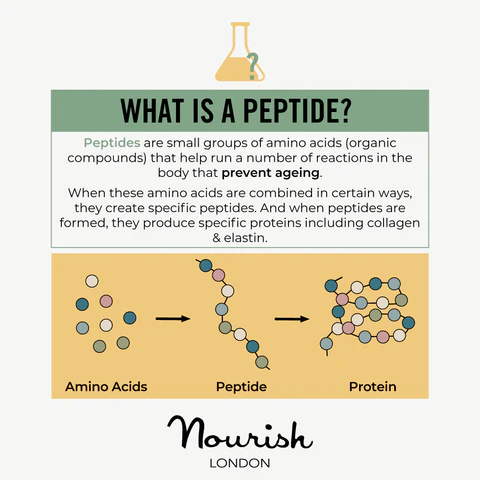
Peptides are linear molecules consisting of 2 or more amino acids linked by a peptide bond, where the amine group (-NH2) is attached to the carboxyl group (-COOH). We can imagine them as those “bricks” that make up proteins. These latter have much larger dimensions than peptides, include large amounts of peptides, while peptides are chains indicating less than 50 amino acids and oligopeptides.
To better understand what peptides are, let’s consider their structure and function. Amino acids are the building blocks of proteins, and when they are linked together by peptide bonds, they form a peptide chain. Peptides can be found in various forms, including natural peptides produced by our bodies or synthetic peptides created in a laboratory.
Natriuretic Peptides
Atrial Natriuretic Peptide (ANP), often indicated with the abbreviation ANP, is a peptide hormone produced by heart muscle cells. Besides atrial, we can also mention the cerebral BNP, abbreviated as BNP, and the natriuretic C CNP.
Natriuretic peptides are released in large quantities during moments of hypertension and contribute to reducing venous return to the heart, which also lowers blood pressure values. These peptides play a crucial role in regulating blood pressure and electrolyte balance in the body.
Peptides as Hormones
The presence of peptides interferes with numerous biological processes that include hormones, proteins, enzymes, etc. There are sequences that modulate proliferative processes, growth or differentiation, but also hormone expression. Other peptides act as transporters and can have systemic or specific effects.
For example, peptide hormones such as insulin and growth hormone regulate blood sugar levels and stimulate cell growth, respectively. These hormones work by binding to specific receptors on cells, which then triggers a series of signaling pathways that lead to changes in cellular behavior.
Glutamine Peptide
Regarding peptides, there is also glutamine peptide, a substance known to those who consume integrators. It’s sometimes used instead of L-glutamine and seems to be effective even in cases of severe burns and traumas, aiding wound healing.
Glutamine peptide has immune system effects: reduces the risk of infection and is sometimes used with hospitalized patients. Additionally, it may help maintain gut health by reducing inflammation and promoting the growth of beneficial gut bacteria.
Peptides in Bodybuilding
The same substance, glutamine peptide, is also used in the fitness world, but with maximum caution because its effectiveness is not proven. In fact, there is limited scientific evidence to support its use for goals like burning fat, building muscle, or improving athletic performance.
Despite its popularity in the fitness world, peptides would be best avoided for these purposes. The idea that arose was that this substance increased hormone levels in the body and helped produce a lot of testosterone or corticosteroids, hormones considered anabolic and also anti-inflammatory.
However, it’s essential to note that there is no concrete evidence to support these claims, and using peptides for bodybuilding purposes can lead to serious health consequences. Peptides can stimulate muscle growth, but they do not provide the same benefits as a well-balanced diet and regular exercise.
Peptides in Food
In food, we find a particular type of peptides called bioactive peptides, which influence biological activity on the organism facilitating cholesterol mobility, for example. Some of these act on the immune system or the nervous system.
Milk contains many bioactive peptides, derived from a protease endogenous to plasma, plasmin. These peptides have been shown to have various health benefits, including:
- Cholesterol-lowering effects: Biopeptides can help reduce levels of low-density lipoprotein (LDL) cholesterol, which is associated with an increased risk of cardiovascular disease.
- Antioxidant properties: Some biopeptides have antioxidant properties, which can help protect against oxidative stress and inflammation in the body.
- Anti-inflammatory effects: Biopeptides may have anti-inflammatory properties, which can help reduce inflammation and improve overall health.
Biopeptides are released during lactation processes of milk and fermentation of cheese-making. They are highly useful for our health and play a significant role in maintaining various bodily functions.
The Role of Peptides in Human Health
Peptides play a vital role in human health, influencing various biological processes that include hormone regulation, immune function, and tissue repair. While there is still much to be learned about the effects of peptides on human health, research continues to uncover their potential benefits.
Some potential applications of peptides include:
- Wound healing: Peptides such as glutamine peptide may help promote wound healing by stimulating cell growth and reducing inflammation.
- Immune system modulation: Biopeptides may have immunomodulatory effects, which can help regulate the immune response and prevent infections.
- Cardiovascular health: Natriuretic peptides play a crucial role in regulating blood pressure and electrolyte balance, which is essential for maintaining cardiovascular health.
In conclusion, peptides are an essential component of our biology, influencing various biological processes that include hormone regulation, immune function, and tissue repair. While there is still much to be learned about the effects of peptides on human health, research continues to uncover their potential benefits.
As we explore the world of peptides, it’s essential to separate fact from fiction and rely on scientific evidence when evaluating their effectiveness. By understanding the role of peptides in our biology and their potential applications, we can unlock new opportunities for improving human health and well-being.
Conclusion
In this article, we’ve explored the fascinating world of peptides, including what they are, their functions, and their potential benefits for human health. From natriuretic peptides to bioactive peptides, each type has unique characteristics that set them apart from one another.
While there is still much to be learned about peptides, research continues to uncover their potential benefits for various aspects of human health. By understanding the role of peptides in our biology and their potential applications, we can unlock new opportunities for improving human health and well-being.
Whether you’re interested in peptides as a means of supporting your overall health or using them to enhance athletic performance, it’s essential to approach these substances with caution and rely on scientific evidence when evaluating their effectiveness.


