
Introduction
The world of birds is incredibly diverse and rich in species that are quite surprising. Among the most fascinating ones are parrots, appreciated for their intelligence as well as their extraordinary beauty. In this article, we will delve into the world of one such species, known affectionately as “inseparable parrots” or “lovebirds,” and explore its main characteristics.
What are Inseparable Parrots?
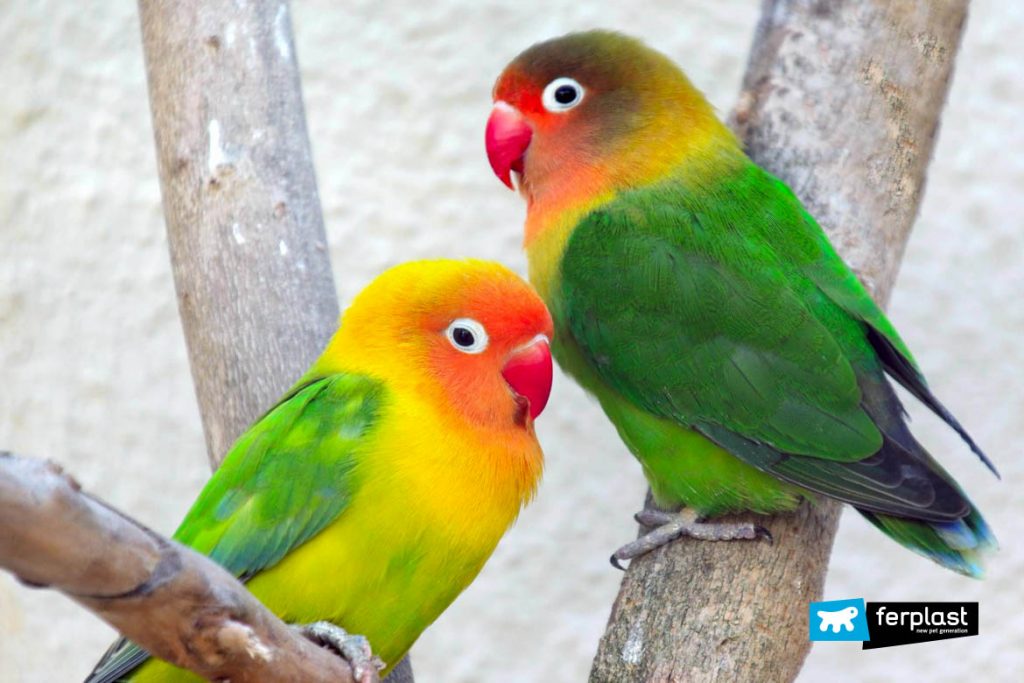
Agapornis, commonly referred to as lovebirds, are small-sized parrots with a round body and long tail, distributed in Africa. The name “inseparables” originates from their tendency to form stable couples during their lives. This unique trait has led to the species being highly appreciated in captivity due to its intelligence, sociality, robustness, ease of breeding and caring, and adaptability.
Characteristics of Lovebirds
Different species of lovebirds can be identified based on their coloration and distinct traits. Each species boasts unique combinations of colors that distinguish it from others. In the first few weeks of life, lovebirds have black marks on their beaks as well as a pale coloration. As time passes, these colors intensify until they reach full maturity.
Within the various species of Agapornis, there are also genetic mutations developed from common examples. Lovebirds are known to be very social and territorial birds, making it best not to keep them with other species, as coexistence can be challenging.
Lovebird Species
The genus Agapornis includes nine species of parrots:
- Agapornis canus: Found in Madagascar
- Agapornis pullarius: Also known as the red-faced lovebird
- Agapornis taranta: Features black wings (Abissinian lovebirds)
- Agapornis swindernianus: Characterized by a black collar
- Agapornis roseicollis: Exhibits a pink neck
- Agapornis fischeri: Known as Fischer’s lovebirds
- Agapornis personatus: Features a mask-like facial marking
- Agapornis lilianae Shelley (Shelly’s lovebirds): Also known as Nyassa lovebirds
- Agapornis nigrigenis: Displays black facial markings
When Do They Become Adults?
To reach full maturity, parrots take at least a year. It is only after this time that Agapornis are fully ready for reproduction.
A typical nest of lovebirds consists of 4-6 eggs, laid alternately, with an incubation period of approximately three weeks. Baby lovebirds hatch blind and hairless, but begin flying alone at seven weeks.
How to Recognize a Male from a Female Lovebird?
Recognizing a male lovebird from a female is not an easy task, even for experts. Lovebirds are monomorphic birds, meaning that males and females look alike. However, through physical examination and behavioral analysis, some clues can be gathered:
- Males tend to have brighter coloration
- They spend less time out of the nest during the day
- Females tend to have more robust bodies and heavier weight, as well as wider pelvis areas for egg-laying
What Do Lovebirds Eat?
Lovebirds are social birds but don’t interact with humans in conversations. However, they form strong bonds with each other. Males bond deeply with females, often staying close to them. Females appreciate this attention as well, leading most couples of lovebirds to remain faithful for life.
Cages for Lovebirds
Since they are not massive birds, lovebirds don’t require enormous enclosures. However, it’s essential to avoid tiny cages as well. Standard cage sizes range from 90 cm (35 in) in length, 50 cm (20 in) height, and 40 cm (16 in) deep.
In nature, they live on the savannas, grasslands, and near ponds in central Africa. In captivity, we can create comfortable environments using cages that mimic their natural habitats. Many cage designs are available on Amazon; a recommended option features a convenient stand and is priced at 64.89 Euro with free shipping.
Reproduction of Agapornis
Around six months old, parrots become reproductive age. Females start preparing nests to lay eggs, followed by mating, resulting in females depositing 4-5 eggs that hatch after approximately three weeks.
When baby lovebirds hatch, males take care of them until they can fly on their own at seven weeks. If the couple is particularly attached, you may get four breeding pairs in a single year.
Price of Agapornis Lovebirds
The price of individual Agapornis birds ranges from 10 to 20 Euros, with prices increasing for couples (around 20-100 Euros or more). Prices can vary depending on age and subspecies.
Common Health Issues in Lovebirds
Lovebirds are generally a healthy species but may be susceptible to certain health issues. The most common health issues include respiratory problems caused by dust and poor ventilation, as well as digestive issues resulting from food allergies.
It is recommended that you create a safe environment with proper nutrition, adequate space for exercise, and sufficient social interaction to keep your lovebirds healthy.
Tips for Maintaining a Happy Lovebird
- Provide plenty of fresh water: Ensure that the water bowl in the cage is always filled with fresh clean water.
- Offer a balanced diet: Feed your lovebirds high-quality pellets specifically designed for birds, and supplement with fruits, vegetables, and nuts.
- Create a safe environment: Ensure the cage is well-ventilated, and provide adequate space for exercise and social interaction.
- Provide mental stimulation: Offer toys and activities that challenge their minds, such as puzzles and problem-solving toys.
- Keep your lovebirds clean: Clean the cage regularly to prevent bacterial growth.
Conclusion
In conclusion, lovebirds are fascinating creatures that have captured the hearts of many bird enthusiasts. With their intelligence, sociality, and adaptability, it’s no wonder why they’re so popular in captivity.
If you’re interested in bringing a parrot into your home as a pet, make sure to research thoroughly and understand the needs and characteristics of lovebirds before making any decisions.
Frequently Asked Questions (FAQs)
- What is the average lifespan of a lovebird?
- How often do lovebirds mate?
- Can lovebirds be kept with other birds species?
- What are some common health issues in lovebirds?
- How can I create a comfortable environment for my lovebird?
- Can lovebirds recognize their owners?
- Are lovebirds intelligent birds?
- How often do lovebirds eat?


