
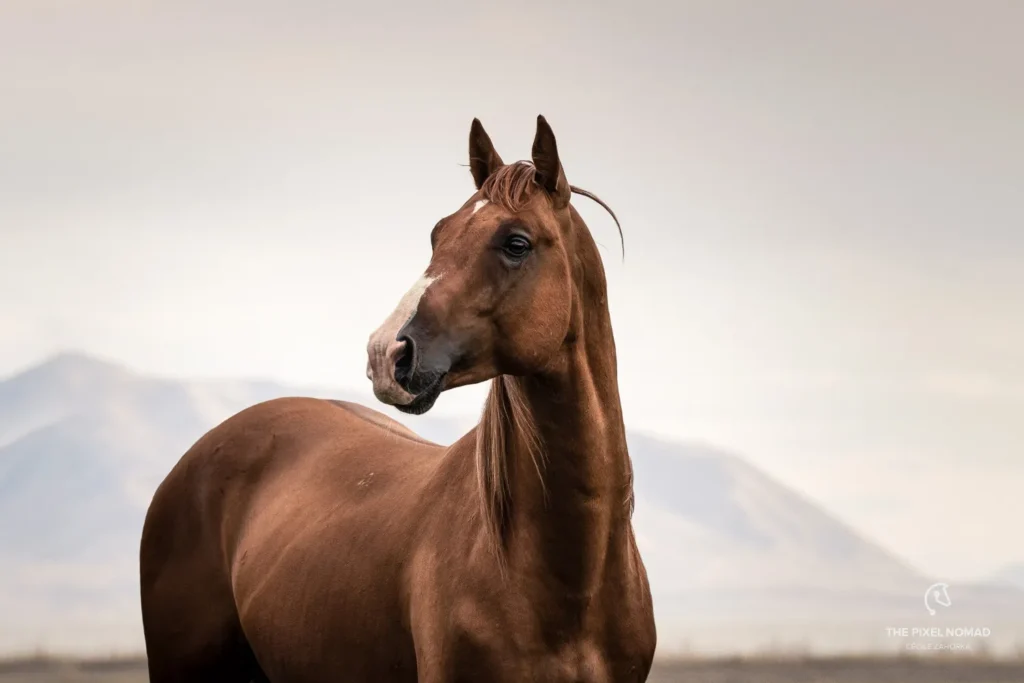
Are you ready to encounter one of the rarest horses in the world? The Karabakh horse is a breed that has captivated many with its unique appearance and exceptional qualities. Found mainly in Azerbaijan, this majestic animal has a fascinating history, shaped by centuries of selective breeding and interaction with various cultures.
Origins of the Karabakh Horse
The origins of the Karabakh horse are shrouded in mystery, but historians believe that it may have descended from crossbreeding between Persian, Arab, Turkishman, Kabardian, and Akhal-Teke horses. The introduction of Russian Don horses during the 19th century further influenced its development. Today, only a few hundred Karabakh horses exist, primarily in Azerbaijan’s Shaki region.
The breeding history of the Karabakh horse is complex, with various theories attempting to explain its origins. One theory suggests that it was created by crossing local breeds with Persian and Turkmen horses, while another posits that it was influenced by the Akhal-Teke breed. Regardless of its exact origin, the Karabakh horse has become a unique and valuable breed.
Caracteristics of the Karabakh Horse
Despite their rarity, the Karabakh horse is an exceptional specimen with several notable characteristics. They typically stand between 145-157 cm tall and have a compact, muscular build, with a strong back, deep chest, and well-sprung ribs. Their head is proportionate to their body, featuring a broad forehead, small ears, and a straight or slightly concave profile.
The coat colors are predominantly brown (chestnut), dark bay, and gray, although rare white markings can occur. The Karabakh horse’s distinctive color pattern is one of its most striking features, making it easily recognizable among other horse breeds.
Attitudes and Temperament
The Karabakh horse is renowned for its impressive agility, speed, and endurance. It’s an apt breed for both open steppe landscapes and mountainous terrain. Its temperament is also noteworthy, characterized by loyalty, intelligence, and a strong will. In fact, the Karabakh horse has been known to form close bonds with its riders, making it an ideal companion for those who value trust and companionship.
Notoriety and Cultural Significance
The Karabakh horse holds significant importance in Azerbaijan’s history and culture. It has been celebrated as the country’s national animal and is considered a symbol of the districts of Agdam and Shaki. The breed appears in Azerbaijani literature and on postage stamps, highlighting its significance to the local population.
In recent years, the Karabakh horse has gained international recognition, participating in notable events like the Royal Windsor Horse Show in 2012 and serving as a mascot for the 2017 Islamic Solidarity Games. A monument dedicated to this majestic breed was also unveiled in Belgium, further solidifying its cultural importance.
Introduction at International Events
The Karabakh horse has been featured in various international competitions and events, showcasing its exceptional qualities and athleticism. In addition to participating in horse shows, the breed has also been used as a symbol of Azerbaijani culture and national pride.
One notable example is the 2017 Islamic Solidarity Games, where the Karabakh horse served as a mascot for the event. This marked a significant milestone for the breed, bringing international attention and recognition to its unique qualities.
Challenges Facing the Karabakh Horse Breed
Despite its cultural significance and athletic abilities, the Karabakh horse breed faces several challenges that threaten its very existence. One major issue is the scarcity of suitable breeding stock, with only a few hundred horses remaining in Azerbaijan.
Additionally, the Karabakh horse is vulnerable to diseases such as equine influenza and West Nile virus, which can have devastating effects on small populations like this one. Efforts are being made by local authorities to monitor and control disease outbreaks, but more support is needed to ensure the long-term survival of the breed.
Conservation Efforts
In response to these challenges, conservation efforts are underway to protect the Karabakh horse breed. The Azerbaijani Ministry of Agriculture has initiated initiatives to deign attention to the breed, including banning its export and protecting the remaining 20 breeding centers that hold approximately 200 Karabakh horses.
These conservation efforts include habitat preservation, disease monitoring, and education programs aimed at promoting the breed’s cultural significance and importance. By supporting these efforts, we can help ensure the long-term survival of this rare and exceptional horse breed.
Conclusion
The Karabakh horse is an enigmatic and fascinating creature that continues to capture the imagination of horse enthusiasts worldwide. Its exceptional characteristics, rich history, and significant cultural role have cemented its status as a beloved national symbol in Azerbaijan.
As we strive to protect this rare breed, it’s essential to understand and appreciate its unique qualities. By supporting conservation efforts and promoting education about the Karabakh horse, we can help ensure its continued survival for generations to come.
Frequently Asked Questions
-
Q: What is the origin of the Karabakh horse?
A: The Karabakh horse is believed to have originated from crossbreeding between Persian, Arab, Turkishman, Kabardian, and Akhal-Teke horses, with influences from Russian Don horses in the 19th century. -
Q: What are the typical characteristics of a Karabakh horse?
A: Karabakh horses typically stand between 145-157 cm tall, have a compact build, strong back, deep chest, and well-sprung ribs. Their head is proportionate to their body, with small ears and a straight or slightly concave profile. -
Q: Is the Karabakh horse suitable for all terrains?
A: Yes, the Karabakh horse is adept for both open steppe landscapes and mountainous terrain due to its agility, speed, and endurance. -
Q: Has the Karabakh horse achieved any notable achievements?
A: In 2004, a Karabakh horse named Kishmish set remarkable speeds of 1,000 meters in 9 seconds and 1600 meters in 52 seconds. -
Q: What is the cultural significance of the Karabakh horse in Azerbaijan?
A: The Karabakh horse holds significant importance in Azerbaijani history and culture as the country’s national animal, symbolizing the districts of Agdam and Shaki, and appearing in literature and on postage stamps. -
Q: Has the Karabakh horse participated in international events?
A: Yes, the Karabakh horse has gained international recognition, participating in notable events like the Royal Windsor Horse Show in 2012 and serving as a mascot for the 2017 Islamic Solidarity Games. -
Q: What measures are being taken to protect this rare breed?
A: The Azerbaijani Ministry of Agriculture has initiated initiatives to deign attention to the Karabakh horse, including banning its export and protecting the remaining 20 breeding centers that hold approximately 200 Karabakh horses. -
Q: Can I learn more about other horse breeds like the Karabakh?
A: Yes, we have published articles on various horse breeds, including the famous French Breton Horse and an exhaustive list of all horse breeds with detailed profiles and descriptions.


