
As the old adage goes, “A spoonful of sugar helps the medicine go down.” However, as we all know, too much sugar can be detrimental to our health. In this article, we’ll explore why sugar is bad for us and what alternatives you can use in place of it.
Why Sugar is Bad for Us
Sugar is not just a simple pleasure, but a major contributor to various health problems. The refined white sugar that ends up on our tables has undergone numerous industrial transformations, leaving little of the natural goodness behind. In fact, most commercial sugars are merely a pale imitation of their natural counterparts.
Scientific studies have confirmed what many people already suspect: excessive sugar consumption can lead to serious health issues. Research has shown that high sugar intake can increase the risk of heart disease, create dependency, and contribute to obesity and diabetes. Furthermore, consuming large amounts of sugar may even reduce our life expectancy by a staggering 20%.
The Impact of Sugar on Our Bodies
When we consume sugar, it triggers an insulin response in our bodies. Insulin is a hormone that regulates blood sugar levels, but when we overconsume sugar, our bodies become resistant to its effects. This can lead to a cascade of negative health consequences, including:
- Weight gain and obesity: Consuming more calories than we burn leads to weight gain, which increases the risk of obesity-related diseases.
- Insulin resistance and type 2 diabetes: Regularly consuming high amounts of sugar can lead to insulin resistance, a precursor to type 2 diabetes.
- Heart disease and stroke: Excessive sugar consumption has been linked to an increased risk of heart disease and stroke due to its impact on blood pressure and lipid profiles.
Artificial Sweeteners: Not the Answer
Dolcificanti sintetici, or artificial sweeteners, are not much better than their sugary counterparts. These synthetic substances can alter our metabolism, raise blood sugar levels, and, in some cases, lead to pre-diabetes.
Let’s take a closer look at two popular artificial sweeteners: Aspartame and Sucralose.
Aspartame
Despite being widely used, the safety of aspartame is still a topic of debate. Research has shown that even low doses of aspartame can affect cognitive function, leading to decreased memory, depression, and irritability.
Aspartame may also impair spatial orientation, causing individuals to experience “memory holes.”
Sucralose
Another artificial sweetener, sucralose, is not without its negative effects. A study has questioned the safety of this substance, citing potential disruptions to hormonal balance, reduced beneficial gut bacteria, and decreased efficacy of medications.
Natural Alternatives: The Way Forward
So, what can you do instead of reaching for sugar? Here are some natural alternatives that might just be the answer:
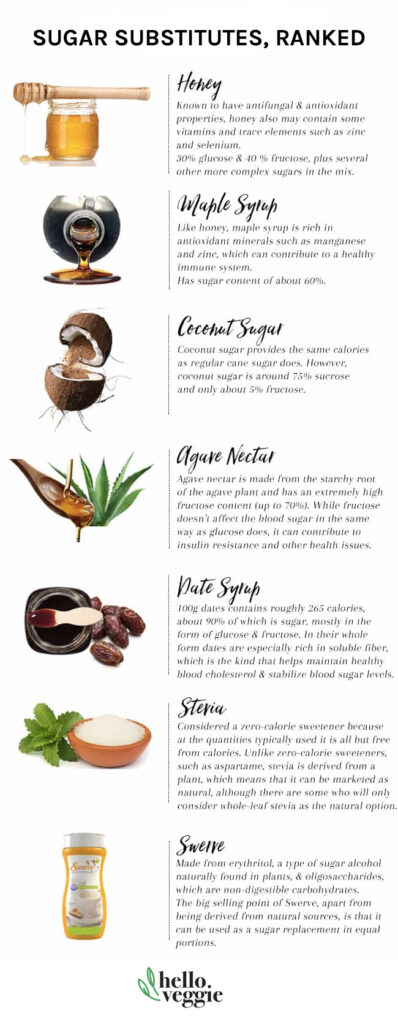
- Molasses: A thick, dark liquid made from refining sugar cane or sugar beets, molasses is a rich source of minerals like iron and potassium.
- Maple Syrup: Made from the sap of maple trees, this sweetener contains minerals like manganese and zinc.
- Honey: A natural preservative with antibacterial properties, honey is also a good source of vitamins and minerals.
- Stevia: A plant-based sweetener that’s 200-300 times sweeter than sugar, stevia is calorie-free and doesn’t raise blood sugar levels.
- Coconut Sugar: A lower-glycemic alternative to refined sugar, coconut sugar contains minerals like iron and zinc.
The Catch: Moderation is Key
While natural sweeteners are generally considered safer than their sugary counterparts, it’s still important to consume them in moderation. Overindulging in even the healthiest options can lead to weight gain, dental problems, and other issues.
By making informed choices about what we put in our bodies, we can take the first step towards a healthier, happier life.
Frequently Asked Questions
Q: What is the safest natural sweetener?
A: Stevia is generally considered one of the safest natural sweeteners due to its low calorie count and lack of impact on blood sugar levels.
Q: Can I use honey as a 1:1 substitute for sugar?
A: No, honey has a distinct flavor and can make baked goods taste overly sweet. Start with small amounts and adjust to taste.
Q: How do I store coconut sugar to keep it fresh?
A: Store coconut sugar in an airtight container at room temperature or in the refrigerator to preserve its freshness.
Q: Can I use molasses as a natural alternative to refined sugar in cooking?
A: Yes, molasses can add depth and richness to baked goods and savory dishes. Use it sparingly due to its strong flavor.
Q: What is the difference between maple syrup and honey?
A: Maple syrup has a distinct, rich flavor while honey is often used as a natural preservative due to its antibacterial properties.
Q: Can I use stevia in cooking or should I only use it as a sweetener?
A: Stevia can be used as both a sweetener and an ingredient in certain recipes. Start with small amounts to adjust the flavor to your liking.
Q: Are natural sweeteners suitable for everyone, including those with diabetes?
A: Consult with a healthcare professional before making any significant changes to your diet if you have diabetes or other health concerns.
Q: How do I choose between different natural sweeteners based on their nutritional content and benefits?
A: Consider the mineral content, calorie count, and potential side effects of each sweetener when selecting the best option for your dietary needs.


