
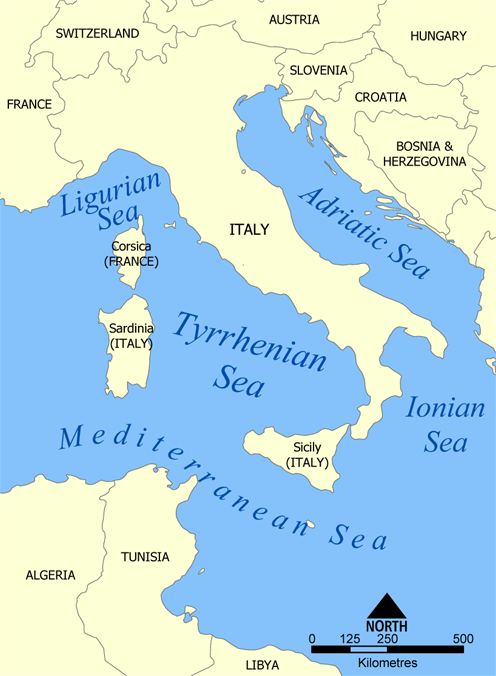
Italy is a country surrounded by water, with its coastline stretching for over 7,456 kilometers. While it may seem like a simple question, how many seas are there in Italy? The answer might surprise you, as Italy has six distinct seas that make up part of its unique coastline. In this article, we will delve into the world of Italian seas, exploring their characteristics, locations, and what makes them special.
The Italian Seas: A Panoramic View
Let’s start by defining what a sea is. A sea is a larger body of saltwater that is usually connected to an ocean but is smaller than one. Italy has six seas that are part of the Mediterranean Sea, which is the world’s largest inland body of water.
1. Adriatic Sea
The Adriatic Sea is the northernmost sea in Italy and is connected to the Ionian Sea through the Strait of Otranto. It stretches from Trieste in the north to Bari in the south, passing through parts of Slovenia, Croatia, Bosnia and Herzegovina, Montenegro, and Albania. The Adriatic Sea is a closed sea, meaning it has limited exchange with the open ocean.
The Adriatic Sea is also known for its rich history and cultural significance. It was an important route for ancient civilizations, including the Greeks and Romans, who used it to trade goods and establish colonies. Today, the Adriatic Sea remains an important shipping lane, with many major ports located along its coast.
One of the most famous landmarks in the Adriatic Sea is the city of Venice, which is built on more than 100 small islands. The city is connected by over 400 bridges, making it one of the most unique and beautiful cities in the world. Visitors to Venice can explore the city’s stunning architecture, including St. Mark’s Basilica and the Doge’s Palace.
2. Ionian Sea
The Ionian Sea is located between Sicily and Calabria, and it’s also connected to the Adriatic Sea through the Strait of Messina. This sea is known for its deep waters, reaching up to 4,000 meters in some areas. The Ionian Sea has a significant impact on Italy’s climate, with strong winds blowing from the south.
The Ionian Sea is also home to many beautiful islands, including Sicily and Calabria. These islands are popular tourist destinations, known for their stunning beaches, historic ruins, and delicious cuisine. Visitors can explore ancient Greek temples, such as the Temple of Athena in Agrigento, or relax on the beach at popular resorts like Taormina.
3. Tyrrhenian Sea
The Tyrrhenian Sea is the largest of the Italian seas and covers most of the western coast of Italy. It stretches from Sicily to Tuscany, passing through parts of Sardinia and Corsica. The Tyrrhenian Sea is known for its deep waters, with a maximum depth of over 3,800 meters.
The Tyrrhenian Sea is also home to many marine species, including dolphins, whales, and sea turtles. This sea is an important habitat for these animals, which come to feed on the abundant fish and squid that live in the waters. Visitors can take boat tours to see these creatures up close or explore the many marine reserves that protect them.
4. Ligurian Sea
The Ligurian Sea is located in the northwest of Italy and borders the French Riviera. It’s part of the Tyrrhenian Sea but has distinct characteristics due to its unique geology. The Ligurian Sea is known for its volcanic activity, with several active volcanoes located along its coast.
One of the most famous landmarks in the Ligurian Sea is the town of Genoa, which is built on a peninsula that extends into the sea. Visitors can explore the city’s historic center, including the cathedral of San Lorenzo and the palace of the Doria family.
5. Sardinian Sea
The Sardinian Sea is located in the southwest of Italy and borders the island of Sardinia. It’s a small sea, with limited exchange with the open ocean, but it’s home to several unique species due to its isolation.
Sardinia is one of the most beautiful islands in Italy, known for its rugged landscape, crystal-clear waters, and stunning beaches. Visitors can explore the island’s capital city, Cagliari, or relax on the beach at popular resorts like Villasimius.
6. Ionian Sea (Sicily)
The Ionian Sea off the coast of Sicily is often referred to as the “Southern Sea” and is known for its crystal-clear waters and picturesque islands.
This sea is home to many beautiful beaches, including those in the island of Sardinia’s neighbor, which is officially a part of Sicily. Visitors can explore these beaches, visit ancient ruins like Agrigento’s Valley of the Temples, or take a boat tour to see the marine life that inhabits this sea.
Exploring Italy’s Seas
Italy’s coastline is incredibly diverse, with each sea offering unique characteristics and attractions. The Adriatic Sea, for example, is home to the historic city of Venice, while the Ionian Sea offers stunning beaches and scenic towns like Cefalù.
The Tyrrhenian Sea is known for its vibrant marine life, including dolphins, whales, and sea turtles. The Ligurian Sea has a unique geology that creates breathtaking landscapes and crystal-clear waters.
Each Italian sea has its own story to tell, from the history of exploration to the impact on local culture. By exploring these six seas, we can gain a deeper appreciation for Italy’s natural beauty and marine diversity.
Conclusion
Italy is a country surrounded by water, with six distinct seas that make up part of its unique coastline. Each sea has its own characteristics, attractions, and stories to tell. From the Adriatic Sea to the Tyrrhenian Sea, each Italian sea offers a unique experience for those who explore them. Whether you’re interested in history, culture, or natural beauty, Italy’s seas have something for everyone.
Frequently Asked Questions
Q: How many seas are there in Italy?
A: There are six distinct seas in Italy: Adriatic, Ionian, Tyrrhenian, Ligurian, Sardinian, and the Southern Sea (Ionian Sea off Sicily).
Q: Which sea is the largest?
A: The Tyrrhenian Sea is the largest of the Italian seas.
Q: What is unique about the Ionian Sea?
A: The Ionian Sea has deep waters, reaching up to 4,000 meters in some areas.
Q: Where can I find dolphins and whales in Italy?
A: The Tyrrhenian Sea is known for its vibrant marine life, including dolphins, whales, and sea turtles.
Q: What is the history of exploration in Italian seas?
A: Italian explorers have long been interested in exploring and mapping the Mediterranean Sea, which includes the six distinct seas that make up Italy’s coastline.
Q: How do Italian seas impact local culture?
A: Each Italian sea has its own unique characteristics and attractions that shape local culture, from fishing communities to tourism industries.


