
As the world grapples with the challenges of climate change, it’s essential to understand the complex relationships between human activities and the Earth’s temperature. One critical aspect often overlooked is the impact of heat islands on climate change.
What are Heat Islands?
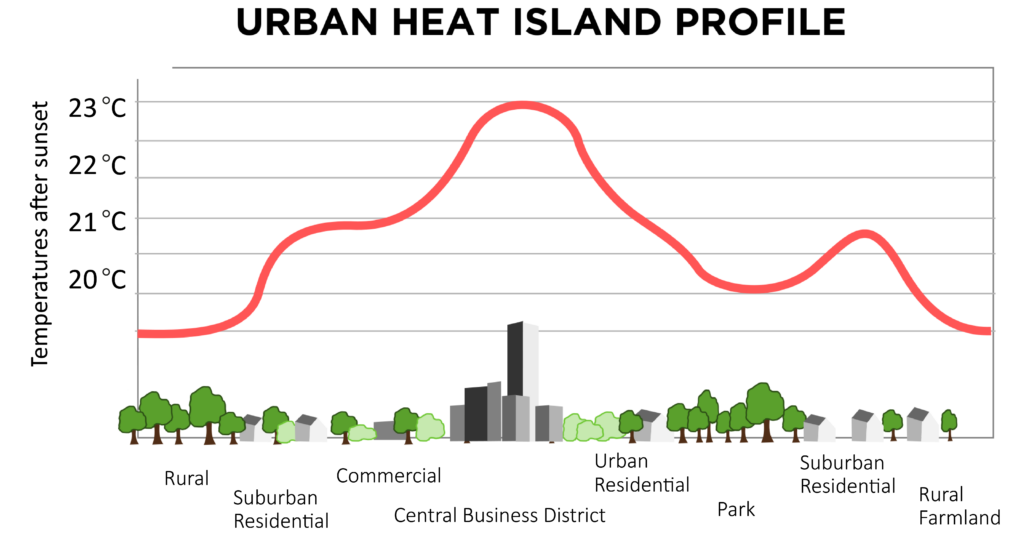
Heat islands occur when urban areas experience higher temperatures than surrounding rural areas due to the concentration of heat-absorbing surfaces such as pavement, buildings, and vehicles. This phenomenon can lead to a significant increase in local temperatures, which may not seem like a concern, but it has far-reaching consequences on climate change.
The Human Factor
Human activities are primarily responsible for climate change, with the production of energy and deforestation being two of the main contributors. However, there’s another factor that plays a crucial role: the direct emission of heat into the atmosphere. This occurs when we burn fossil fuels, such as coal, oil, and gas, which releases greenhouse gases and traps heat in the lower atmosphere.
Direct vs. Indirect Emissions
When we talk about climate change, we often focus on the indirect effects of human activities, such as the release of greenhouse gases. However, there’s a more direct and localized impact: heat islands. Direct emissions occur when we burn fossil fuels, while indirect emissions involve the release of pollutants like carbon dioxide and methane.
The Heat Island Effect
Heat islands are not limited to urban areas; they can affect entire continents. A study published in Nature Climate Change found that direct emissions from human activities can have a significant impact on climate change. The team of scientists led by G.J. Zhang discovered that heat islands can lead to drastic changes in local temperatures, even when considering the overall global temperature.
The Impact on Climate Change
The effects of heat islands on climate change are multifaceted. On one hand, direct emissions contribute to the greenhouse effect, trapping heat in the lower atmosphere and leading to rising global temperatures. On the other hand, heat islands can exacerbate this effect by creating pockets of higher temperatures within cities.
Why Heat Islands Matter
The impact of heat islands on climate change cannot be underestimated. By failing to consider direct emissions in climate models, scientists have been unable to accurately predict temperature changes. The addition of new data on heat islands will allow for more accurate projections of the future climate, both globally and regionally.
Historical Context
Heat islands have been a concern for urban planners and policymakers for decades. In the 1960s and 1970s, researchers began to study the impact of urbanization on local temperatures. However, it wasn’t until the 1990s that the term “heat island” became widely used.
Current Research
In recent years, there has been a surge in research focused on heat islands and climate change. Scientists have begun to explore the complex relationships between human activities, heat islands, and climate change. This research has shed new light on the impact of direct emissions on local temperatures and the potential consequences for global warming.
Case Studies
There are several case studies that demonstrate the impact of heat islands on climate change. For example, a study published in Environmental Research Letters found that the urban heat island effect can lead to a 1-2°C increase in local temperatures during the summer months. Another study published in the Journal of Geophysical Research found that the heat island effect can exacerbate the greenhouse effect by creating pockets of higher temperatures within cities.
Mitigation Strategies
Reducing energy consumption, increasing energy efficiency, and promoting sustainable urban planning are some potential strategies for mitigating the effects of heat islands on climate change. By implementing these measures, cities can reduce their reliance on fossil fuels and lower their carbon footprint.
Technological Innovations
There are several technological innovations that can help alleviate the impact of heat islands on climate change. For example, green roofs and walls can provide insulation and reduce the amount of heat absorbed by buildings. Other technologies, such as smart grids and energy-efficient buildings, can also play a crucial role in reducing energy consumption and greenhouse gas emissions.
Economic Impacts
The economic impacts of heat islands on climate change are significant. A study published in the Journal of Economic Issues found that the urban heat island effect can lead to increased energy consumption, which can result in higher energy costs for residents. Another study published in Environmental Research Letters found that the heat island effect can also exacerbate air pollution, leading to negative impacts on public health.
Policy and Governance
Policy and governance are critical components of addressing the impact of heat islands on climate change. Governments can implement policies to promote sustainable urban planning, increase energy efficiency, and reduce greenhouse gas emissions. Other strategies, such as green infrastructure and carbon pricing, can also play a crucial role in mitigating the effects of heat islands.
Conclusion
Climate change is a complex issue with many interconnected factors. Understanding the impact of heat islands is crucial in comprehending the broader picture of human activities on the environment. By acknowledging the role of direct emissions and heat islands, we can work towards creating more accurate climate models and mitigating the effects of climate change.
Frequently Asked Questions
- What are heat islands?
Heat islands are areas where urban temperatures are higher than surrounding rural areas due to concentrated heat-absorbing surfaces. - How do heat islands affect climate change?
Heat islands can exacerbate the greenhouse effect by creating pockets of higher temperatures within cities, leading to increased global temperatures. - What is the role of direct emissions in climate change?
Direct emissions occur when we burn fossil fuels, releasing greenhouse gases and trapping heat in the lower atmosphere. - How do heat islands impact local temperatures?
Heat islands can lead to drastic changes in local temperatures, even when considering the overall global temperature. - Why is it important to consider direct emissions in climate models?
Considering direct emissions allows for more accurate projections of the future climate, both globally and regionally. - What are some ways to mitigate the effects of heat islands on climate change?
Reducing energy consumption, increasing energy efficiency, and promoting sustainable urban planning can help alleviate the impact of heat islands on climate change. - How can we better understand the relationship between heat islands and climate change?
Further research is needed to fully comprehend the complex relationships between human activities, heat islands, and climate change. - What are some potential consequences of neglecting direct emissions in climate models?
Neglecting direct emissions can lead to inaccurate projections of temperature changes, making it more challenging to develop effective climate mitigation strategies.
Future Research Directions
There are several research directions that need to be explored further to fully understand the impact of heat islands on climate change. Some potential areas of investigation include:
- Developing new climate models: Researchers should focus on developing new climate models that take into account direct emissions and heat islands.
- Conducting comprehensive case studies: Case studies should be conducted in cities around the world to better understand the impact of heat islands on local temperatures and greenhouse gas emissions.
- Investigating the role of green infrastructure: Researchers should investigate the role of green infrastructure, such as parks and green roofs, in mitigating the effects of heat islands on climate change.
- Examining the economic impacts: The economic impacts of heat islands on climate change should be examined further to better understand the potential costs and benefits of mitigation strategies.
By continuing to research and explore new avenues for investigation, we can gain a deeper understanding of the complex relationships between human activities, heat islands, and climate change.


