
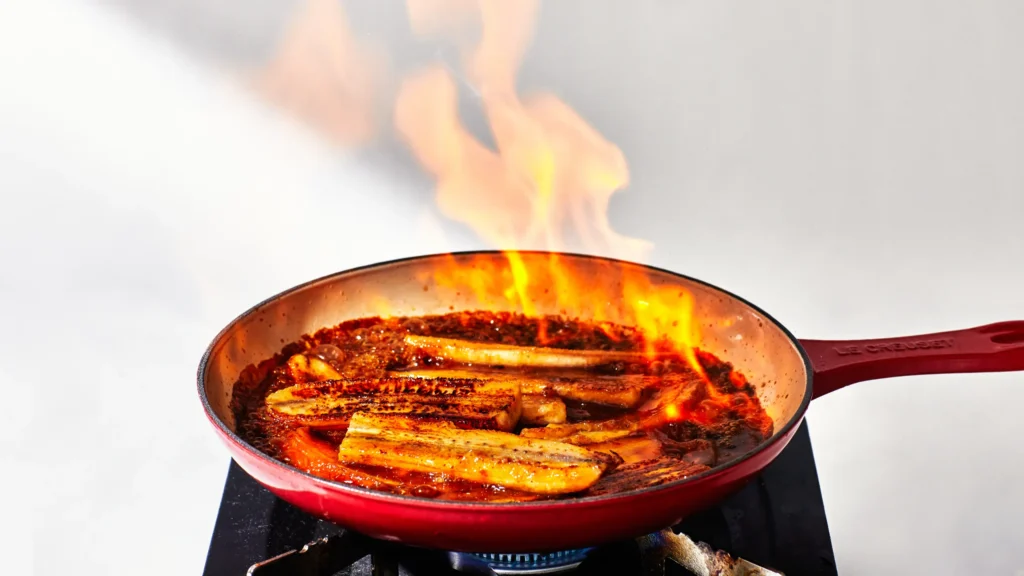
Flambé, a French term meaning “flame,” is a cooking method that has been tantalizing taste buds for centuries. It involves adding flammable liquids to food in a hot pan, resulting in a spectacular display of flames and a unique culinary experience. In this article, we’ll delve into the world of flambé, exploring its history, techniques, and best practices.
What is Flambé?
Flambé is not just a cooking technique; it’s an art form. The term “flambé” itself evokes images of flames dancing on a plate, enticing diners to take a bite. But what makes flambé so special? It all starts with the choice of liquor or spirit. Whether you’re using rum, vodka, cognac, or brandy, the key is to select an ingredient that’s high in alcohol content.
Equipment and Safety
Before diving into the world of flambé, it’s essential to have the right equipment. You’ll need a shallow pan with a long handle, ideally made from stainless steel or copper. A coperchio is also necessary to contain any stray flames. For lighting the liquor, use an ignition source like a match or lighter.
When working with fire, safety is paramount. Always keep a fire extinguisher nearby and never leave the cooking area unattended. Be mindful of your surroundings, including any loose clothing or fabrics that might catch fire.
Choosing the Right Liquor
Not all liquors are created equal when it comes to flambé. The ideal spirit should be high in alcohol content (around 40 degrees) and have a strong flavor profile. Here are some popular options:
- Rum: A classic choice for flambé, rum pairs well with sweet desserts like crêpes Suzette.
- Vodka: Vodka is another popular option, often used in savory dishes like fish or poultry.
- Cognac: Cognac adds a sophisticated touch to fine dining, especially when paired with delicate flavors.
- Brandy: Brandy is a versatile spirit that complements both sweet and savory dishes.
- Gin: Gin’s botanical flavor profile makes it an excellent choice for flambé, particularly in combination with fruits or vegetables.
When selecting a liquor, consider the type of dish you’re preparing. For example, brandy pairs well with sweet desserts like crêpes Suzette, while cognac complements savory dishes like fish or poultry.
Flambé Techniques
Now that we’ve covered the basics, it’s time to explore some flambé techniques:
- Sous vide: This method involves sealing food in a bag and cooking it sous vide before adding the liquor. Sous vide is an excellent way to ensure even cooking and prevent overcooking.
- Grill pan: Use a grill pan to sear meat or fish before finishing with a liquor-based sauce. The Maillard reaction, a chemical reaction between amino acids and reducing sugars, enhances flavor and texture.
- Searing: Add a liquor to a hot pan, then quickly add sliced ingredients like vegetables or fruit. This technique creates a caramelized crust on the food while infusing it with flavorful liquid.
Flambé History
Flambé has its roots in 19th-century France, where it was used as a way to warm up cold dishes. Over time, the technique gained popularity, and chefs began experimenting with different liquors and ingredients.
In the early 20th century, flambé became a staple of fine dining, with restaurants featuring elaborate displays of flames on their menus. Today, flambé is enjoyed by home cooks and professional chefs alike.
Flambé in Practice
Ready to give flambé a try? Here are some tips for success:
- Use the right pan: Choose a shallow pan with a long handle to ensure safe handling.
- Select the perfect liquor: Opt for an ingredient that’s high in alcohol content and has a strong flavor profile.
- Practice makes perfect: Start with small batches and experiment with different liquors and ingredients.
FAQs
Here are some frequently asked questions about flambé:
- Is it safe to cook with fire?
- Yes, as long as you follow proper safety precautions.
- What’s the best way to light a liquor-based sauce?
- Use a match or lighter to ignite the liquor.
- Can I use any type of liquor for flambé?
- Not all liquors are created equal; choose an ingredient with high alcohol content and a strong flavor profile.
- How do I prevent flames from getting out of control?
- Keep a fire extinguisher nearby and never leave the cooking area unattended.
Flambé is a unique cooking technique that requires practice and patience. By following these tips and techniques, you’ll be well on your way to creating stunning dishes that will impress your friends and family. So go ahead, get creative with flambé, and ignite your passion for cooking!
Variations of Flambé
Flambé is not just limited to savory dishes; it can also be used in sweet applications. Here are some popular variations:
- Crêpes Suzette: A classic French dessert, crêpes suzette is flambéed with Grand Marnier liqueur and served with a sprinkle of sugar.
- Bananas Foster: This decadent dessert features bananas, brown sugar, butter, and rum, all flambéed to perfection.
- Fruit salad: Add a splash of liquor to your fruit salad for an added layer of flavor.
Tips for Advanced Flambé Enthusiasts
For those who have mastered the art of flambé, here are some advanced techniques to try:
- Flambé sauce: Create a reduction sauce by cooking down liquors and ingredients until they reach a thick, syrupy consistency.
- Foie gras: Infuse foie gras with liquor for an added layer of flavor and richness.
- Pastry dough: Use flambé to add flavor to pastry dough before baking.
Flambé is a versatile cooking technique that can be applied to both sweet and savory dishes. With practice, patience, and the right equipment, you’ll be well on your way to creating stunning meals that will impress even the most discerning palates. So go ahead, ignite your passion for flambé, and take your culinary skills to new heights!


