
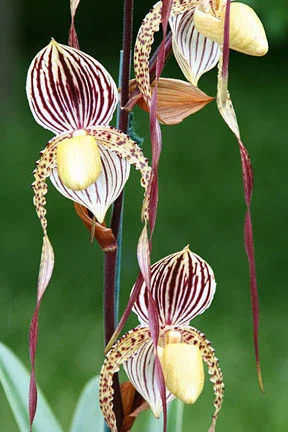
As we delve into the world of orchids, one species stands out for its unique charm and delicate beauty – the Paphiopedilum. Native to the tropical regions of Asia, Malaysia, and nearby islands, this exquisite orchid has captivated the hearts of many with its striking foliage and long-lasting flowers. In this article, we will explore the key characteristics of Paphiopedilum, provide practical tips for cultivation, and discuss common issues such as pests and diseases.
Characteristics of Paphiopedilum
The Paphiopedilum orchid is renowned for its slender, nastriform leaves that sprout directly from the rhizome, giving it a distinctive “angle.” The inflorescence develops at the center of the plant, producing a solitary flower that measures 5-10 cm in width. This regal bloom boasts an intense color and features a label-like shape, accompanied by a dorsal sepal that sets it apart from other orchid species.
The flowering season typically occurs between August and December, although specific varieties may have varying blooming periods.
Cultivating Paphiopedilum: Tips and Tricks
To successfully grow this stunning orchid in your home, follow these guidelines:
Exposure and Temperature
- The plant with glossy green leaves prefers lower temperatures (15°C during the day and 10°C at night).
- Conversely, the plant with mottled leaves thrives in higher temperatures (around 20°C), benefiting from diurnal temperature fluctuations.
Ventilation is crucial: Avoid strong air currents, which can harm the delicate foliage. Provide moderate light, avoiding direct sunlight exposure.
Ideal Potting Mix
Create a well-draining potting mix by combining:
- Medium-sized pine bark
- Filose sphagnum moss (30%)
- Perlite or eucalyptus fiber (10%)
- Coarse limestone or rocks (10%)
This blend ensures proper moisture retention and aeration for the roots.
Watering and Humidity
Maintain consistent humidity levels by:
- Watering every 2-3 weeks in summer
- Reducing frequency to once a week in winter
Avoid overwatering, which can lead to root rot. Use nebulizers or misting systems to maintain optimal humidity.
Fertilization
Feed your Paphiopedilum during the growing season (spring) with a balanced fertilizer (30 parts nitrogen, 10 parts phosphorus, and 10 parts potassium).
Reduce dosages in autumn and discontinue fertilizing during the winter months.
Pest and Disease Management
The Paphiopedilum is relatively resistant to pests, but may be affected by fungal diseases if proper precautions are not taken. Monitor for signs of infection, such as brownish discoloration on leaves or roots. If necessary, use insecticides or fungicides to prevent the spread of disease.
Interesting Facts about Paphiopedilum
This orchid has captivated our imagination with its exotic beauty and rich symbolism:
- Its name “Sandalo di Afrodite” (Sandalwood of Aphrodite) evokes ancient Greek mythology, referencing the goddess’s association with love and seduction.
- Some species of Paphiopedilum are pollinated by ants, which use their long antennae to transfer pollen between flowers.
By understanding the unique characteristics and needs of this exquisite orchid, you can create a harmonious environment that showcases its beauty for years to come.
Frequently Asked Questions
- How often should I water my Paphiopedilum?
Water your plant every 2-3 weeks in summer and once a week in winter. - What is the best way to fertilize my Paphiopedilum?
Feed your orchid with a balanced fertilizer during the growing season (spring) using the ratio of 30 parts nitrogen, 10 parts phosphorus, and 10 parts potassium. - How can I prevent pests from infesting my Paphiopedilum?
Monitor for signs of infection and use insecticides or fungicides as necessary to prevent the spread of disease. - What is the ideal temperature range for my Paphiopedilum?
The plant with glossy green leaves prefers temperatures between 15°C and 10°C, while the mottled-leaved variety thrives in temperatures around 20°C. - Can I grow multiple Paphiopedilum plants together?
It is best to keep each orchid species separate, as they have different light and temperature requirements.
Specialized Care for Paphiopedilum
Some Paphiopedilum varieties require specialized care:
- Epiphytes: These species can grow on other surfaces, such as tree trunks or rocks. Use a secure attachment method to prevent the plant from falling.
- Air plants: Some Paphiopedilum varieties are epiphytic and don’t require soil. Instead, they absorb moisture through their leaves.
Common Problems and Solutions
Don’t be discouraged if you encounter issues while growing your Paphiopedilum:
- Yellowing Leaves: Overwatering can cause yellowing leaves. Reduce watering frequency and ensure proper drainage.
- Brown Edges: Fungal diseases can lead to brown edges on the leaves. Monitor for signs of infection and treat promptly.
- Lack of Blooming: Insufficient light or inadequate temperature fluctuations may prevent flowering. Adjust your care routine accordingly.
Collecting Paphiopedilum
For collectors and enthusiasts, here are some essential tips:
- Choose reputable nurseries: Buy plants from trusted suppliers to ensure authenticity and health.
- Research species-specific requirements: Understand the unique needs of each variety to provide optimal conditions.
- Handle with care: Be gentle when handling plants to avoid damage or bruising.
Caring for Paphiopedilum in Bloom
When your Paphiopedilum is in bloom, it’s essential to provide special care:
- Minimize disturbance: Avoid touching the flowers or disturbing the plant during blooming.
- Maintain humidity levels: Keep the air around the plant humid to promote long-lasting blooms.
- Provide filtered light: Direct sunlight can cause the flowers to wilt quickly.
Propagation Methods
Paphiopedilum can be propagated using various methods:
- Division: Divide mature plants in the spring or autumn, taking care not to damage the roots.
- Seedling propagation: Sow seeds on a sterile surface and provide adequate light and temperature conditions.
- Tissue culture: Use tissue culture techniques to propagate new plants.
Tips for Displaying Paphiopedilum
To showcase your exquisite orchid, consider these display tips:
- Use a shallow pot: Show off the leaves by using a shallow pot that allows the plant’s unique shape to be appreciated.
- Create a natural environment: Replicate the plant’s native habitat by providing rocks, moss, or other plants.
- Add decorative elements: Incorporate decorative elements, such as shells or pebbles, to create an attractive display.
Conclusion
The Paphiopedilum is an exquisite orchid species that demands attention and care. By understanding its unique characteristics and needs, you can create a harmonious environment that showcases its beauty for years to come. Whether you’re a seasoned collector or a beginner enthusiast, this article has provided valuable insights into the world of Paphiopedilum.


