
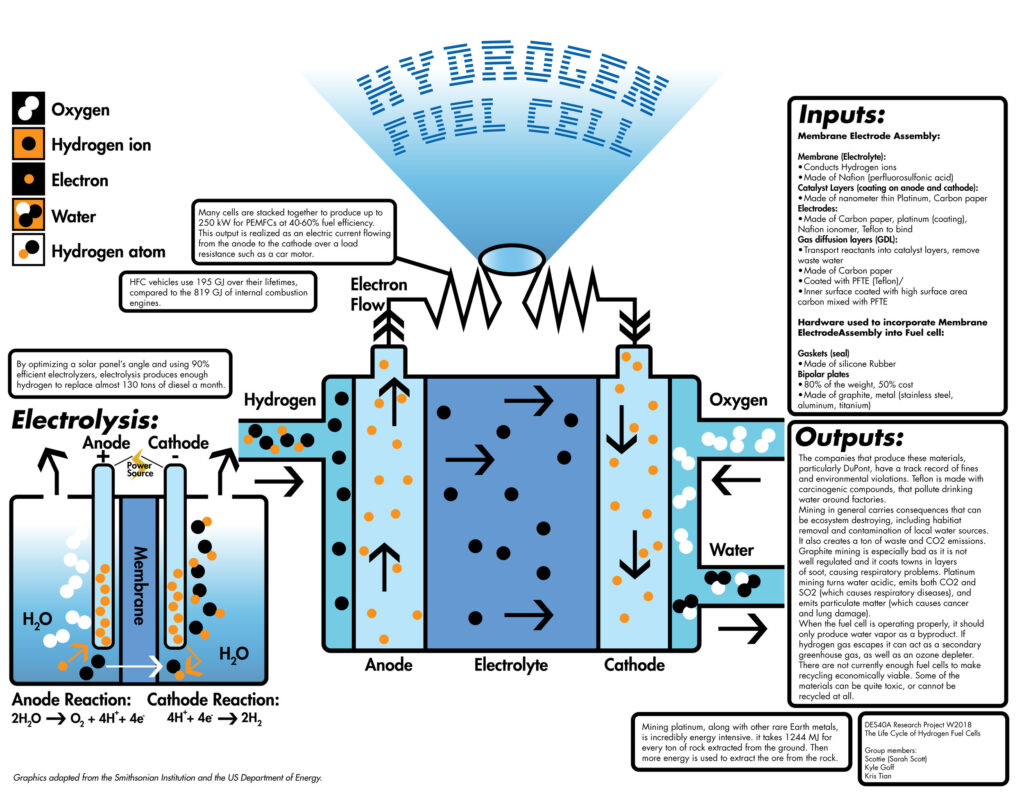
As we strive to reduce our reliance on fossil fuels and mitigate climate change, renewable energy sources have become an essential component of a sustainable future. Among these alternatives, hydrogen fuel cells are gaining traction as a promising technology that could revolutionize the way we generate and consume energy.
The Hydrogen Conundrum: A Complex Problem with Simple Solutions
Despite the abundance of renewable energy sources, our current technology is not efficient enough to harness their full potential. This is where hydrogen comes in – an element that has all the makings of a perfect energy carrier. However, it’s not just about having a promising material; we need to overcome the technical challenges associated with converting chemical energy into electrical energy.
Hydrogen has several advantages as an energy carrier: it’s abundant, can be extracted from various sources (such as water and biomass), and can be used in fuel cells, internal combustion engines, and even as a rocket fuel. However, there are also significant challenges to overcome, including the need for efficient production methods, storage, transportation, and conversion of hydrogen into electricity.
The Current State of Hydrogen Fuel Cells
In recent years, Germany has made significant strides in harnessing the power of hydrogen fuel cells, integrating them with wind and biogas energy sources. This innovative approach has shown promising results, but there’s still much work to be done. The development of more efficient and cost-effective technologies is crucial for widespread adoption.
The use of hydrogen fuel cells has been gaining popularity, particularly in the automotive industry. Several major car manufacturers have announced plans to phase out gasoline-powered vehicles in favor of hydrogen fuel cell cars. However, there are still significant challenges to overcome before this transition can occur on a large scale.
Breaking Down Barriers: A Breakthrough by the University of Central Florida
The University of Central Florida (UCF) has made a groundbreaking discovery that could change the game for hydrogen fuel cells. By developing a new catalyst material, researchers have improved the efficiency and reduced costs of these energy-harvesting devices. This breakthrough has significant implications for the automotive industry and beyond.
The Role of Catalyst Materials in Hydrogen Fuel Cells
Traditional catalysts used in hydrogen fuel cells are often composed of platinum, which is expensive and limited in its ability to withstand acidic environments. Iridium is another element that can resist corrosion, but it’s also extremely costly. The UCF researchers have found a solution by creating an ultra-thin layer of gold, combined with palladium and tungsten.
The use of these materials reduces costs significantly compared to traditional platinum-based catalysts. Gold, in particular, has been shown to be effective at improving the efficiency of hydrogen fuel cells, while also providing a more sustainable alternative to platinum.
A Cost-Effective Solution for a Sustainable Future
The use of gold, palladium, and tungsten reduces costs significantly compared to traditional platinum-based catalysts. The UCF team’s approach is not only more efficient but also more sustainable. This development has far-reaching implications for the automotive industry, which could potentially phase out gasoline-powered vehicles in favor of hydrogen fuel cell cars.
The use of gold, palladium, and tungsten also has significant environmental benefits. Hydrogen fuel cells produce only water and heat as byproducts, making them a cleaner alternative to traditional fossil fuels. As our reliance on these energy sources increases, so do the benefits for the environment.
Environmental Benefits: A Brighter Future Ahead
The shift towards hydrogen fuel cells offers a cleaner alternative to fossil fuels, reducing greenhouse gas emissions and pollution. According to estimates, widespread adoption of hydrogen fuel cell technology could reduce carbon dioxide emissions by up to 70%.
As we move forward, it’s clear that this technology has the potential to revolutionize the way we generate and consume energy. By embracing innovation and collaboration, we can create a brighter future for all.
The Future of Hydrogen Fuel Cells
While significant challenges remain, the potential of hydrogen fuel cells is vast. In the coming years, researchers will continue to develop new catalyst materials, improve efficiency, and reduce costs. Governments around the world are also investing in research and development, with several countries setting ambitious targets for hydrogen production and adoption.
The use of hydrogen fuel cells has far-reaching implications for the automotive industry, with potential applications in electric vehicles, public transportation, and even power generation. As this technology continues to evolve, we can expect to see significant advancements in efficiency, cost-effectiveness, and sustainability.
Conclusion: A New Era for Renewable Energy
The University of Central Florida’s breakthrough in hydrogen fuel cells represents a significant milestone in the pursuit of renewable energy. As we move forward, it’s clear that this technology has the potential to revolutionize the way we generate and consume energy. By embracing innovation and collaboration, we can create a brighter future for all.
Frequently Asked Questions
- What is hydrogen fuel cell technology?
Hydrogen fuel cells are devices that convert chemical energy into electrical energy, producing only water and heat as byproducts. - How does the UCF breakthrough work?
The University of Central Florida researchers developed a multi-stratum catalyst material using gold, palladium, and tungsten, which maximizes energy conversion rates while protecting the catalysts from corrosive substances. - What are the environmental benefits of hydrogen fuel cells?
Hydrogen fuel cells offer a cleaner alternative to fossil fuels, reducing greenhouse gas emissions and pollution. - Can we phase out gasoline-powered vehicles with hydrogen fuel cell cars?
Yes, as hydrogen fuel cell technology becomes more efficient and cost-effective, it’s possible that gasoline-powered vehicles could become obsolete. - How will the use of gold, palladium, and tungsten affect costs?
The use of these materials reduces costs significantly compared to traditional platinum-based catalysts. - What is the current state of hydrogen fuel cell technology in Germany?
Germany has made significant strides in harnessing the power of hydrogen fuel cells, integrating them with wind and biogas energy sources. - Can we replicate this breakthrough with other materials?
While the UCF researchers’ approach is innovative, it’s unlikely that other materials will match its efficiency and cost-effectiveness. - What are the next steps for hydrogen fuel cell technology?
Further research and development are needed to optimize and commercialize this technology before it can be widely adopted.
Recommendations
- Increase investment in research and development: Governments, industries, and individuals must invest in research and development to improve efficiency, cost-effectiveness, and sustainability.
- Develop infrastructure for hydrogen production and transportation: The creation of a well-developed infrastructure is crucial for widespread adoption of hydrogen fuel cells.
- Promote education and awareness: Educating the public about the benefits and challenges of hydrogen fuel cell technology is essential for fostering support and collaboration.
- Encourage international cooperation: Collaboration between countries can accelerate progress, share knowledge, and reduce costs.
- Support policy initiatives: Governments should implement policies that encourage the adoption of hydrogen fuel cells, such as tax incentives, subsidies, and regulations.
Conclusion
The future of renewable energy is bright, and hydrogen fuel cells are at the forefront of this revolution. By embracing innovation, collaboration, and sustainable practices, we can create a brighter future for all.


