
What are Plant Pathogens?
As we explore the intricate relationships between plants, pathogens, and climate change, it’s essential to start with the basics. What exactly are plant pathogens, and how do they impact our food systems?
Plant pathogens are microorganisms that cause diseases in plants. They can be viruses, bacteria, fungi, or other types of organisms that harm plants. Some common examples of plant pathogens include powdery mildew, rusts, leaf spot, and root rot.
These pathogens can be broadly categorized into two groups:
- Biological pathogens: These are microorganisms that directly infect plants, causing damage to tissues and organs.
- Non-biological pathogens: These are abiotic factors such as extreme temperatures, drought, and salinity that can also cause plant diseases.
The Impact of Climate Change on Agroecosystems
Climate change is having a profound impact on agroecosystems worldwide. Rising temperatures and changing precipitation patterns are altering the conditions under which plants grow, making them more susceptible to diseases. This shift can have devastating consequences for global food production.
In order to understand the complexities of this issue, it’s crucial to consider the various ways in which climate change is affecting agroecosystems. These changes include:
- Warmer temperatures: Rising temperatures are altering plant growth patterns and increasing the duration of plant susceptible periods.
- Changes in precipitation patterns: Changes in rainfall patterns are affecting soil moisture levels, reducing crop yields, and promoting disease outbreaks.
- Increased frequency of extreme weather events: Extreme weather events such as droughts and floods can also impact crop yields and increase the risk of disease.
These factors can lead to shifts in the distribution and prevalence of diseases, ultimately impacting the health and productivity of crops.
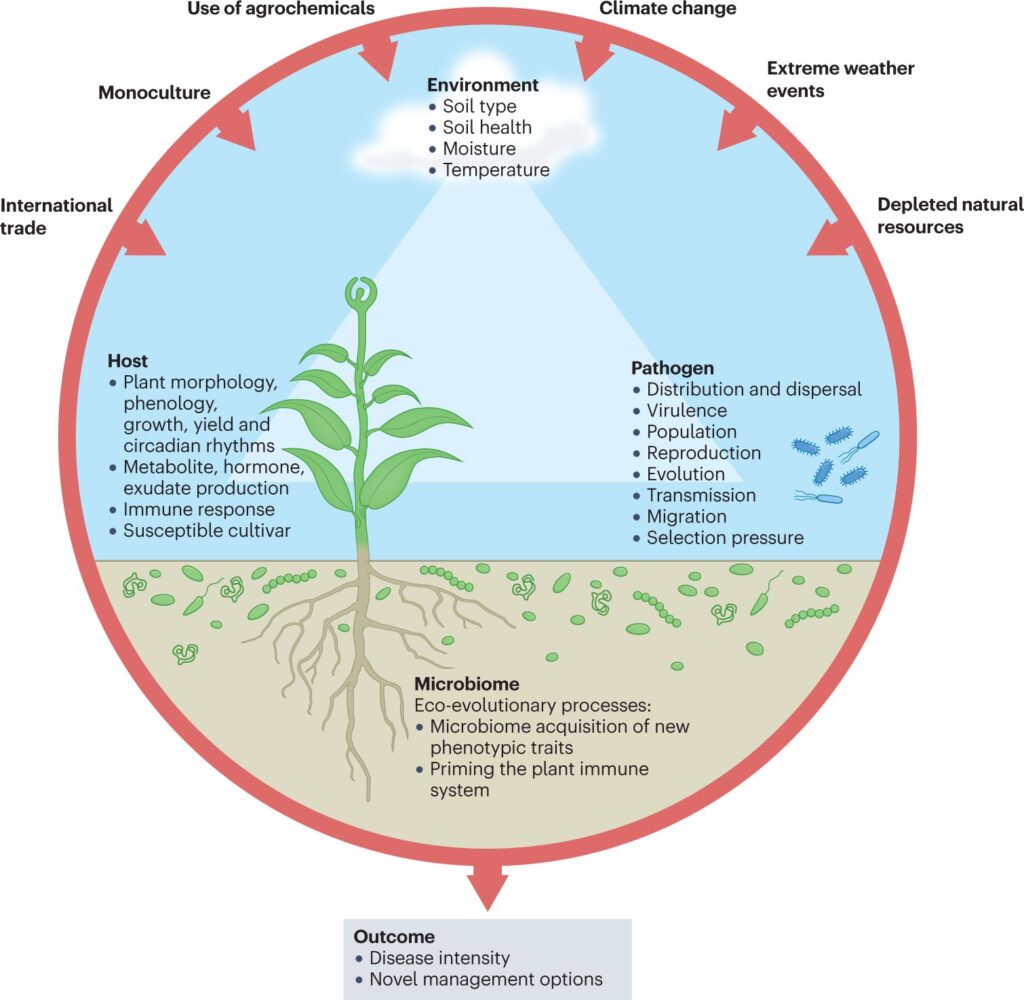
The “Triangle of Disease”
Understanding the interactions between plant pathogens, their hosts, and the environment is vital for developing effective strategies for disease management. The concept of the “triangle of disease” highlights the interconnectedness of these three components:
- Plant host: The plant that harbors the pathogen
- Pathogen: The microorganism that causes disease
- Environment: The external factors that influence the interaction between host and pathogen
Changes in climate are affecting all three components of this triangle, leading to shifts in the distribution and prevalence of diseases.
For example:
- A plant species may become more susceptible to a particular disease due to changes in temperature.
- A new pathogen may emerge as a result of changing environmental conditions.
- The distribution of a particular pathogen may shift from one region to another due to changes in precipitation patterns.
Specialized Machines of Time: Modeling Disease Outbreaks
Studying the impact of climate change on plant pathogens requires specialized models and experiments. These tools can simulate the effects of different environmental conditions on disease outbreaks and help researchers predict future trends.
Some key aspects to consider when modeling disease outbreaks include:
- Climate-driven shifts in disease distributions: Understanding how changes in temperature and precipitation patterns affect the distribution of diseases
- Phenological mismatches: Identifying instances where changes in climate cause mismatched timing between plant growth and pathogen reproduction
- Epidemiological modeling: Developing mathematical models to predict the spread of diseases
The Role of Insects
Insects play a crucial role in the transmission of diseases between plants. Changes in temperature and precipitation patterns are affecting insect populations and their ability to transmit diseases.
Some key factors to consider when examining the impact of insects on disease transmission include:
- Vector-borne diseases: Understanding how insects like mosquitoes, ticks, and aphids transmit diseases
- Habitat disruption: Examining the effects of climate change on insect habitats and populations
Adapting to Climate Change
To address the challenges posed by climate change, it’s essential to develop effective adaptation strategies. These strategies include:
- Modeling and simulation tools: Using specialized models to predict disease outbreaks and inform decision-making
- Integrated pest management practices: Implementing holistic approaches that combine physical, cultural, biological, and chemical controls
- Monitoring disease outbreaks closely: Continuously monitoring the spread of diseases to identify areas where intervention is needed
The Future of Plant Pathogen Management
As climate change continues to impact agroecosystems worldwide, it’s essential to develop effective strategies for managing plant pathogens. This includes:
- Continuing research: Investing in studies that examine the impact of climate change on plant pathogens
- Developing adaptation strategies: Implementing holistic approaches that combine modeling, simulation, and integrated pest management practices
- Promoting monitoring and reporting: Continuously monitoring disease outbreaks to identify areas where intervention is needed
By working together to address these challenges, we can ensure the sustainability of food production systems and build a more resilient future.
Frequently Asked Questions
Q: What are some common plant pathogens?
A: Some common examples include powdery mildew, rusts, leaf spot, and root rot.
Q: How is climate change affecting agroecosystems?
A: Climate change is altering the conditions under which plants grow, making them more susceptible to diseases.
Q: What role do insects play in disease transmission?
A: Insects can transmit diseases between plants, and changes in temperature and precipitation patterns are affecting their ability to do so.
Q: How can we adapt to climate change?
A: We can develop effective adaptation strategies by using modeling and simulation tools, implementing integrated pest management practices, and monitoring disease outbreaks closely.


