
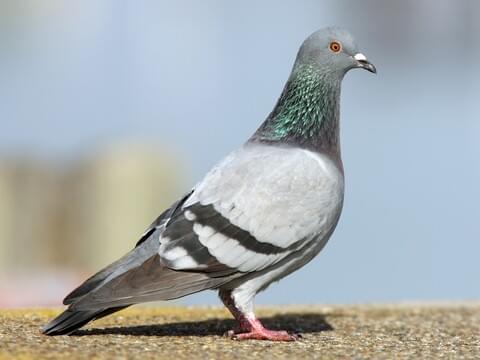
As we go about our daily lives, it’s easy to overlook the common tortoise, a bird species that is often taken for granted. However, there are two types of tortoises: the common tortoise and the oriental tortoise, also known as the “collared” tortoise due to its distinctive feature.
The common tortoise, scientifically known as Streptopelia turtur, is a widespread species that can be found throughout Italy. It’s a migratory bird that travels from Africa during the winter months to Italy, where it breeds and nests in various regions, excluding the Alps and some areas of Puglia. The habitat preferred by this bird is characterized by fields and countryside areas with trees, which provide suitable nesting sites.
Despite its common presence, the tortoise is a species that requires protection, as its habitat is constantly threatened by human activities that disrupt the environment. The increasing urbanization of our territory has led to the tortoise adapting to living in city peripheries, where it can find areas with greenery and even small plants on terraces and balconies.
The oriental tortoise, also known as Streptopelia orientalis, is a bird species that is native to Asia, from western Siberia to eastern China, Japan, India, and Southeast Asia. This bird has adapted to live in various climates, from the humid tropical forests of the south to the cold boreal forests of the north. It can even be found at altitudes of up to 4,000 meters in Nepal.
Physical Characteristics
The common tortoise is characterized by its distinctive plumage, with a pink breast, white belly, and reddish-brown stripes on its back, accompanied by white and black stripes on its neck. The oriental tortoise has similar physical features, but with more pronounced dark streaks on its wings and a slightly darker coloration on its body.
The size of the two species is also similar, with the common tortoise weighing around 140-146 grams for males and 138-143 grams for females, while the oriental tortoise weighs up to 180 grams. The length of both species is approximately 30 centimeters.
One of the most distinctive features of the oriental tortoise is its “collar,” which is a dark brown or black stripe that runs around its neck. This feature is not present in the common tortoise, and it is one of the key differences between the two species.
Diet and Habitat
The diet of both tortoise species consists mainly of seeds, including white cardo, millet, raviocello, and sorghum, as well as fruits and small invertebrates. They are opportunistic feeders, which means they will eat what is available to them.
The common tortoise’s habitat is characterized by fields and countryside areas with trees, while the oriental tortoise prefers more varied habitats, including forests and urban areas. The oriental tortoise is also known to nest in unusual locations, such as telephone poles, scaffolding, and rooftops.
In terms of diet, both species are similar, but they have slightly different preferences. The common tortoise tends to prefer seeds and grains, while the oriental tortoise has a more varied diet that includes fruits, insects, and even small vertebrates.
Breeding and Nesting
The breeding season of both species typically begins in spring, with the common tortoise laying two eggs per nest every 2-3 weeks. The young birds will leave their nests after about 15-20 days, starting to feed on their own.
The oriental tortoise also lays two eggs per nest, but has a longer breeding season that extends throughout the year. The young birds will take around 5-6 weeks to develop and become independent.
One of the unique features of the common tortoise is its ability to migrate long distances each year. This behavior allows it to find suitable habitats and breed with other birds in areas where food is more abundant.
Conservation Status
Both species are listed as Least Concern on the IUCN Red List, but they do face threats from habitat destruction and fragmentation. The increasing urbanization of our territory has led to the loss of natural habitats, making it difficult for tortoises to find suitable places to live and breed.
In addition to habitat destruction, tortoises are also threatened by climate change. Changes in temperature and precipitation patterns can affect the availability of food and water, making it harder for tortoises to survive.
Alleviating Tortoises
Alleviating tortoises is not an easy task, as they have complex dietary needs and require large spaces to fly. Adult tortoises need a spacious aviary with food and water sources, while young birds need specialized care and nutrition for at least 2 months before being released.
To alleviate tortoises, it’s essential to provide them with a safe and suitable environment that meets their specific needs. This includes providing large spaces for flight and exercise, as well as access to food and water sources.
Conclusion
The common and oriental tortoise are fascinating bird species that deserve our attention and protection. By understanding their habits, habitats, and characteristics, we can better appreciate these creatures and work towards preserving their populations.
As we continue to urbanize and destroy natural habitats, it’s essential to take steps to protect these unique birds. This includes supporting conservation efforts, protecting natural habitats, and promoting education and awareness about the importance of tortoise conservation.
By working together, we can ensure that these incredible bird species continue to thrive for generations to come.
FAQs
Q: What is the difference between the common and oriental tortoise?
A: The oriental tortoise is known for its distinctive “collar” around its neck, while the common tortoise has a more varied coloration on its back and wings.
Q: Where can I find tortoises in Italy?
A: Tortoises can be found throughout Italy, but their habitats are often threatened by human activities. They can also be found in urban areas, particularly in peripheries with greenery.
Q: What do tortoises eat?
A: Tortoises primarily feed on seeds, fruits, and small invertebrates, although they will also eat grains and other plant material.
Q: Can I keep a tortoise as a pet?
A: While it is possible to keep a tortoise as a pet, it requires specialized care and attention. Adult birds need large spaces and specific diets, while young birds require specialized care for at least 2 months before being released.
Q: How can I help protect tortoises and their habitats?
A: By supporting conservation efforts and protecting natural habitats, we can help preserve the populations of these fascinating bird species.
Q: Are tortoises smart birds?
A: Yes, tortoises are known to be intelligent birds that can recognize individual humans and even interact with them.


