
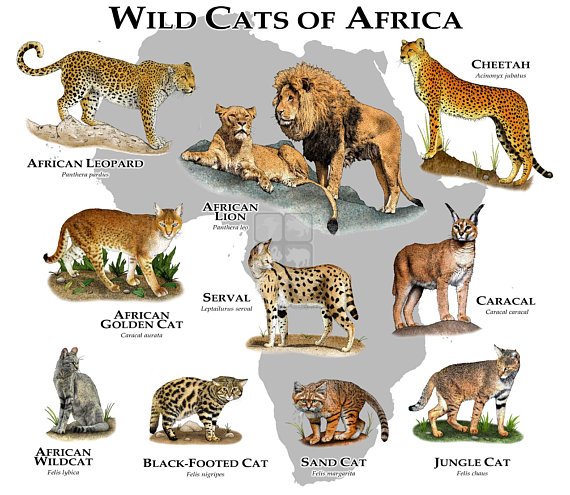
The Wild Cat: Characteristics and Varieties
As we explore the fascinating world of wild cats, it’s difficult to summarize their characteristics without getting lost in the vast array of species and subspecies. One must admit that some cats are truly cosmopolitan, having adapted to human environments while maintaining their wild essence. Let’s delve into the realm of the Wild Cat, exploring its features, habitats, and various forms.
Wild Cat: A Brief Overview
The Wild Cat, scientifically known as Felis silvestris Schreber, is a small feline species that has spread across continents. Its adaptability to different environments has led to numerous variations in appearance. We’ll focus on the African and Asian subspecies, as well as the Desert Cat of China, a lesser-known cousin.
Carnivorous Nature
As a skilled hunter, the Wild Cat feeds on small mammals, birds, and other smaller animals. Its agility and stealth enable it to thrive in various habitats, from savannas to forests and grasslands.
Distribution and Habitat
The Wild Cat’s range spans across Africa, Europe, and Asia, with a presence in many regions, including:
- Savannas
- Forests
- Grasslands
- Deserts
Its adaptability allows it to inhabit diverse environments, from the driest deserts to the lush forests.
Physical Characteristics
The Wild Cat’s physical appearance can vary significantly depending on its subspecies. Some notable features include:
- Coat color: From golden brown to dark gray, with distinctive markings
- Body size: Varies between 36 cm and 80 cm in length, with a tail measuring 21-45 cm
- Weight: Ranges from 1.6 kg to 13 kg, with most individuals weighing between 3-6 kg
Subspecies
There are currently five recognized subspecies of the Wild Cat:
- European Wild Cat: Characterized by its muscular build and distinctive coat patterns.
- African Wild Cat: Slender and agile, with a striking coat pattern featuring dark stripes and spots.
- Asian Wild Cat: Generally smaller than its African counterpart, with a short coat and prominent markings.
- Desert Wild Cat (China): A rare subspecies found in the mountainous regions of China.
Unique Characteristics
Each subspecies has distinct features that set it apart from others. For example:
- The European Wild Cat’s long, fluffy coat helps it blend into its surroundings.
- The African Wild Cat’s slender build allows for agility and speed.
- The Asian Wild Cat’s short coat enables it to conserve energy in its dry environment.
Conservation Status
As we explore the world of wild cats, it’s essential to acknowledge their vulnerability to habitat loss, hunting, and human-wildlife conflict. Conservation efforts are crucial to protect these magnificent creatures and their habitats.
The Importance of Preservation
Preserving the natural habitats of wild cats is vital for maintaining biodiversity and ecological balance. Habitat destruction due to human activities such as deforestation, urbanization, and agriculture can lead to population decline and even extinction.
Threats to Wild Cat Populations
Wild cat populations face numerous threats, including:
- Hunting: Many humans view wild cats as pests or compete with them for resources.
- Human-wildlife conflict: As human settlements expand, they encroach on wild cat habitats, leading to conflicts over food and territory.
- Disease: Wild cats are susceptible to diseases such as feline immunodeficiency virus (FIV) and feline leukemia virus (FeLV).
- Climate change: Changes in temperature and precipitation patterns can disrupt the delicate balance of ecosystems.
Conservation Efforts
Several organizations and initiatives work tirelessly to protect wild cat populations and their habitats. Some notable conservation efforts include:
- The International Union for Conservation of Nature (IUCN): Provides a global framework for conserving biodiversity, including wild cats.
- The Wildlife Conservation Society (WCS): Works with governments, local communities, and other organizations to protect wildlife habitats and prevent human-wildlife conflict.
What You Can Do
Individuals can contribute to the conservation of wild cat populations by:
- Spreading awareness: Educate friends and family about the importance of preserving wild cat habitats.
- Supporting conservation organizations: Donate to reputable organizations working to protect wildlife.
- Reducing carbon footprint: Make environmentally conscious choices to minimize your impact on ecosystems.
Conclusion
The Wild Cat is a fascinating species, with its adaptability and unique characteristics making it an intriguing subject for study. By exploring its physical features, habitats, and subspecies, we can gain a deeper appreciation for these incredible animals. As we continue to learn more about wild cats, it’s essential to acknowledge their vulnerability to habitat loss, hunting, and human-wildlife conflict. Conservation efforts are crucial to protect these magnificent creatures and their habitats.
FAQs
- What is the average lifespan of a wild cat?
- In the wild, wild cats typically live between 8-12 years.
- Can wild cats be domesticated?
- While some wild cats have been known to adapt to domestic life, they generally prefer their freedom in the wild.
- What is the primary threat to wild cat populations?
- Habitat loss and human-wildlife conflict are major concerns for many wild cat species.
- Can I help protect wild cats and their habitats?
- Yes! Support conservation efforts, reduce your carbon footprint, and spread awareness about the importance of preserving wild cat habitats.
- Are all wild cat subspecies recognized by scientists?
- No, new discoveries are continually being made, and some subspecies may be reclassified or merged as research progresses.
Recommended Articles
- “All Breeds of Cats”
- “Giant Cat Breeds”
- “Bengal Cat”
- “Margay or Weid Cat”
- “Kid-Friendly Cat Breeds”


