
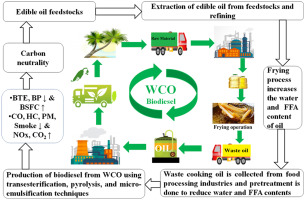
What Can Be Done with Used Cooking Oil?
Used cooking oil can be used to fuel your car in three different ways: filtering the oil and pouring it directly into the tank, filtering the oil and mixing it with gasoline or other solvents to fill up the tank, or transforming it into biodiesel. While the first two methods may seem simple, they are actually the least safe options. The third method, transforming used cooking oil into biodiesel, is a more complex process that requires no modifications to your engine, but needs a thorough transformation of the oil.
Understanding the Transesterification Process
The process of transforming used cooking oil into biodiesel is called transesterification. This chemical reaction produces glycerin and liquid soap as byproducts. Transesterification is an esterification process that involves the conversion of triglycerides in the used cooking oil into fatty acid methyl esters (FAMEs), which are the main components of biodiesel.
Key Differences Between Gasoline and Used Cooking Oil
If you observe the classic gasoline, you’ll notice that it has a different viscosity than used cooking oil. Gasoline is much thinner because its chemical structure lacks the “triglycerides” that characterize used cooking oil. The engines in your car rely on this viscosity to function properly. The triglyceride content in used cooking oil can range from 70% to 90%, while gasoline contains less than 2%.
To transform used cooking oil into biodiesel, we need to make it less viscous, just like gasoline. This is achieved by converting the triglycerides into fatty acid methyl esters (FAMEs), which have a lower viscosity.
Using a Catalyzer for Transesterification
The transformation of used cooking oil into biodiesel begins with the use of a catalyst, a chemical agent that can break the bonds between glycerol and the three fatty acids (the most common one is potassium hydroxide). This breaks the “triglycerides” bond in favor of introducing methanol, which creates the metyl ester, the main component of biodiesel. Methanol can be substituted with ethyl alcohol (ethanol).
The catalyst used for transesterification is usually a homogeneous base catalyzer, such as potassium hydroxide (KOH), sodium hydroxide (NaOH), or calcium oxide (CaO). The choice of catalyst depends on the type of oil being used and the desired properties of the biodiesel.
Purification of Used Cooking Oil
Before proceeding with the transformation process, it’s essential to purify the used cooking oil. This involves filtering the oil to remove any impurities, such as food residue, metal particles, or other contaminants. The filtered oil is then dried to remove any excess moisture, which can affect the transesterification process.
A Safer Alternative: Transforming Used Cooking Oil into Biodiesel
Transforming used cooking oil into biodiesel is a safer alternative that requires no modifications to your engine. However, it does require a more complex transformation process. This method is also more environmentally friendly, as it reduces the amount of waste generated by using discarded cooking oil.
How Transesterification Works in Practice
Here’s an overview of the transesterification process:
- Purifying the Used Cooking Oil: Remove any impurities from the used cooking oil.
- Mixing with a Catalyzer: Mix the purified oil with a catalyst to break down the triglycerides.
- Introducing Methanol: Introduce methanol into the mixture to create the metyl ester.
- Transforming into Biodiesel: Transform the mixture into biodiesel.
The Transesterification Process: A Step-by-Step Guide
Here’s a more detailed step-by-step guide on how to transform used cooking oil into biodiesel:
- Gather Equipment and Materials: You’ll need a filter press, a mixing tank, a catalyst, methanol, glycerin, and a distillation apparatus.
- Purify the Used Cooking Oil: Filter the oil to remove any impurities, such as food residue or metal particles.
- Dry the Oil: Dry the filtered oil to remove any excess moisture.
- Mix with Catalyst: Mix the dried oil with a catalyst, such as potassium hydroxide (KOH), in a 1:10 ratio.
- Introduce Methanol: Introduce methanol into the mixture in a 1:5 ratio.
- Heating and Mixing: Heat the mixture to around 80°C and mix it thoroughly for about an hour.
- Distillation: Distill the mixture to separate the biodiesel from the glycerin and soap.
- Filtering: Filter the biodiesel to remove any impurities or contaminants.
Conclusion
Producing biodiesel from used cooking oil is a viable alternative that requires no modifications to your engine. While it’s a more complex process, it’s a safer and environmentally friendly option. The transesterification process is a crucial step in transforming used cooking oil into biodiesel, and understanding the process is essential for producing high-quality biodiesel.
Frequently Asked Questions (FAQs)
- What can be done with used cooking oil?
- You can use it to fuel your car in three different ways: filtering the oil and pouring it directly into the tank, filtering the oil and mixing it with gasoline or other solvents to fill up the tank, or transforming it into biodiesel.
- Is it safe to use used cooking oil as a fuel?
- The first two methods are less safe options that require specialized engines (tetrafuel or flex fuel).
- How do I transform used cooking oil into biodiesel?
- You need to purify the oil, mix it with a catalyst, introduce methanol, and then transform it into biodiesel.
- What are the benefits of transforming used cooking oil into biodiesel?
- It’s a safer alternative that requires no modifications to your engine, produces fewer emissions, and is environmentally friendly.
- Can I use any type of used cooking oil for biodiesel production?
- No, you need to use high-quality, pure vegetable oil.
- How much energy can be produced from used cooking oil?
- The amount of energy produced depends on the amount of used cooking oil and the efficiency of the transesterification process.
- What is the cost of producing biodiesel from used cooking oil?
- The cost varies depending on the location, equipment, and labor costs.
- Can I produce biodiesel at home?
- Yes, but it requires specialized equipment and knowledge to ensure a safe and efficient transformation process.
Common Mistakes to Avoid When Producing Biodiesel from Used Cooking Oil
- Using the wrong catalyst: Using the wrong catalyst can affect the quality of the biodiesel produced.
- Not purifying the oil properly: Not filtering or drying the oil properly can lead to impurities in the final product.
- Not controlling temperature and pressure: Not controlling the temperature and pressure during the transesterification process can result in a lower-quality biodiesel.
- Using too much methanol: Using too much methanol can affect the quality of the biodiesel produced.
Conclusion
Producing biodiesel from used cooking oil is a viable alternative that requires no modifications to your engine. While it’s a more complex process, it’s a safer and environmentally friendly option. By understanding the transesterification process and avoiding common mistakes, you can produce high-quality biodiesel from used cooking oil.


