
Understanding Dew Point: The Temperature Limit Beyond Which Miracles Happen
As we go about our daily lives, there are often moments when something remarkable happens without us even noticing. One such phenomenon is the dew point, a temperature limit that signals the start of something special – like a miracle in nature.
But what exactly is the dew point? In English, it’s simply referred to as “dew point,” and for good reason. It’s not just a temperature; it’s a state of thermodynamics that can be identified by two parameters: temperature and pressure.
What is Dew Point?
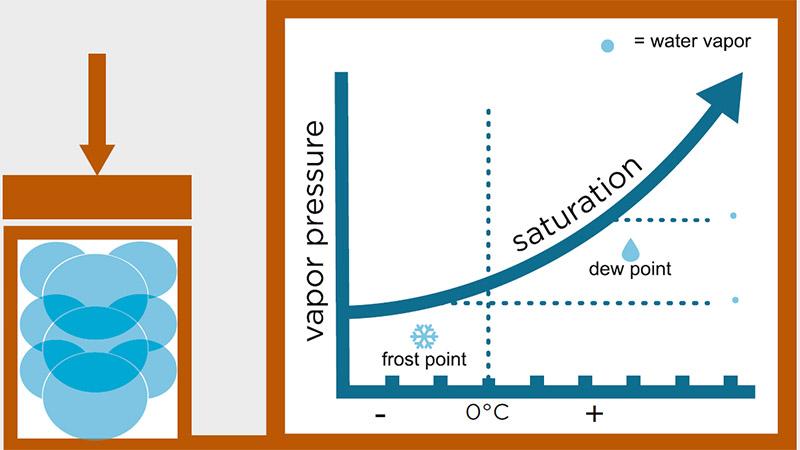
Imagine a mixture of liquid and vapor in a system. When this mixture reaches the dew point, it becomes saturated with vapor. If you continue to increase the temperature or decrease the pressure, the mixture will no longer exist as both liquid and gas but only as vapor.
However, if you don’t surpass the dew point, the system can remain in equilibrium between liquid and vapor states.
Why is Dew Point Important?
In meteorology, dew point refers mainly to a temperature. To condense air without any pressure change, it needs to be cooled to a specific temperature. If this temperature falls below zero, we’re talking about the frost point; otherwise, we’re dealing with the regular dew point.
So why do we care about dew point? Because it defines how low temperatures can go for an air mass at constant pressure before condensation begins. In practical terms, this leads to the formation of fog, dew, or even rain because tiny water droplets remain suspended in the air.
The Importance of Dew Point Beyond Walls
But dew point’s impact isn’t limited to clouds and precipitation; it also affects our homes and buildings. Just like how we can feel a slight difference between temperatures, dew point plays a crucial role when considering humidity levels inside walls.
Therefore, knowing your home’s humidity level is vital – especially if you’ve ever noticed condensation on windows or walls.
Measuring Dew Point
Fortunately, measuring dew point has become simpler with modern equipment. Calculating it can still be less accurate but there are formulas to approximate within specific limits.
One of the most commonly used formulas for calculating dew point involves looking at temperature and humidity data from a hygrometer.
The Role of Dew Point in Our Lives
Dew point plays an essential role when we experience heatwaves. For instance, temperatures above 17°C (63°F) can lead to mild discomfort, while those exceeding 21°C (70°F) signal potential heat stress.
Beyond meteorology, the dew point is also linked to thunderstorm formation; higher values increase the likelihood of storms.
Choosing a Dew Point Measuring Device
To measure humidity levels in the air outside your home or office, you need an instrument called a thermohygrometer. The more accurate and versatile it can be used both indoors and outdoors makes digital devices better options.
You might find this device on Amazon for just $14 – making monitoring your environment easier than ever.
Understanding Dew Point in Different Environments
Dew point is not just limited to one specific environment; it’s a universal concept that applies to various fields such as:
- Meteorology: Understanding dew point helps us predict weather patterns, including fog, rain, and thunderstorms.
- Construction: Knowing the dew point can help builders design buildings with optimal ventilation systems and materials that can withstand humidity levels.
- Home Maintenance: Regularly checking the dew point can help homeowners identify moisture issues in their homes and make necessary repairs to prevent damage.
Common Mistakes to Avoid When Measuring Dew Point
To get accurate readings, it’s essential to avoid common mistakes such as:
- Incorrect calibration: Make sure your thermohygrometer is properly calibrated before taking measurements.
- Environmental factors: Avoid measuring dew point in areas with high winds, direct sunlight, or other environmental factors that can affect accuracy.
- Inadequate data: Ensure you have sufficient data points to accurately calculate the dew point.
Conclusion
Understanding dew point offers us new insights into nature’s mechanisms and how they impact our daily lives.
By grasping the basics of thermodynamics, it becomes clear why measuring humidity is crucial in various fields like meteorology, construction, and even home maintenance.
Stay curious, and keep on learning!
Frequently Asked Questions
- What is dew point?
Dew point refers to a temperature that signals when air starts to condense into liquid or ice due to saturation with water vapor. - How does dew point affect our climate?
Dew point plays a crucial role in precipitation and storm formation, especially thunderstorms. - Why is measuring dew point important for buildings?
Knowing your home’s humidity level can help detect potential moisture issues and improve indoor comfort. - What equipment do I need to measure dew point?
To accurately measure dew point, you’ll need a thermohygrometer or other temperature- and humidity-measuring instruments like hygrometers. - Can I use any device to measure dew point?
No, measuring dew point requires precise devices capable of measuring both temperature and humidity levels, as well as accurate calculations or formulas. - Is there an optimal range for dew point measurements?
Yes; generally, a dew point between 10°C and 25°C (50°F -77°F) is considered ideal for most applications, but this can vary depending on location and purpose. - Can I use digital devices to measure dew point?
Yes; many modern thermohygrometers are digital, making it easier to obtain accurate readings both indoors and outdoors. - Are there any special considerations when measuring dew point in certain environments?


