
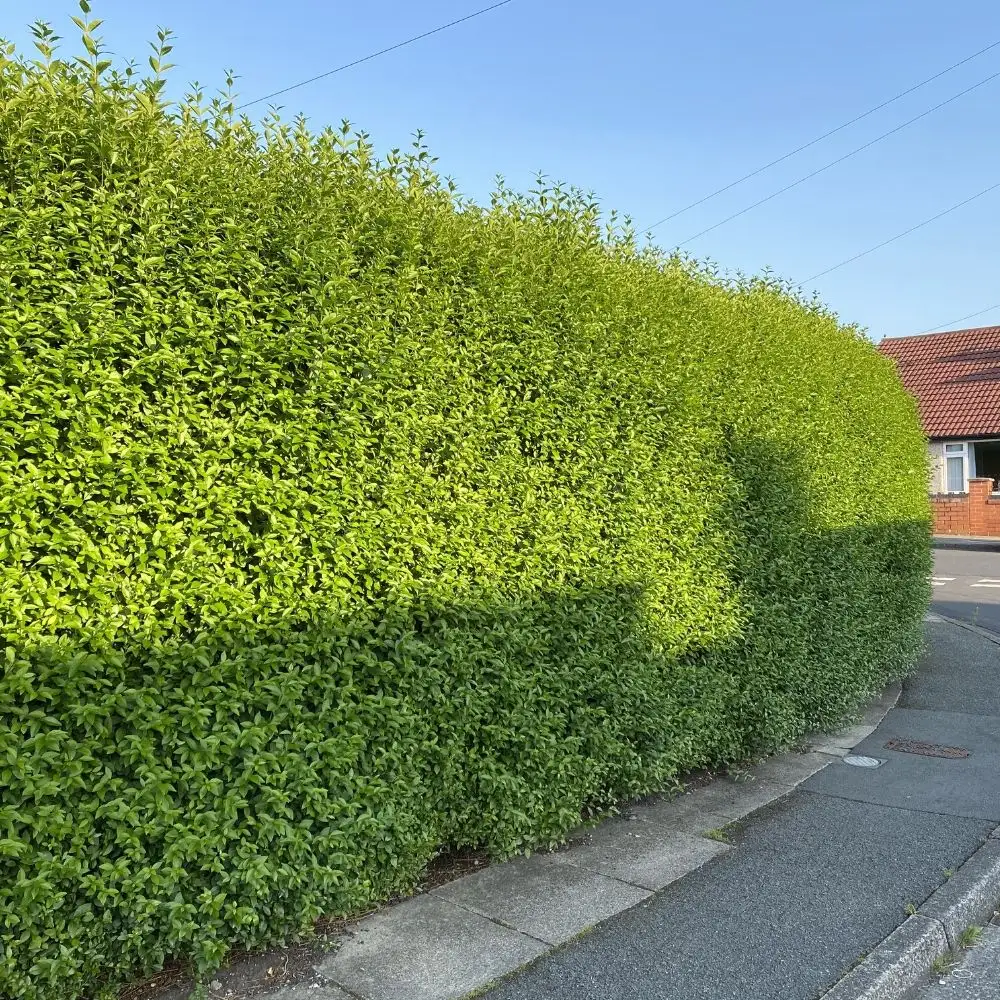
A ligustrum hedge in your garden can be a versatile addition. It can serve as a boundary, divide two areas of the green space, border a path, create shade, or even create a labyrinth. This evergreen shrub has noble traditions and is widely used in Italian topiary art, and its ability to adapt to little land makes it easy to cultivate.
Why Choose Ligustrum Hedges?
Ligustrum hedges can be grown in pots, although they will have smaller dimensions and less resistance to cold temperatures compared to those grown in full field. When it comes to maintenance, the ligustro requires care and attention but not more than other shrubs. Starting a ligustrum hedge is relatively easy.
Benefits of Ligustrum Hedges
There are many benefits to having a ligustrum hedge in your garden:
- Aesthetic appeal: Ligustrum hedges have beautiful, glossy leaves that provide year-round interest and beauty.
- Structural support: A well-maintained ligustrum hedge can provide structural support for other plants or trees.
- Noise reduction: Ligustrum hedges can act as a natural sound barrier, reducing noise pollution.
- Wildlife habitat: Ligustrum hedges can provide a habitat for small animals and birds.
Starting a Ligustrum Hedge
To start a ligustrum hedge, you’ll need to get your potted plants. As a common evergreen shrub, they are easy to find in nurseries. A suitable variety for creating thick hedges is the lugustrum vulgare, but there are many other varieties that can be grown as an alberello or deciduous. Before buying, make sure you ask for precise information.
If you already have a ligustrum hedge, you might consider multiplying it by taking cuttings, which is possible but requires time and experience. The ideal time to take cuttings from evergreen shrubs like ligustrum is August. Cut the stems with a small portion of the main stem (tallone) using a sharp knife. Remove the lower leaves and halve the middle ones with scissors, leaving only those at the top intact.
Next, plant the cuttings in pots about 15 cm apart, making sure the soil is loose and keeping it consistently moist. You can use a root stimulator to encourage new roots growth. In the spring, you can harvest your new plants and keep them in a pot for another year or transplant them immediately (they’ll be more fragile). Regular pruning is necessary.
Root Stimulators for Cuttings
The ideal time to start a new ligustrum hedge with already grown potted plants is September. To prepare the holes for planting, smoothen out the soil up to 40 cm deep using a fork and cover it with compost or mature manure. To maintain alignment, you can use a string between two stakes placed along the planned line of planting.
Compost Bio 50 Lt
Once you’ve planted your ligustrum hedge (even in rows if desired), close the holes with soil, forming a gentle curve near the base; this will guide water and irrigation to the roots. After planting, it’s essential to provide plenty of watering, gradually decreasing dosages as the weather cools down until the first frost.
Pruning Ligustrum Hedges
Proper pruning is crucial for maintaining your beautiful ligustrum hedge. Both shape and health are affected by pruning. A fully grown ligustrum can reach 2-4 meters in height but tends to “filare” while keeping leaves at the top of the plant and shedding them from the base.
A pre-winter cleaning is necessary to remove dry twigs, followed by two or three pruning sessions throughout the year. The first one should occur in early spring, with a second pruning session taking place in September. However, if the first pruning takes place later, there might be only one pruning session required. Pruning can be done using either hand pruners or electric shears.
Tips for Pruning Ligustrum Hedges
- Prune in sections: Divide your hedge into sections and prune each one separately to maintain evenness.
- Use a combination of techniques: Use both thinning cuts and reduction cuts to shape your ligustrum hedge.
- Don’t over-prune: Prune only what is necessary to maintain the health and appearance of your hedge.
Conclusion
In conclusion, ligustrum hedges are versatile and easy to maintain, providing beautiful foliage and structure to your garden. With their ability to adapt to small spaces, they make an excellent choice for adding beauty and functionality to your outdoor space.
Frequently Asked Questions (FAQs)
- How long does it take to establish a ligustrum hedge?
The establishment time of a ligustrum hedge can vary depending on factors like climate and soil quality. Generally, it takes several years for a newly planted hedge to fully mature. - What type of pruning tools are best suited for ligustrum hedges?
Ligustrum hedges can be pruned using either hand pruners or electric shears. The choice between the two will depend on personal preference and the desired level of precision. - Can ligustrum hedges be grown in containers?
Yes, ligustrum hedges can be grown in pots, although they may not reach their full potential size compared to those grown in open fields. - How often should ligustrum hedges be watered?
Ligustrum hedges require consistent moisture during the first year after planting. After that, it’s essential to adjust watering according to weather conditions and soil type. - Can ligustrum hedges be pruned in winter?
Pruning ligustrum hedges is typically done in early spring or late summer/early autumn when new growth begins. However, a pre-winter cleaning can be done to remove dry twigs and promote healthy growth. - What is the best time of year to multiply ligustrum hedges by taking cuttings?
The ideal time to take cuttings from evergreen shrubs like ligustrum is during their dormant season, usually in late summer or early autumn.
By following these guidelines, you’ll be able to create a beautiful and thriving ligustrum hedge that will provide years of enjoyment for your garden.


