
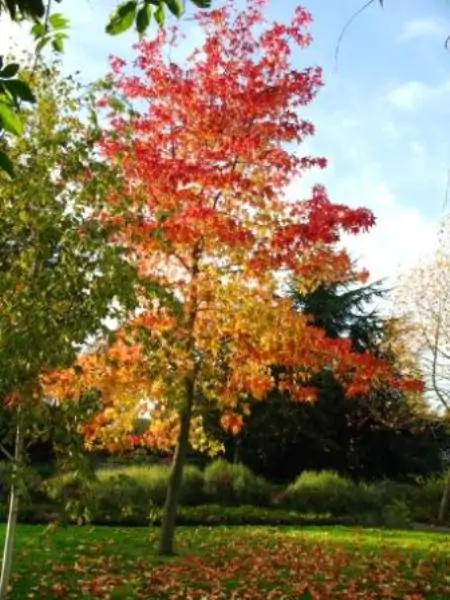
As we explore the world of trees, we often come across species that are lesser-known but no less fascinating. The Liquidambar tree, also known as the Albero dello storace liquido or amber tree, is one such specimen. Native to North America, this deciduous tree has been widely introduced to Italy and other parts of Europe due to its adaptability to milder climates. In this article, we’ll delve into the world of Liquidambar, exploring its characteristics, uses, and unique features that make it a popular choice for gardeners and enthusiasts alike.
Liquidambar: The Tree’s Basics
The Liquidambar is a genus of plants belonging to the family Altingiaceae. With several species under its umbrella, this tree is known for its elegant appearance and long lifespan. While it can grow up to 30 meters tall in ideal conditions, city gardens often feature smaller specimens, typically ranging from 5 to 6 meters high.
Liquidambar Styraciflua and Liquidambar Orientalis
Among the various Liquidambar species, two stand out for their distinct characteristics: Liquidambar styraciflua and Liquidambar orientalis. The latter is native to Anatolia and typically reaches a height of 7 meters, boasting a stunning canopy that adds beauty to any landscape. Its leaves are characterized by five lobes, becoming more pronounced in autumn as they display a kaleidoscope of colors.
In contrast, Liquidambar styraciflua hails from Florida and Mexico, growing up to 4 meters wide with a distinctive pyramidal shape. Its leaves have seven lobes, ranging from green to shades of yellow, orange, red, and brown during autumn. The tree’s bark is initially gray and smooth but becomes rugged and brown over time.
Liquidambar: A Tree with Unique Wood Properties
The Liquidambar’s wood is prized for its hardness and unique coloration, often featuring reddish-brown undertones. This durability makes it an ideal choice for woodworking projects. The tree’s bark also has a remarkable property: when stripped, it yields a viscous liquid known as amber, which has been used in perfumery and cosmetics due to its sweet aroma.
The Leaves of Liquidambar
As we explore the Liquidambar’s foliage, we find leaves that are deciduous, ranging from 5 to 7 lobes. Their surface is smooth and glossy, with a distinctive shape that becomes more pronounced as they mature. During autumn, the leaves display an array of colors, showcasing the tree’s vibrant beauty.
Fruits of Liquidambar
As the flowers fade, the Liquidambar produces capsules containing seeds, which are dispersed by wind. These fruit-like structures have a rounded appearance and can be found on the branches throughout the winter months. Each capsule contains one or two winged seeds, allowing them to disperse and propagate.
Liquidambar: Uses and Applications
Beyond its ornamental value, the Liquidambar has been used in various contexts:
- Gardening: As a popular choice for public and private gardens, the Liquidambar is valued for its ability to thrive in milder climates.
- Perfumery: The tree’s bark yields amber, which has been used in perfumery and cosmetics due to its sweet aroma.
- Woodworking: The tree’s wood is prized for its hardness and unique coloration, making it an ideal choice for woodworking projects.
Liquidambar’s Adaptability
One of the Liquidambar’s most significant advantages is its adaptability. This deciduous tree can thrive in a variety of environments, from full sun to partial shade, and tolerates a range of soil conditions. Its ability to withstand frost makes it an excellent choice for gardeners looking to add some winter interest to their landscape.
Liquidambar’s Maintenance
While the Liquidambar is relatively low-maintenance, it does require some care to keep it healthy and thriving:
- Pruning: Regular pruning can help maintain the tree’s shape and promote new growth.
- Watering: Consistent moisture levels are essential for the Liquidambar’s survival. Watering should be done regularly during dry spells, but not excessively.
- Fertilization: A balanced fertilizer can provide the necessary nutrients for healthy growth.
Liquidambar’s Toxicity
While the Liquidambar is generally non-toxic to humans and pets, it can be toxic if ingested in large quantities. The tree’s seeds, bark, and leaves contain a compound called styryl alcohol, which can cause nausea, vomiting, and diarrhea if consumed excessively.
Liquidambar: FAQs
- What is the Liquidambar tree also known as?
- Albero dello storace liquido
- Where is the Liquidambar tree native to?
- North America
- How tall can the Liquidambar tree grow?
- Up to 30 meters in ideal conditions
- What are the main characteristics of the Liquidambar’s leaves?
- Deciduous, smooth and glossy, ranging from 5 to 7 lobes
- Why is the Liquidambar tree used for perfumery?
- The tree’s bark yields amber, which has a sweet aroma
Conclusion
The Liquidambar tree is an incredible specimen that offers unique characteristics and uses beyond its ornamental value. From its striking foliage to its prized wood properties, this deciduous tree has something to offer every enthusiast. Whether you’re a gardener or simply an admirer of nature’s beauty, the Liquidambar is definitely worth exploring further.
By understanding the Liquidambar’s history, characteristics, and uses, gardeners and enthusiasts can appreciate the beauty and value of this remarkable tree. With its adaptability, low-maintenance requirements, and unique wood properties, the Liquidambar is an excellent choice for anyone looking to add some elegance and sophistication to their landscape.
In addition to its ornamental value, the Liquidambar has also been used in various cultural and historical contexts:
- Ancient Egypt: The Liquidambar was highly valued by ancient Egyptians, who used its wood to create furniture and other household items.
- Medieval Europe: During the Middle Ages, the Liquidambar was prized for its beauty and durability, making it a popular choice for gardens and parks.
In conclusion, the Liquidambar tree is an incredible specimen that offers unique characteristics and uses beyond its ornamental value. By understanding the Liquidambar’s history, characteristics, and uses, gardeners and enthusiasts can appreciate the beauty and value of this remarkable tree.


