
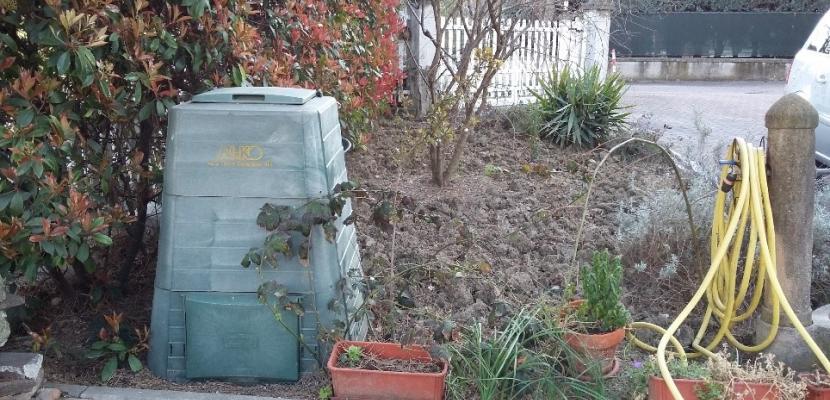
As a homeowner who produces compost, you’re entitled to reduce your waste tax. Here’s how recycling organic waste can pay off: what you need to do to get the reduction in waste tax.
The waste tax is the local tax related to waste management, set by municipalities and covering costs for waste disposal and collection. Homeowners who dispose of organic waste themselves through composting have the right to a reduction on the waste tax, let’s see how to do it.
What is the Waste Tax?
The waste tax, also known as TARI, is the new name given to the waste tax. It replaced Tares in 2014, which replaced Tarsu in its turn. The TARI makes part of the communal tax Luc with Imu and belongs to the Tasi, that is the local tax for indivisible services provided.
Homeowners with agricultural land can take advantage of specific reductions both on TASI (and TARI) and IMU. For this type of reduction on taxes, we refer you to the following pages:
Taxes on Agricultural Land
Property Tax on Agricultural Land
Composting at Home: How Much Can You Save on Waste Tax?
The TARI allows for various local reductions based on specific cases, including domestic composting. With domestic composting, you can save up to 30% of the final cost of the waste tax. However, the percentage of discount to apply to the waste tax due to compost varies from region to region and sometimes from province to province. In Trieste, the municipality has set a discount of 20% on TARI for users who have carried out composting, while in Bologna the reduction is only 10% of the tariff.
What Can You Save on Waste Tax with Composting?
Domestic composting allows better management of organic waste with benefits both for the home and the environment. According to data from Legambiente, a medium-sized Italian family that carries out the domestic composting system can save up to 60 euros per year on the waste tax. A single person living in a house around 50 square meters can save about 21 euros, while a couple living in an apartment of 60 square meters will save around 40 euros.
Reducing Waste Tax for Composting: How to Make the Request
Homeowners who carry out domestic composting and want to benefit from the reduction on the waste tax must submit an application to the Municipal Office of residence. The request can be made either on paper or by filling in a pre-stamped form, if the municipal office of residence disposes of one.
In the request to save on the waste tax, you need to insert:
- Your personal data complete of date and place of birth, tax code and residency.
- Data relating to the immovable.
- Methods of disposing of organic waste, if compost is placed in the garden and piled up, or if a composting bin is placed on the balcony.
In some municipalities in Italy (rare pearls), the offices of administration provide an “anagrafe” of composters. After submitting the request for reduction of TARI for composting, the municipality of residence will proceed to insert the applicant into the list of composters with the double function of identifying precisely the environmentally conscious citizens and constantly monitoring their activity. In the presence of legal requirements, the municipality of residence will accept the request for reduction on the waste tax and reserve the right to carry out eventual controls to verify the presence of the composting bin.
In some municipalities in Italy, the application cartacea contains the data previously mentioned should be accompanied by a photocopy of the contributor’s identity card and photos of the composting pile or composting bin.
The request for reduction on waste tax must be submitted every year to the Municipal Office of residence or sent via registered mail (with return receipt) to AMA.
For advice on how to start the domestic composting system optimally, we invite you to read the page dedicated to common problems (management of unpleasant odors, leakage of potential liquids…) of home composting: Composting at Home – Common Problems and Solutions
Benefits of Composting
Domestic composting allows for a better management of organic waste. With this method, you can reduce the amount of waste sent to landfills, decrease greenhouse gas emissions, and create a nutrient-rich fertilizer for your garden.
In addition to reducing waste tax, domestic composting also has several other benefits:
- Reduces the need for chemical fertilizers
- Improves soil quality
- Increases crop yields
- Helps control pests and diseases
Tips for Optimal Composting
To get the most out of your composting system, here are some tips to keep in mind:
- Add a mix of “green” materials (food waste, grass clippings) and “brown” materials (dried leaves, straw)
- Keep the pile moist
- Avoid adding meat, dairy, and oily foods
- Turn the pile regularly
Common Problems with Composting
While domestic composting can be a great way to reduce waste tax, there are some common problems that may arise:
- Unpleasant odors: This can be caused by too much food waste or not enough brown materials.
- Leaks of potential liquids
- Pests and diseases
Solving Common Problems with Composting
If you encounter any of these problems, here are some solutions to keep in mind:
- Unpleasant odors: Add more brown materials, turn the pile regularly, and avoid adding too much food waste.
- Leaks of potential liquids: Add a layer of straw or sawdust to absorb excess moisture.
- Pests and diseases: Add a few tablespoons of cinnamon or cayenne pepper to repel pests.
Conclusion
Domestic composting is a great way to reduce waste tax and create a nutrient-rich fertilizer for your garden. With the right techniques and strategies, you can minimize common problems and get the most out of your composting system.


