
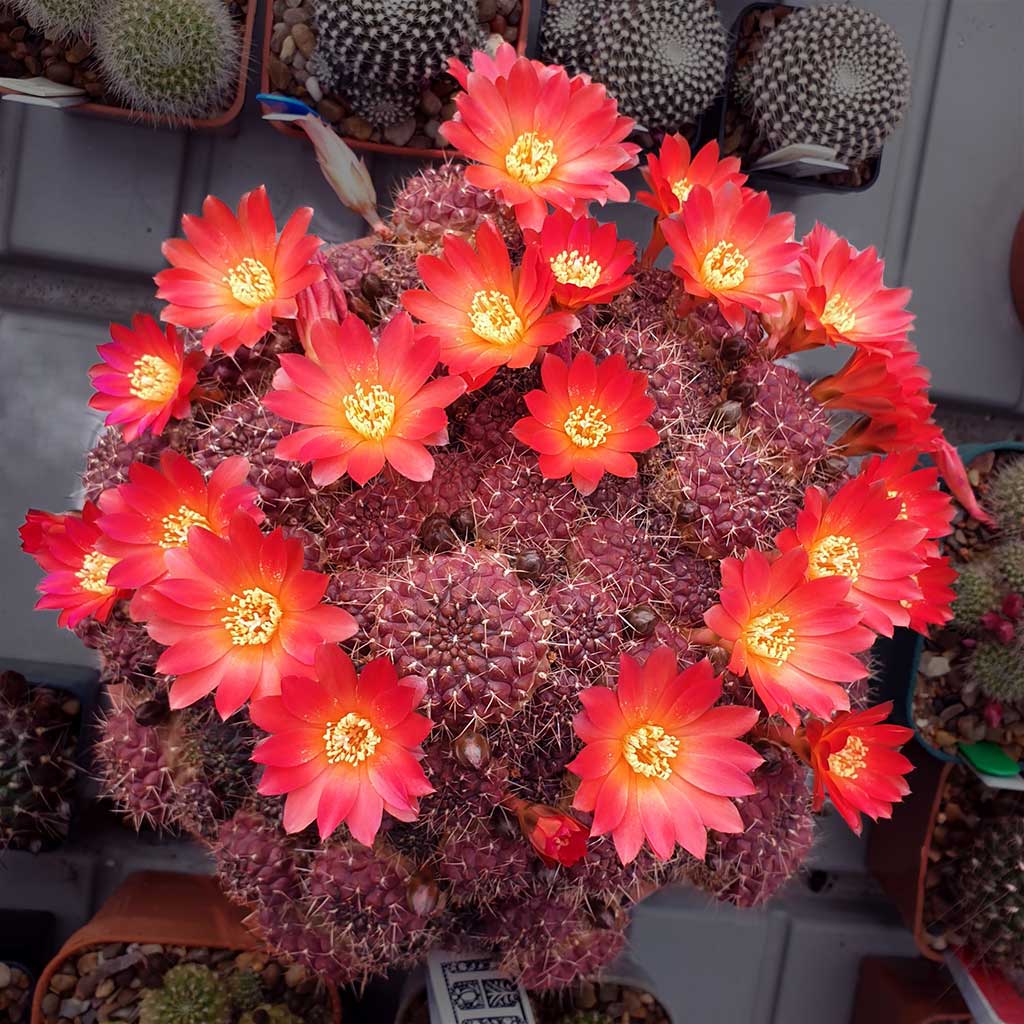
As we explore the world of cacti, one species stands out for its unique characteristics and adaptability – the rebutia. Belonging to the Cactaceae family, this genus comprises about sixty different species, all originating from the mountainous Andean regions of Bolivia and northern Argentina. In this article, we’ll delve into the main characteristics of rebutia, practical tips for cultivating it, and explore its fascinating history and symbolism.
Characteristics of Rebutia
Rebutia’s globular body, measuring approximately seven centimeters in diameter, is a striking feature. The stem is covered with spinous tuberules, arranged in spiral fashion, which sometimes form a depression at the apex. The spines are thin, giving the plant a prickly appearance, but some species, like Rebutia canigueralii, have very small spinelets.
The flowers of rebutia are large, cup-shaped, and reddish-orange (rarely white), blooming from the apices of tuberules placed at the base of the stem. The root system is poorly developed, making it essential to provide adequate care.
Rebutia also exhibits unique adaptations for its native habitat in the Andes Mountains. Its stems can store water, allowing the plant to survive during periods of drought. This adaptation enables rebutia to thrive in areas with limited rainfall.
How to Cultivate Rebutia
Cultivating rebutia requires attention to its specific needs, ensuring a thriving and healthy plant. Here are some practical tips:
Ideal Exposure
Rebutia prefers bright light but does not tolerate direct sunlight. Place the plant at partial shade, especially during the hottest seasons of the year. In winter, it can be exposed to more sunlight for a few hours.
During the coldest months, many Rebutia species can resist being outdoors with temperatures as low as -10°C, but always in dry conditions. For optimal care, consider placing rebutia under a frosty greenhouse or under the protection of a roof.
Suitable Soil for Housing
Rebutia requires well-drained soil, primarily composed of sand or gravel or pumice rock mixed with a small amount of slightly acidic earth. The root system is delicate, so avoid causing moisture to promote fungal growth.
Cover the surface of the vase with a thin layer of coarse gravel after placing the plant in a pot. Most Rebutia species have slow growth, requiring infrequent repotting every four or five years.
Watering the Plant
Water rebutia sparingly during spring-summer periods, waiting for the soil to be completely dry (approximately every four or five days). However, monitor the soil closely to avoid root rot. Make sure to water thoroughly after repotting and reduce watering in winter.
In warmer climates, rebutia may require more frequent watering due to the increased temperature. In this case, ensure that the pot has good drainage holes to prevent waterlogged soil.
Fertilizing the Rebutia
Fertilize rebutia monthly in spring using a specific product for cacti. Alternatively, use granular fertilizer for slow release to sprinkle on the surface of the soil. Ensure the perfect fertilizer contains essential nutrients and microelements.
Pest Control and Treatment
As with all succulent plants, rebutia is susceptible to attacks from pests like the red spider mite producing insidious webs between its spines. Mealybugs are also a concern, visible as fluffy tufts at a naked eye.
To control these pests, use neem oil or insecticidal soap according to the product’s instructions. In severe cases, remove infected plants from the pot and treat them with insecticides before reintroducing them to the garden.
Common Diseases
Rebutia is also susceptible to fungal diseases like root rot and crown rot. These infections can be caused by overwatering or poor air circulation around the plant.
To prevent these diseases, ensure good air circulation and avoid watering the plant during its resting period (winter). Use fungicides specifically designed for cacti when necessary.
Fascinating Facts about Rebutia
Rebutia is often considered a rare species due to its limited geographical range. However, this plant has gained popularity among succulent enthusiasts for its unique features and adaptability.
Contrary to popular belief, cacti are not always dry; each species benefits from at least one wet season depending on its natural habitat. Rebutia’s adaptation to the Andean climate provides a fascinating example of how plants have evolved to thrive in challenging environments.
Conclusion
In conclusion, rebutia is an intriguing and fascinating cactus, requiring attention to its unique characteristics and specific needs. By following practical tips for cultivation and understanding its history and symbolism, we can appreciate the beauty and strength of this incredible plant.
Frequently Asked Questions (FAQs)
- What type of soil does rebutia require?
Rebutia requires well-drained soil composed of sand or gravel or pumice rock mixed with slightly acidic earth. - How often should I water my rebutia?
Water sparingly during spring-summer periods, waiting for the soil to be completely dry (approximately every four or five days). - Can rebutia tolerate direct sunlight?
No, rebutia prefers bright light but does not tolerate direct sunlight. - What pests affect rebutia?
Red spider mite and mealybugs are common pests affecting rebutia. - How often should I fertilize my rebutia?
Fertilize monthly in spring using a specific product for cacti or granular fertilizer for slow release. - Can rebutia be grown outdoors?
Some Rebutia species can resist being outdoors with temperatures as low as -10°C, but always in dry conditions. - How do I prevent fungal diseases on my rebutia?
Cover the surface of the vase with coarse gravel and nebulize the plant with a rame-based product to prevent fungal diseases. - What symbolism does Rebutia represent?
In the language of flowers, Rebutia represents strength of will that allows us to overcome difficulties, tenacity, and determination.
Interesting Cultivation Techniques
Cultivators can experiment with various techniques to promote healthy growth and flowering in rebutia. Here are a few examples:
- Vernalization: Keep rebutia in a cool and sheltered place for 2-3 months during the winter season to induce flowering.
- Repotting: Repot rebutia every four or five years, using fresh potting mix and avoiding overwatering.
- Pruning: Prune Rebutia regularly by removing damaged or weak growth, promoting bushy shapes and encouraging flowering.
Conclusion
By following these practical tips, fascinating facts, and interesting cultivation techniques, you can unlock the secrets of rebutia’s unique characteristics and thrive in growing this incredible plant.


