
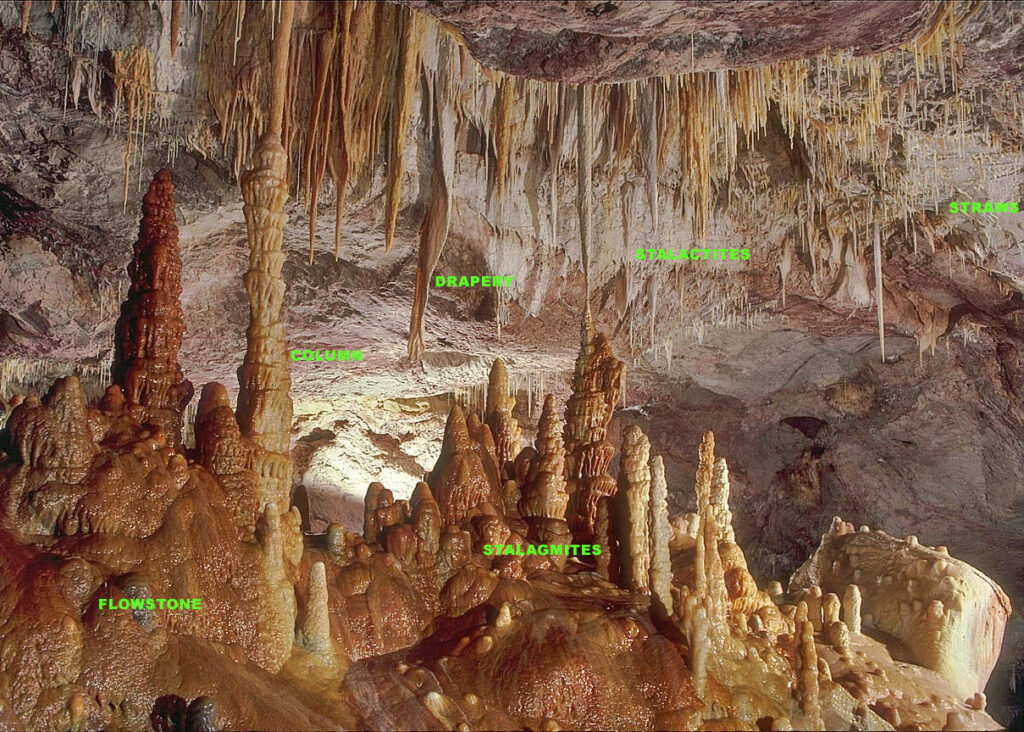
As we explore the world through science, it’s easy to confuse stalactites and stalagmites. These are terms we learn in elementary school, but let’s dive deeper into their formation, composition, and significance.
What Are Stalactites and Stalagmites?
Stalactites and stalagmites are both mineral formations that occur in caves, characterized by a similar composition of calcium carbonate (CaCO3). The key differences lie in their structure and growth pattern. Stalactites hang from the ceiling, while stalagmites rise from the floor.
Imagine a dripping faucet in a cave, where water drops onto the rock surface, depositing minerals like calcite. Over time, these deposits accumulate, forming the distinctive shapes we see today.
How Do Stalactites and Stalagmites Form?
The process of formation is fascinating:
- Water drips from the ceiling, carrying mineral-rich water.
- The minerals are deposited on the rock surface, creating a small cavity.
- As more water flows, the deposit grows, forming a stalactite.
- Meanwhile, the same process occurs on the floor, where the water collects and deposits minerals, forming a stalagmite.
As the stalactites and stalagmites grow, they may eventually meet in the middle, creating a column or cone-shaped formation.
Determining Stalagmite Shape
The shape of a stalagmite depends on several factors:
- The height from which the water droplets fall: Greater heights result in wider, flatter stalagmites.
- Water frequency: More frequent water flow leads to thicker, more compact stalagmites.
These unique formations can be found in various Italian caves, including those in Lazio, Puglia, and Sardegna. Each region offers a distinct geological history, resulting in diverse stalactite and stalagmite shapes and sizes.
The Science Behind Stalactite and Stalagmite Formation
Understanding the science behind these formations can provide valuable insights into geological processes:
- Chemical Composition: Calcium carbonate is the primary mineral deposited by water, forming the structures of stalactites and stalagmites.
- pH Levels: The pH level of the water affects the rate of deposition. Lower pH levels promote faster deposition, while higher pH levels slow it down.
- Water Flow Rate: The frequency and velocity of water flow play a crucial role in shaping these formations.
Where to See Stalactites and Stalagmites
For an up-close look at these natural wonders:
- Visit the Grotte di Pastena e Collepardo in Lazio, featuring ten salas with stunning stalactites and stalagmites.
- Explore the Grotte di Castellana in Puglia, showcasing a variety of formations, including cristals and colonnes.
- Discover the breathtaking Grotta Bianca in Sardinia, illuminated by alabaster, making it the most spectacular cave in the world.
Time Required for Formation
Be amazed to learn that stalactites and stalagmites require tens of thousands of years to form!
Take a look at the “Bacio degli Innamorati” formation in Pertosa-Auletta’s Grottese, which took 20,000 years to develop after the initial formation.
These incredible formations have captivated humans for centuries. Now you know their story – from water droplets to towering stalactites and stalagmites.
The Importance of Stalactite and Stalagmite Research
Understanding these natural wonders is crucial in various fields:
- Geology: Studying the formation of stalactites and stalagmites provides valuable information about geological processes, climate change, and regional geology.
- Ecology: The unique environments within caves support a diverse range of plant and animal life, making them an important area of research for conservation efforts.
- Tourism: Responsible tourism practices can help preserve these formations for future generations.
FAQs
- What is the main difference between a stalactite and a stalagmite?
A stalactite hangs from the ceiling, while a stalagmite rises from the floor. - How long does it take for stalactites to form?
Tens of thousands of years. - Why are stalactites and stalagmites so important in geology?
They provide valuable information about the geological history of an area. - Can stalactites and stalagmites be found anywhere?
Yes, they occur in caves all over the world. - How do I protect these natural wonders from damage?
Responsible tourism practices, such as guided tours and minimal disturbance, can help preserve these formations for future generations.
Conservation Efforts
Preserving stalactites and stalagmites requires a concerted effort:
- Protected Areas: Designating caves and caverns as protected areas ensures that human activity does not harm these formations.
- Tourism Regulations: Implementing guidelines for responsible tourism practices helps minimize the impact of visitors on the cave environment.
Conclusion
Stalactites and stalagmites are breathtaking natural wonders that have captivated humans for centuries. By exploring their formation, composition, and significance, we gain a deeper understanding of geological processes and the beauty of nature.


