
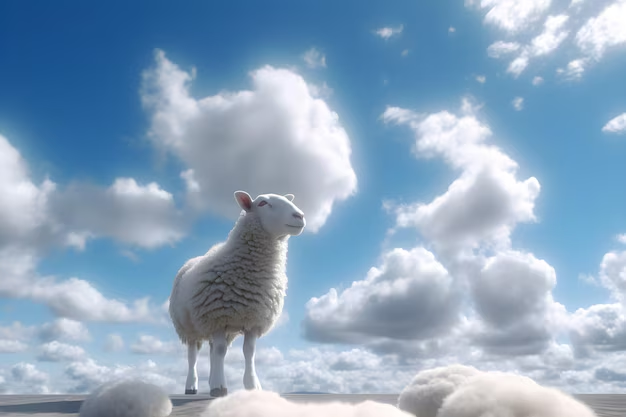
The Mackerel Sky: Understanding the “Cielo a Pecorelle” Phenomenon
As we grow up, we’re often taught to associate the phrase “cielo a pecorelle” with rain and thunderstorms. But is this just a simple saying or does it hold some truth? Let’s dive into the world of weather patterns and explore what makes this phenomenon tick.
A Brief History of Weather Proverbs
Proverbs like “cielo a pecorelle” are not simply poetic expressions, but rather observations that have been passed down through generations. They’re based on the idea that certain weather patterns can be predicted by observing the clouds and their movements. While these proverbs may not be grounded in scientific fact, they’ve proven to be surprisingly accurate over time.
The Science Behind “Cielo a Pecorelle”
So, what exactly is meant by “cielo a pecorelle”? In essence, it describes a type of cloud formation where the clouds are arranged in a grid-like pattern, resembling a chessboard. This occurs when a cold front is approaching, and the air is forced to rise as it encounters an obstacle like a mountain or hill.
Altocumuli: The Key Players
The clouds that form during this phenomenon are called altocumulus clouds. They’re formed when warm, moist air is forced to rise, causing the water vapor to condense into visible clouds. These clouds can take on a variety of shapes and forms, but they’re often characterized by their horizontal or layered appearance.
How “Cielo a Pecorelle” Forms
To understand how this phenomenon occurs, let’s follow a simple example. Imagine a cold front moving eastward across a mountain range. As the front approaches, the air is forced to rise, causing the warm, moist air to condense into clouds. These clouds will take on a characteristic grid-like pattern as they spread out in the direction of the wind.
Key Features of “Cielo a Pecorelle”
So, what makes this phenomenon so distinctive? Here are some key features to look out for:
- Grid-like cloud formations: The clouds are arranged in a horizontal or layered pattern, resembling a chessboard.
- Cold fronts: These types of weather systems are often associated with “cielo a pecorelle.”
- Altocumulus clouds: These are the specific type of cloud that forms during this phenomenon.
The Importance of Observations
While proverbs like “cielo a pecorelle” may not be based on scientific fact, they’re still incredibly useful for predicting weather patterns. By observing the clouds and their movements, we can gain valuable insights into the behavior of the atmosphere.
A World of Poetry and Science
From the simple phrase “cielo a pecorelle” to the intricate dance of atmospheric particles, our world is full of beauty and complexity. Whether you’re a seasoned weather enthusiast or just starting to explore the world of meteorology, there’s always something new to learn and discover.
Types of Weather Patterns Associated with “Cielo a Pecorelle”
“Cielo a pecorelle” is often associated with certain types of weather patterns, including:
- Cold fronts: These are low-pressure systems that bring cold air into an area.
- Warm fronts: These are low-pressure systems that bring warm air into an area.
- Thunderstorms: While not always present, thunderstorms can develop in association with “cielo a pecorelle.”
Conclusion
The next time you hear someone say “cielo a pecorelle,” remember that there’s more to it than meets the eye. This simple phrase has its roots in centuries-old observations about the weather, and it holds a wealth of information about the world around us. Whether you’re an avid meteorologist or just a curious observer of the skies, “cielo a pecorelle” is a phenomenon worth exploring.
Frequently Asked Questions
- What causes “cielo a pecorelle”?: This phenomenon occurs when cold fronts force warm, moist air to rise, causing altocumulus clouds to form.
- How do I recognize “cielo a pecorelle”?: Look for grid-like cloud formations and the presence of altocumulus clouds, often associated with cold fronts.
- Is “cielo a pecorelle” always accompanied by rain?: No, while it’s often associated with precipitation, “cielo a pecorelle” can also be seen in clear weather conditions.
- Can I use “cielo a pecorelle” to predict the weather accurately?: While this phenomenon is useful for predicting certain types of weather patterns, it’s not a foolproof method. Always check multiple sources and consider other factors when making weather predictions.
- Is there more to “cielo a pecorelle” than just cloud formations?: Yes! This phenomenon has its roots in centuries-old observations about the weather, offering valuable insights into atmospheric behavior.
Sources:
- National Weather Service
- American Meteorological Society
- National Geographic


