
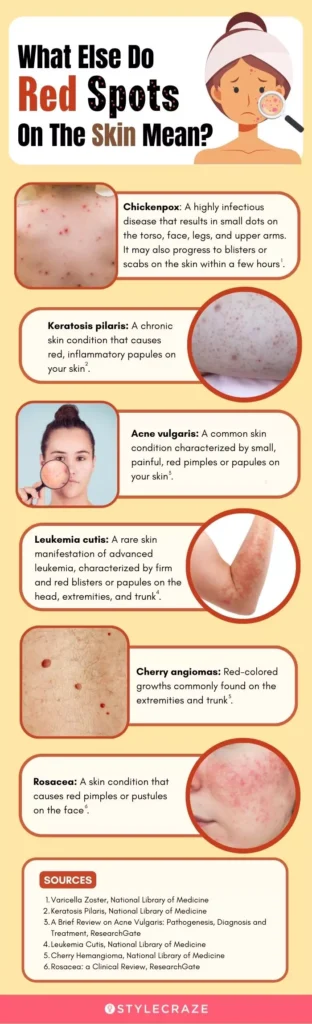
Are you experiencing mysterious red spots on your skin? You’re not alone. These enigmatic lesions can be unsettling, but there’s hope for a natural solution. In this article, we’ll delve into the symptoms, causes, and remedies of red spots on the skin.
Red Spots on the Skin: Symptoms
Before we explore the possible causes, it’s essential to understand the symptoms that may accompany these lesions. You might experience:
- Itching or discomfort
- Swelling in the affected area
- Localized burning or pruritus (a feeling of intense itching)
- Fever and sore throat (in severe cases of external infection)
- Pallor (pale skin), fatigue, easy bleeding, altered white blood cell count, and swelling of lymph nodes (potential indicators of leukemia)
- Redness and inflammation in the affected area
- Small, painful bumps or blisters
- Lesions that may be itchy or tender to the touch
If you’re unsure about your symptoms or if they persist, it’s crucial to consult a doctor to rule out any underlying conditions.
Red Spots on the Skin: Causes
Now that we’ve discussed the symptoms, let’s examine the possible causes of red spots on the skin. Keep in mind that this list is not exhaustive, but it’ll give you an idea of what might be hiding behind these reactions:
- Dermatitis Seborroica: an inflammatory disease characterized by small red spots on the torso, scalp, and face, accompanied by desquamation (shedding of skin) and pain.
- Sudamina: irritation due to excessive sweating caused by non-breathable clothing, disrupting skin hydration balance.
- Acute or Chronic Eczema: often triggered by food allergies, medications, infections, or stress accumulation, leading to raised, pruritic red spots.
- Cheratosi Piliare (Pilar Keratosis): red spots appear on areas with hair follicles, such as the legs. This condition is often caused by hormonal imbalances or genetic predisposition.
- Folliculitis following Depilation: occurs after improper shaving, causing inflammation in areas with hair.
- Pitiriasi Rosea (Rose Petechiae): small oval-shaped patches of red skin, especially on the chest and back, which can be inflammatory in nature. This condition is often caused by viral infections or autoimmune disorders.
- Angioma Rubino (Ruby Angioma): a reddish-colored mole that protrudes above the skin surface due to hormonal imbalances or liver problems.
- Petecchie: tiny punctiform hemorrhages caused by bleeding from small blood vessels, requiring medical attention.
Red Spots on the Skin: Natural Remedies
While seeking medical attention is essential in some cases, there are natural remedies you can try at home to alleviate discomfort and itching:
- Topical creams or oral medications (consult a doctor before starting)
- Calendula or Aloe vera creams as soothing agents
- Ice to cool swollen areas and soothe pain
- Warm baths with bicarbonate of soda and oatmeal flour to reduce inflammation
- Essential oils like chamomile or lavender oil, which have anti-inflammatory and antimicrobial properties
- Proper hydration to prevent skin dryness and irritation
- Natural, non-aggressive products applied to the skin, such as coconut oil or olive oil
Home Remedies for Red Spots on the Skin
Here are some home remedies you can try to alleviate red spot symptoms:
- Tea Tree Oil: apply a few drops of tea tree oil to the affected area using a cotton swab. This essential oil has antibacterial and anti-inflammatory properties.
- Coconut Oil: apply coconut oil to the affected area, as it has anti-inflammatory and antimicrobial properties.
- Aloe Vera Gel: apply Aloe vera gel to the affected area, as it soothes and calms the skin.
- Turmeric Paste: mix turmeric powder with water to create a paste, and apply it to the affected area. Turmeric has anti-inflammatory properties that can help reduce redness and swelling.
- Apple Cider Vinegar: soak a cloth in apple cider vinegar and apply it to the affected area. The acidity of apple cider vinegar helps balance skin pH and reduce inflammation.
Prevention is Key
While these home remedies can provide relief, preventing red spots on the skin requires good hygiene, proper clothing, and lifestyle habits:
- Wear breathable clothing: avoid non-breathable fabrics that can cause excessive sweating.
- Shower regularly: maintain good hygiene to prevent bacterial or fungal infections.
- Keep your environment clean: avoid sharing personal items, wash hands frequently, and keep surfaces clean to reduce the risk of infection.
- Stay hydrated: drink plenty of water to maintain skin hydration and prevent dryness.
Conclusion
Red spots on the skin can be mysterious, but by understanding their symptoms, causes, and natural remedies, you’ll be better equipped to address this common issue. Remember to consult a doctor if your symptoms persist or worsen over time.
Frequently Asked Questions (FAQs)
- Q: What are red spots on the skin?
A: Red spots on the skin are small, raised lesions that can be caused by various conditions, ranging from mild to severe. - Q: Can I treat red spots on my skin at home?
A: While natural remedies can provide relief, it’s essential to consult a doctor before starting any treatment plan, especially if you’re unsure about the cause or severity of your symptoms. - Q: What are some potential underlying conditions that may cause red spots on the skin?
A: Conditions like leukemia, eczema, and angioma rubino (ruby angioma) require medical attention to rule out serious health issues. - Q: How can I prevent red spots on my skin from occurring in the future?
A: Maintaining good hygiene, wearing breathable clothing, and avoiding excessive sweating can help reduce the risk of developing red spots on the skin. - Q: Can essential oils help alleviate red spot symptoms?
A: Certain essential oils like chamomile or lavender oil may provide soothing relief for mild cases of red spots on the skin. - Q: How often should I check my skin for red spots?
A: Regular self-examination can help you catch any potential issues early on and prevent more severe problems from developing. - Q: Can red spots on the skin be contagious?
A: In most cases, no; however, some conditions like eczema or folliculitis can be spread through close contact with an infected person. - Q: Are there any over-the-counter medications available for treating red spots on the skin?
A: Yes, some creams and ointments are available for mild cases of red spots on the skin, but it’s crucial to consult a doctor before using them, especially if you’re unsure about your symptoms or underlying conditions.


