
As a gardener, you’re likely aware of the importance of soil acidity in plant growth and development. But what exactly is acidity in soil, and how can you improve it? In this article, we’ll delve into the world of soil acidity, exploring the causes, effects, and solutions for creating an ideal acidic environment for your plants.
Understanding Soil Acidity
Soil acidity refers to the measure of hydrogen ions (H+) present in the soil, which determines its pH level. A pH scale ranging from 0 to 14 is used to express acidity levels, with a neutral pH of 7 and increasingly acidic or alkaline values below or above this point.
Soil acidity is an important factor in plant growth and development, as it can affect nutrient availability and uptake. For example, plants that thrive in acidic environments, such as azaleas and rhododendrons, require specific micronutrients like iron and manganese to function properly.
Factors Influencing Soil Acidity
Several factors contribute to soil acidity, including:
- Mineral content: Different minerals present in the soil can influence its acidity level. For instance, sulfur is an acid-forming element that can lower pH levels, while calcium and magnesium can raise them.
- Geological characteristics: The type of rocks and soil composition in your area can impact soil acidity. Areas with high concentrations of limestone or dolostone tend to be more alkaline due to the presence of calcium carbonate.
- Organic matter: The presence of organic materials like peat moss or compost can affect soil pH. As these materials break down, they release carbon dioxide and water vapor, which can contribute to a decrease in pH levels.
Plants That Require Acidic Soil
Not all plants thrive in acidic environments. Some examples of plants that require a more acidic soil include:
- Azaleas: These flowering shrubs are native to North America and thrive in acidic soils with pH levels between 5.0 and 6.0.
- Gardenias: With over 200 species, gardenias are popular ornamental plants that prefer acidic soils with pH levels between 5.5 and 7.0.
- Rhododendrons: These evergreen shrubs and trees require acidic soils with pH levels between 5.0 and 6.5 for optimal growth.
- Evergreen shrubs and trees like fir, magnolia, and oak: While these plants can tolerate a wide range of soil pH levels, they often perform best in slightly acidic environments.
Other plants that benefit from acidic soil include:
- Begonias: These flowering plants are common in tropical regions and thrive in acidic soils with pH levels between 5.0 and 7.0.
- Camellias: With over 3,000 species, camellias are popular ornamental plants that require acidic soils with pH levels between 5.5 and 7.0.
- Orchids: These flowering plants come in a wide variety of species and often require acidic soils with pH levels between 5.5 and 7.0 for optimal growth.
- Herbs like mint, peppers, potatoes, ravanelli, and sweet potatoes: While these herbs can tolerate some alkalinity, they often perform best in slightly acidic environments.
Methods for Improving Soil Acidity
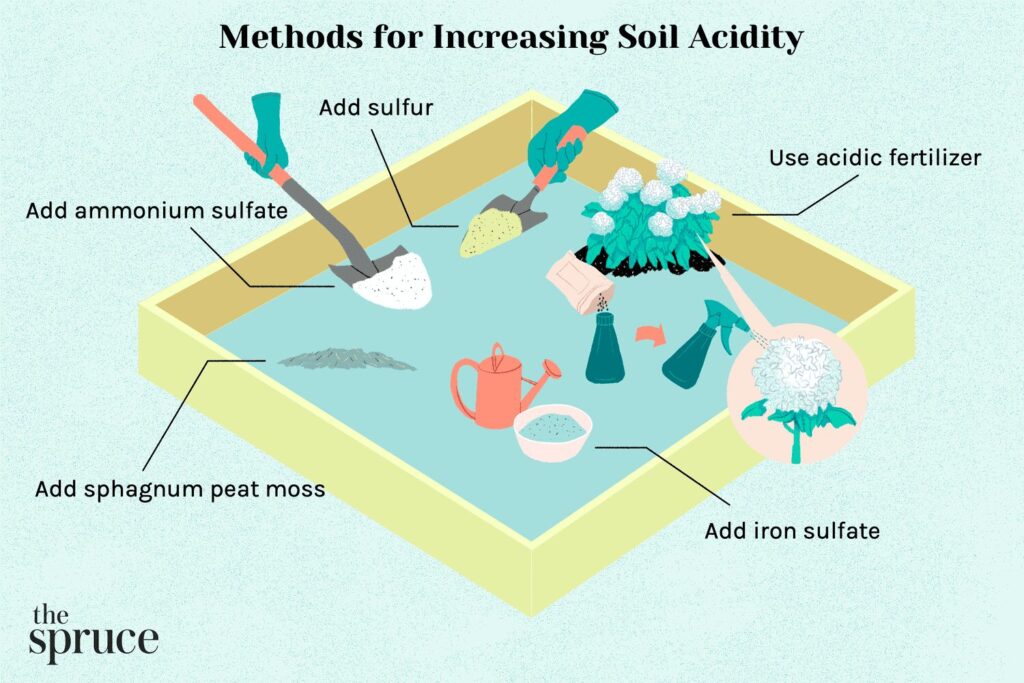
To improve soil acidity, consider the following methods:
1. Using Sulfur-Based Products
Sulfur-based products are effective in reducing soil pH levels.
- Sulfur can be added to the soil in the form of elemental sulfur or gypsum.
- However, this method may take time and requires careful application to avoid over-acidification. It’s recommended to apply sulfur in the spring or fall when plants are dormant to minimize potential damage.
2. Applying Sulfate-Based Products
Sulfate-based products are another option for improving soil acidity.
- These products can be applied directly to the plants or incorporated into the soil as a fertilizer.
- However, excessive use of sulfate-based products can harm plants, so it’s crucial to follow recommended application rates and guidelines to avoid over-acidification.


