
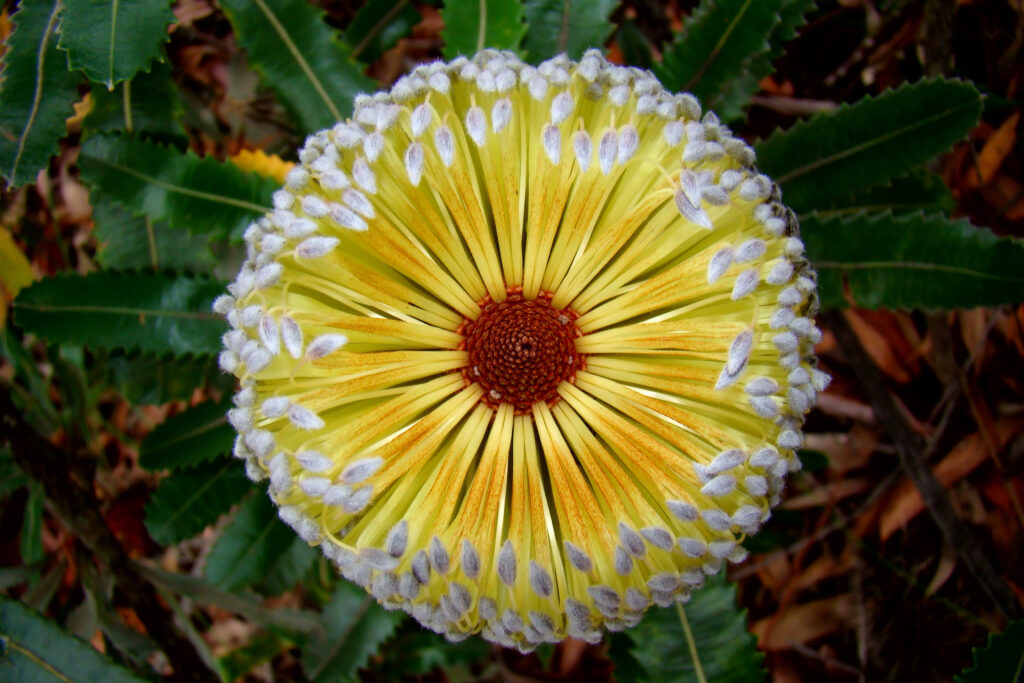
As one of the many types of shrubs present in the rich world of vegetation, the banksia is a plant that has captured the attention of botanists and gardeners alike. Native to Australia and New Guinea, this evergreen shrub belongs to the Proteaceae family and has become a popular choice for gardens due to its unique beauty.
Characteristics
The banksia is easily recognizable by its distinctive inflorescences and spiky branches. In full maturity, these shrubs can reach up to 30 meters in height. The plant can be found in various habitats, from tropical forests to arid landscapes, but it is not typically found in Australian deserts.
One of the most notable features of the banksia is its use as a medicinal plant. Banksia robur, a specific variety, has been used for centuries to alleviate fatigue and depression due to its revitalizing properties.
Cultivation
Banksia can be easily cultivated in gardens by following similar care instructions as those for azaleas. The shrub requires acidic soil and frequent fertilization. It also needs full sun exposure to promote vigor and flowering. Due to its small, shallow roots, banksia is best handled with care during transplanting.
During the summer season, regular watering is necessary, while monthly fertilization with acid-based fertilizers helps maintain plant health. A well-watered and fertilized banksia can thrive abundantly, making it a popular choice for gardeners.
Flower, Foliage, and Propagation
Banksia flowers from late spring to early summer, depending on the specific variety. The inflorescences are characterized by long, pannicle-like structures adorned with small, golden or orange flowers. The foliage varies among varieties but is typically covered in a fine, waxy coating.
Unlike other plants, banksia reproduces through seeds rather than stem cuttings. Seeds are produced on the plant’s spiky branches, making seed dispersal an effective method of propagation.
Pruning
Pruning banksia typically occurs in November and is only necessary when the shrub needs shaping or maintenance. For mature plants, pruning involves removing dead, broken, or diseased branches. Younger plants may require pruning to maintain a balanced shape.
When pruning banksia, it’s essential to adopt an oblique cutting style, leaving 4-5 leaves at the base of each cut to promote healthy regrowth.
Pests and Diseases
Banksia is relatively resistant to common pests like aphids and spider mites. However, it may be susceptible to Phytophthora cinnamomi, a pathogen that causes root rot, spreading from roots to stems and eventually killing the plant.
Iron Chlorosis: The Yellowing of Leaves
If the soil pH exceeds 6.0, banksia can develop iron chlorosis, characterized by yellowed leaves due to an iron deficiency. This issue can be addressed through acidic soil adjustments and regular application of iron-based fertilizers.
Varieties Cultivated in Italy
Some popular varieties of banksia cultivated in Italy include:
- Banksia integrifolia
- Banksia ericifolia
- Banksia speciosissima
- Banksia prionotes
These species are well-suited to milder climates and can thrive in Italian gardens.
Role in Nature
In their natural habitat, banksias play a crucial role as primary producers of nectar. They serve as an essential food source for various animal species, including bees, birds, bats, and insects. In some parts of Australia, indigenous tribes have traditionally consumed the flowers to obtain energy and nutrition.
However, like many plant species, banksia faces threats from human activities such as deforestation, frequent fires, and disease outbreaks. Some varieties are already considered rare or endangered due to these factors.
Properties of Banksia Robur
Banksia robur is known for its revitalizing properties on both physical and mental health. It has been traditionally used to alleviate fatigue after a long day’s work.
In conclusion, the banksia is an extraordinary plant that has adapted remarkably well to various environments while maintaining its unique characteristics. Its rich history in cultivation, propagation, and medicinal use highlights its value as a vital component of our ecosystem and a symbol of resilience in nature.
Additional Information
For those interested in further learning about this fascinating plant, here are some additional resources:
- Scientific Classification: Banksia is classified under the scientific name Banksia, which belongs to the family Proteaceae. There are over 200 species of banksia known to date.
- Medicinal Uses: Besides alleviating fatigue and depression, banksia has been traditionally used for other purposes such as treating fever and reducing inflammation.
- Conservation Efforts: Efforts have been made to protect the habitats of banksia plants, ensuring their survival in a changing environment.
The Banksia: A Plant of Resilience
As we continue to explore and learn about this remarkable plant, it becomes clear that its resilience is not limited to its ability to thrive in various environments. The banksia’s unique characteristics have inspired countless individuals around the world, making it an essential part of our ecosystem.
In today’s fast-paced world, where stress and anxiety are prevalent, the banksia serves as a symbol of hope and renewal. Its rich history in cultivation, propagation, and medicinal use highlights its value as a vital component of our ecosystem and a symbol of resilience in nature.
The banksia is more than just a plant – it represents a powerful force that continues to inspire us to this day.


