
As animals often stigmatized as wild and aloof, cats are actually masters of communication. While dogs may openly shower their owners with affection, cats communicate in a more subtle yet effective manner. By understanding how cats speak, we can better comprehend their needs and emotions.
Understanding Cat-to-Cat Communication
Let’s begin by observing how cats interact with each other. From our experience with two gatos brothers, it’s clear that they have developed a complex language that allows them to convey their thoughts and feelings to one another. This language is not limited to human-feline communication, but rather extends to the way they communicate among themselves.
In these cases, we see signs of affection, playfulness, and even aggression. For example, when the two brothers chase each other, they engage in a form of play-fighting that involves gentle swatting and pouncing. Conversely, when one brother tries to steal food from the other, they may hiss or growl, signaling their displeasure.
Understanding Cat-Human Communication
Now it’s our turn as spectators become protagonists. When cats speak directly to us, they employ a diverse range of sounds and gestures that convey their emotions and intentions. These include meows, purrs, hisses, and even tail swishes.
While we may associate these behaviors with aggression or fear, they can also be indicative of affection and appreciation. For instance, when our cat purrs contentedly while being petted, it’s a clear sign of trust and comfort.
However, not all sounds from cats are pleasant to hear. Hisses and growls are warning signs that our feline friend is feeling threatened or scared. By paying attention to these subtle cues, we can better understand their needs and provide the appropriate response.
Understanding Cat Body Language
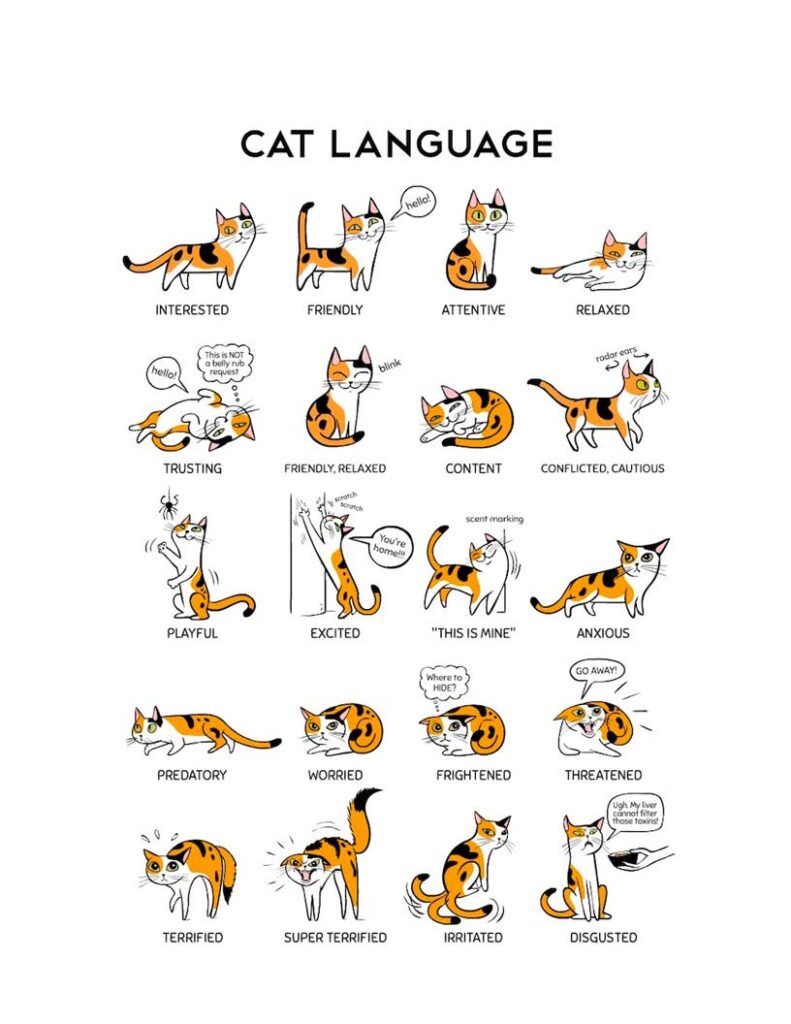
In addition to vocalizations, cats also communicate through body language. Their tail positions, ear angles, and whisker twitches all convey specific messages about their emotional state.
When a cat’s tail is held low or twitching back and forth, it may indicate anxiety or agitation. On the other hand, when a cat’s ears are perked up and alert, it suggests that they’re feeling curious or interested.
Their whiskers also play an important role in feline communication, as they help detect even the slightest changes in air pressure and temperature. When a cat’s whiskers are relaxed and forward-pointing, it indicates confidence and friendliness.
Decoding Cat Communication: A Guide
To better understand your feline companion, follow these tips:
- Pay attention to vocalizations: Each meow, purr, hiss, or growl can convey different emotions and intentions.
- Observe body language: Cats use their tails, ears, whiskers, and posture to communicate their mood and state of mind.
- Look for context: Consider the situation and environment when interpreting your cat’s behavior.
By following these guidelines, you’ll become a skilled feline communicator and be able to build a deeper understanding with your beloved pet.
Frequently Asked Questions
- How do I know if my cat is happy or sad?
- Pay attention to vocalizations, body language, and behavior changes.
- Why does my cat always seem so aloof?
- Cats are naturally independent animals that value their alone time.
- Can cats understand human language?
- While cats may not comprehend complex human speech, they can recognize certain words and phrases associated with positive reinforcement.
- How do I get my cat to purr on demand?
- Engage in gentle petting, stroking, or massage to stimulate a purring response.
- Can cats see color?
- While cats have limited color vision compared to humans, they can detect movement and changes in brightness.
- How often should I feed my cat?
- Consult your veterinarian for personalized feeding recommendations based on age, size, and activity level.
- Why does my cat always sleep so much?
- Cats need a significant amount of rest due to their high metabolism and energy needs.
- Can cats recognize individual voices?
- While cats may not distinguish between human voices, they can learn to associate specific tones or frequencies with food or affection.
By understanding the intricacies of feline communication, you’ll be able to build a stronger bond with your cat and provide the best possible care for their physical, emotional, and social needs.


