
Heating accounts for approximately half of the energy consumption in European households. The economic downturn has forced families to reduce or abandon heating altogether, as highlighted by data from ISTAT. In recent years, the market for superficial geothermal heat pumps has seen significant growth, with countries like Sweden, Iceland, and Germany increasingly adopting this renewable energy source.
Geothermal energy is a promising alternative to traditional fossil fuel-based systems, offering several advantages over conventional heating methods. Not only does it provide consistent heat output, but it’s also environmentally friendly, as it doesn’t involve combustion or emissions. In addition, geothermal systems can be more cost-effective in the long run, reducing the need for frequent temperature adjustments and minimizing the impact of price fluctuations on energy costs.
In this article, we will explore the potential of geothermal energy, its benefits, and how to harness its power for domestic heating. We’ll delve into the basics of geothermal energy, its applications, and discuss the future prospects of this renewable energy source.
Understanding the Importance of Domestic Heating in Europe
Heating is a critical component of European households, accounting for approximately half of total energy consumption. The economic downturn has forced families to reduce or abandon heating altogether, as highlighted by data from ISTAT. In recent years, the market for superficial geothermal heat pumps has seen significant growth, with countries like Sweden, Iceland, and Germany increasingly adopting this renewable energy source.
According to a report by the European Commission, the share of renewable energy sources in the EU’s energy mix is expected to increase significantly over the next decade. Geothermal energy is one of these promising alternatives, offering several benefits over traditional fossil fuel-based systems.
The Potential of Geothermal Energy
In theory, anyone can harness geothermal energy to warm their home. At a depth of just 10 meters, the ground temperature remains constant at around 10°C, regardless of the season. This stable temperature can be leveraged using a heat pump to provide warmth during the winter months.
Geothermal energy originates from the subsurface. When we talk about geothermal heating systems, we’re actually referring to the use of solar radiation and rainfall-penetrated groundwater, which are stored in shallow soil layers. At relatively low depths, the ground acts as a thermal reservoir, retaining heat generated by solar irradiance and precipitation.
The potential of geothermal energy is vast, with applications ranging from small-scale domestic heating systems to large-scale industrial processes. In recent years, countries like China, Indonesia, and the Philippines have invested heavily in geothermal infrastructure, taking advantage of this renewable energy source to reduce their reliance on fossil fuels.
Where Does Geothermal Energy Come From?
Geothermal energy originates from the subsurface, where heat is generated by natural processes such as plate tectonics and volcanic activity. The earth’s crust is divided into several plates that move relative to each other, creating areas of compression and tension. This movement generates heat, which is then released through various geological formations.
In areas with high levels of geothermal activity, the ground temperature can be significantly higher than in regions with low geothermal potential. For example, the hot springs of Yellowstone National Park are a result of geothermal energy generated by the movement of tectonic plates.
How Does a Geothermal Heat Pump Work?
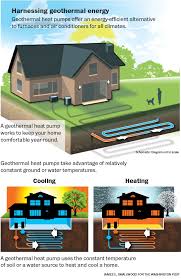
The simplest geothermal heat pump can be installed in a matter of hours and consists of two tubes buried at depth, a well with a diameter of 15 cm. The system operates as a closed-loop circuit, where water is pumped through the ground to extract thermal energy and then transferred to a boiler, providing warmth for the home.
The process begins with the installation of two vertical pipes (inground or boreholes) in the ground, which are connected to a heat exchanger at each end. The system operates as follows:
- In the winter, cold water is pumped from the earth through the underground pipes and into the heat exchanger.
- As the water flows through the heat exchanger, it transfers its thermal energy to a working fluid, usually a refrigerant.
- The cooled-down refrigerant is then compressed by an electric motor and used to provide warmth in the home.
In the summer, the process is reversed, with hot water being pumped from the earth to cool the home.
Benefits of Geothermal Energy
Geothermal heating offers several advantages over traditional fossil fuel-based systems. Some of the key benefits include:
- Environmental sustainability: Geothermal energy is a renewable resource that does not involve combustion or emissions.
- Consistent heat output: Geothermal systems can provide consistent heat output, reducing the need for frequent temperature adjustments.
- Cost-effectiveness: Geothermal systems can be more cost-effective in the long run, as they reduce the need for fuel and minimize energy costs.
The Future of Geothermal Energy
As concern about climate change grows, renewable energy sources like geothermal energy are becoming increasingly important. By harnessing the earth’s natural heat, we can reduce our reliance on fossil fuels and mitigate greenhouse gas emissions.
Governments and industries are investing heavily in geothermal infrastructure, paving the way for widespread adoption of this renewable energy source. According to a report by the International Renewable Energy Agency (IRENA), the global geothermal energy market is expected to reach 10 GW by 2025, up from just 12 GW in 2019.
Is Geothermal Energy Right for You?
If you’re considering switching to a geothermal heating system, there are several factors to consider. The suitability of your property will depend on its geology and depth, as well as local regulations regarding underground installations.
However, with proper installation and maintenance, geothermal energy can provide years of reliable and cost-effective heat. It’s essential to consult with a professional to determine if a geothermal heating system is right for you.
Frequently Asked Questions
Q: How does a geothermal heating system work?
A: A geothermal heating system uses a closed-loop circuit to extract thermal energy from the ground, which is then transferred to a boiler to provide warmth for your home.
Q: Is geothermal energy suitable for all properties?
A: The suitability of your property will depend on its geology and depth. Consult with a professional to determine if a geothermal heating system is right for you.
Q: How long does it take to install a geothermal heat pump?
A: The installation process typically takes a few hours, depending on the complexity of the system and local regulations.
Q: What are the environmental benefits of geothermal energy?
A: Geothermal energy is environmentally friendly, as it doesn’t involve combustion or emissions. It also reduces greenhouse gas emissions and dependence on fossil fuels.
Q: Can I install a geothermal heat pump myself?
A: While possible, installing a geothermal heat pump requires specialized knowledge and equipment. Consult with a professional to ensure safe and efficient installation.
Q: What is the average cost of a geothermal heat pump?
A: The cost of a geothermal heat pump varies depending on factors like size, material, and local labor costs. Expect to pay between $5,000 and $20,000 or more for a typical system.
Q: Is geothermal energy a reliable source of heat?
A: Yes, geothermal heating systems can provide consistent heat output, reducing the need for frequent temperature adjustments.
Q: Can I use a geothermal heat pump during the summer months?
A: While geothermal heat pumps are designed to extract thermal energy from the ground, they can also be used to cool your home in the summer. This is known as “reverse mode” operation.


