
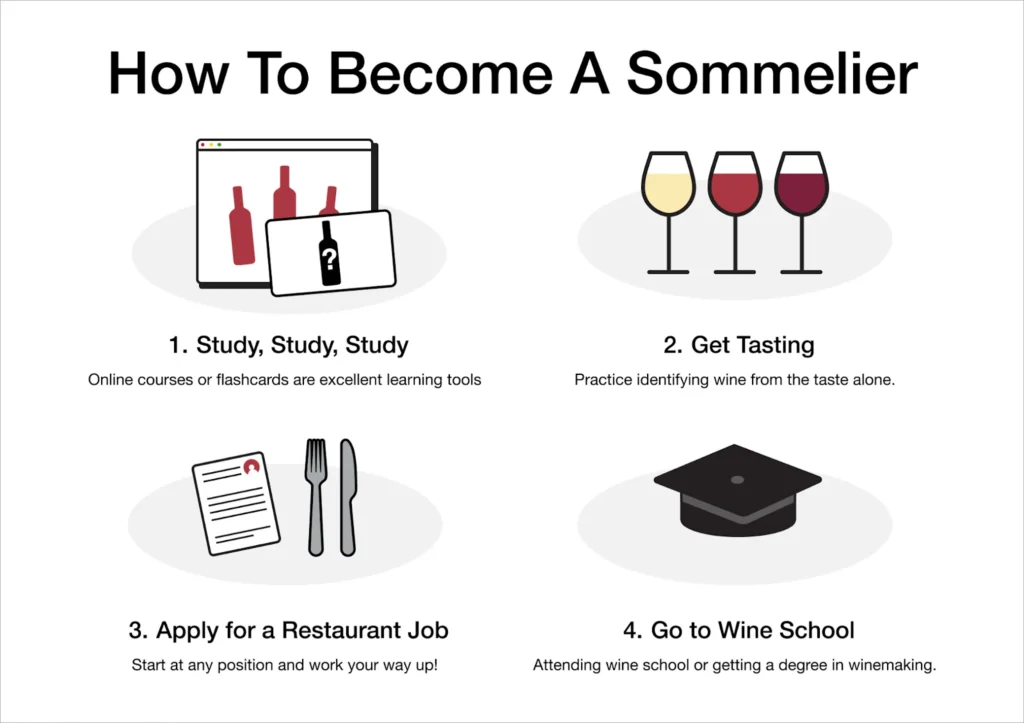
As more young individuals pursue the profession of sommelier, it’s essential to understand that knowing wines is an art form. A sommelier is a professional figure who, through tasting, provides information on wine characteristics and proposes food pairings. In this article, we will explore the steps needed to become a sommelier, covering key competencies, knowledge requirements, educational paths, and more.
The Role of a Sommelier
In high-end restaurants, the “Wine List” with detailed descriptions of wine characteristics is prepared by the sommelier. It’s their responsibility to update the list regularly and introduce customers to various wine types to appreciate their quality. Another critical aspect of a sommelier’s role is managing the cellar: ensuring it’s organized, clean, and at optimal temperature.
Sommeliers must also source high-quality wines that meet budget expectations. To excel in this field, one needs to understand how to pair wines with food and have in-depth knowledge of at least two foreign languages (starting with English). Moreover, sommeliers should be well-versed in communication techniques, etiquette rules, and stay up-to-date on market trends.
Essential Skills for a Sommelier
To become a successful sommelier, one must possess:
- Wine Pairing Knowledge: Understand how to combine wines with food.
- Language Skills: Be proficient in at least two foreign languages (starting with English).
- Communication Skills: Master communication techniques and etiquette rules.
- Market Awareness: Stay informed about market trends and consumer preferences.
Education and Training
To become a certified sommelier, it’s essential to enroll in reputable schools that offer comprehensive training programs. Two prominent organizations are:
- AIS (Associazione Italiana Sommelier): Based in Milan, with branches in various regions across Italy.
- FISAR (Federazione Italiana Sommelier, Albergatori e Ristoratori): Offers courses for sommeliers throughout Italy.
By joining these organizations and completing their programs, you’ll gain the necessary skills to excel as a sommelier.
Becoming a Certified Sommelier
To become certified, one must:
- Complete a comprehensive training program covering both theory and practice.
- Pass a rigorous examination that tests knowledge and skills.
- Gain practical experience by working under an experienced sommelier or in a reputable restaurant.
Key Takeaways
Becoming a certified sommelier requires dedication, hard work, and a passion for wine. By mastering key competencies, acquiring language skills, developing communication techniques, and staying informed about market trends, you’ll be well on your way to becoming a successful sommelier.
Frequently Asked Questions (FAQs)
- What are the essential skills required to become a sommelier?
- Wine pairing knowledge, language skills, communication skills, and market awareness.
- Which organizations offer comprehensive training programs for sommeliers?
- AIS (Associazione Italiana Sommelier) and FISAR (Federazione Italiana Sommelier, Albergatori e Ristoratori).
- What is the process of becoming a certified sommelier?
- Complete a comprehensive training program, pass a rigorous examination, and gain practical experience.
- How long does it take to become a certified sommelier?
- The duration varies depending on the organization and individual progress.
- Can I learn about wine pairing without formal education?
- Yes, but formal training provides a more comprehensive understanding of wine and its pairings.
Additional Tips for Becoming a Certified Sommelier
- Develop your language skills: Learn to speak fluently in at least two foreign languages.
- Stay informed about market trends: Follow industry publications and attend seminars to stay up-to-date on the latest developments.
- Practice wine tasting: Regularly taste different wines to develop your palate and understanding of their characteristics.
- Join online communities: Participate in online forums and social media groups to connect with other sommeliers and learn from their experiences.
Wine Pairing Strategies
Pairing wines with food is an art that requires practice and patience. Here are some common pairing strategies:
- Match weight with weight: Pair light dishes with light wines, and heavy dishes with full-bodied wines.
- Consider flavor profiles: Match the flavors of each dish with complementary or contrasting flavors in the wine.
- Don’t forget about acidity: Acidity can help cut through richness and balance out sweetness.
Tips for Managing a Cellar
Managing a cellar is an essential part of being a sommelier. Here are some tips to keep your cellar organized and running smoothly:
- Use storage solutions: Invest in shelving, bins, or baskets to store wines in a safe and accessible manner.
- Label your wines: Use labels or tags to identify each wine, including its name, vintage, and region of origin.
- Maintain optimal temperatures: Store wines at the appropriate temperature for their type, whether it’s cool or warm.
Conclusion
Becoming a certified sommelier requires dedication, hard work, and a passion for wine. By mastering key competencies, acquiring language skills, developing communication techniques, and staying informed about market trends, you’ll be well on your way to becoming a successful sommelier. With the right education, training, and practice, you can excel in this rewarding profession and provide exceptional service to your customers.
Additional Resources
For further learning, consider the following resources:
- Wine books: Read classic wine guides such as “The Wine Bible” by Karen MacNeil or “Wine and Spirit Education Trust (WSET)” guidebooks.
- Online courses: Enroll in online courses offered by reputable institutions, such as Coursera or edX.
- Industry events: Attend wine conferences, seminars, and workshops to network with other professionals and learn from their experiences.
By following these guidelines and dedicating yourself to becoming a skilled sommelier, you’ll be well-equipped to navigate the world of wine and provide exceptional service to your customers.


