
Are you one of the millions of people who feel guilty about something? We all experience guilt at some point in our lives, but for some, it can be a persistent and debilitating emotion that affects their mood, behavior, and even decision-making. Today, we’ll explore what guilt is, its examples, symptoms, and most importantly, how to overcome it.
What is Guilt?
Guilt is an emotional state characterized by feelings of remorse, regret, and shame. It’s a natural response to perceived wrongdoing or failure, which can be triggered by our actions, inactions, or even thoughts. In essence, guilt serves as an internal warning system that alerts us to potential harm or negative consequences.
The Role of Guilt in Our Lives
Guilt is often seen as a moral compass that guides our behavior and decision-making. It’s a natural response to situations where we feel like we’ve wronged someone or failed to meet expectations. However, when guilt becomes overwhelming, it can lead to feelings of anxiety, self-doubt, and even depression.
Examples of Guilt
Guilt is an everyday phenomenon that we often take for granted. Here are some examples:
- Feeling guilty about not helping a friend in need
- Regretting a missed opportunity or a past mistake
- Struggling with self-doubt and feeling unworthy of success or happiness
- Feeling guilty about a relationship that’s not working out
- Guilt over not being able to provide for loved ones
Types of Guilt
There are two main types of guilt: external and internal.
- External Guilt: This type of guilt is driven by societal expectations, moralistic messages, or the fear of judgment from others. It’s often linked to feelings of inadequacy, shame, or self-doubt.
- Internal Guilt: In contrast, internal guilt arises from our own self-criticism and judgments. It’s a more constructive force that encourages personal growth and improvement.
Symptoms of Overwhelming Guilt
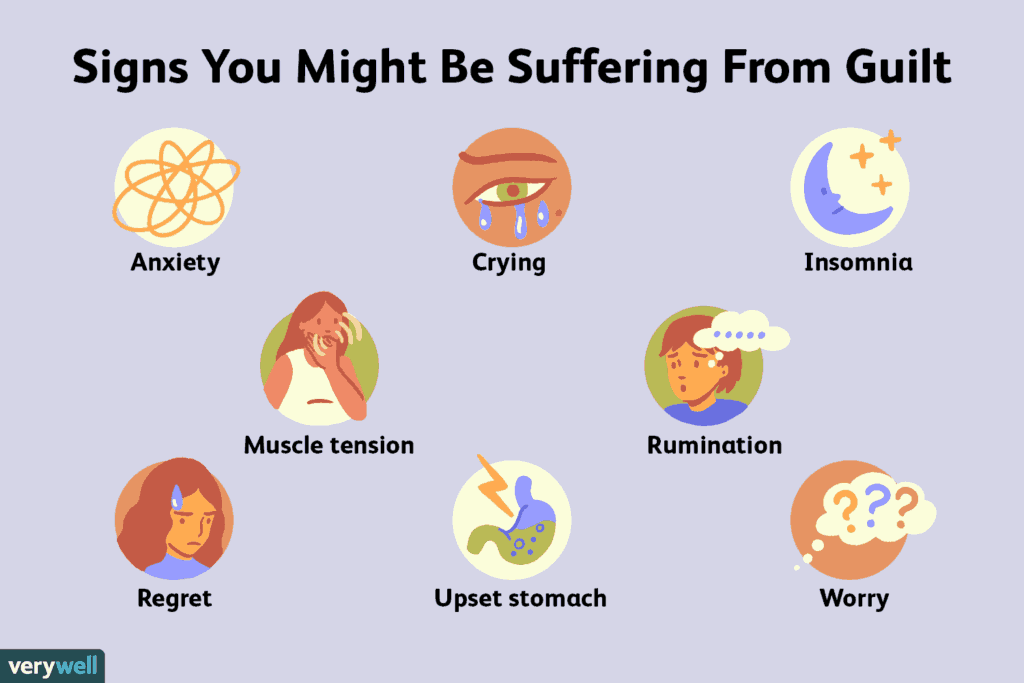
When guilt becomes overwhelming, it can have severe consequences on our mental and emotional well-being. Some common symptoms include:
- Persistent feelings of anxiety or dread
- Difficulty concentrating or making decisions
- Social withdrawal or avoidance behaviors
- Physical symptoms like headaches, stomachaches, or insomnia
- Increased stress levels
- Decreased motivation and self-esteem
The Impact of Guilt on Relationships
Guilt can have a significant impact on our relationships with others. It can lead to feelings of resentment, anger, and hurt in ourselves and others. When we’re consumed by guilt, we may:
- Become overly critical or perfectionistic
- Struggle to communicate effectively or show affection
- Feel suffocated by the weight of expectation from others
- Have difficulty setting boundaries or asserting our needs
Overcoming Guilt: Advice and Strategies
Breaking free from the cycle of guilt requires a combination of self-awareness, introspection, and intentional actions. Here are some advice and strategies to help you overcome guilt:
- Recognize and Challenge Negative Thoughts: Become aware of your thought patterns and challenge negative self-talk. Replace critical thoughts with more balanced and compassionate ones.
- Practice Self-Compassion: Treat yourself with kindness, understanding, and patience. Acknowledge that everyone makes mistakes and that it’s okay not to be perfect.
- Focus on the Present: Instead of dwelling on past regrets or worrying about future consequences, focus on the present moment. Mindfulness practices can help you cultivate a sense of awareness and acceptance.
- Reframe Guilt as a Growth Opportunity: View guilt as a chance for personal growth, learning, and self-improvement. Ask yourself what you can learn from the experience and how you can apply those lessons to future situations.
- Seek Support: Share your feelings with trusted friends, family members, or a therapist. Talking through your emotions can help you gain perspective and develop coping strategies.
Managing External Guilt
When faced with external guilt, it’s essential to recognize that others’ expectations are not our responsibility. Here are some tips for managing external guilt:
- Set Boundaries: Learn to say “no” without feeling guilty or obligated.
- Communicate Effectively: Express your needs and boundaries clearly and assertively.
- Practice Assertiveness: Stand up for yourself and express your opinions without apology.
- Seek Support: Surround yourself with people who support and accept you.
Managing Internal Guilt
When faced with internal guilt, it’s essential to recognize that self-criticism is not an effective or healthy way to cope. Here are some tips for managing internal guilt:
- Practice Self-Compassion: Treat yourself with kindness, understanding, and patience.
- Challenge Negative Thoughts: Replace critical thoughts with more balanced and compassionate ones.
- Focus on the Present: Instead of dwelling on past regrets or worrying about future consequences, focus on the present moment.
- Reframe Guilt as a Growth Opportunity: View guilt as a chance for personal growth, learning, and self-improvement.
Conclusion
Guilt is a natural emotion that can be both helpful and debilitating. By understanding its causes, recognizing its symptoms, and adopting strategies to overcome it, we can break free from the cycle of guilt and live more fulfilling lives. Remember, self-compassion, mindfulness, and self-awareness are key to healing from guilt and embracing our imperfections.
Frequently Asked Questions
- Q: How do I know if my guilt is healthy or unhealthy?
A: Healthy guilt motivates us to make positive changes, while unhealthy guilt can be debilitating and interfere with daily life. - Q: Can I forgive myself for past mistakes?
A: Yes, forgiveness is a process that requires self-compassion, understanding, and patience. It’s possible to learn from past experiences and move forward with greater self-awareness. - Q: How can I balance my desire to please others with my own needs and desires?
A: Recognize that your own needs and desires are valid and important. Practice assertiveness, set healthy boundaries, and communicate openly with others. - Q: What role does self-compassion play in overcoming guilt?
A: Self-compassion is essential in healing from guilt. It allows us to treat ourselves with kindness, understanding, and patience, rather than judgment or criticism. - Q: Can I seek help if my guilt is impacting my daily life?
A: Yes, seeking professional help from a therapist or counselor can provide a safe space to explore underlying issues and develop coping strategies.
Feel free to share your thoughts and experiences with guilt in the comments below.


